Historical figure · Pearson Edexcel International GCSE revision on Incandio
Augustine of Hippo
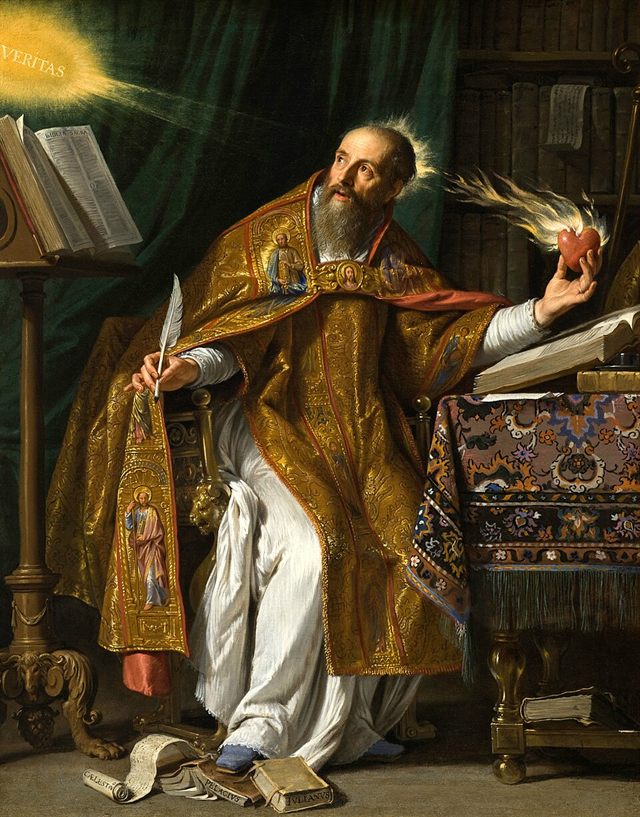
Who Wrote Down What He Had Been · Bishop & Theologian · 354–430
The North African bishop who wrote the first autobiography in the West, argued that evil is not a substance at all, and spent thirty years insisting the will is genuinely free and genuinely damaged.
Defend these ideas against Augustine
Incandio is a free revision platform for the Pearson Edexcel International GCSE, and on it a topic counts as mastered only once you have learned it, proved it in questions, taught it back and defended it against the person with the strongest claim on it. Augustine of Hippo is that person for 13 topics on the course — 8 of them:
- The problem of evil and suffering — Religious Studies · Christianity
- Free will, determinism and predestination — Religious Studies · Christianity
- The problem of evil and suffering — Religious Studies · Sikhism
- Selfishness, greed, ignorance and sin — Religious Studies · Sikhism
- The problem of evil and suffering — Religious Studies · Judaism
- Selfishness, greed, ignorance and sin — Religious Studies · Judaism
- The problem of evil and suffering — Religious Studies · Islam
- Selfishness, greed, ignorance and sin — Religious Studies · Islam
Who was Augustine?
Augustine was born at Thagaste in Numidia in 354, to a Christian mother, Monica, and a father who was not one. He was clever, was funded through a rhetorical education by a local patron, and went to Carthage, where he lived with a woman for some fifteen years and had a son, Adeodatus. For about nine years he was a hearer among the Manichees, who taught that evil is a substance with a kingdom of its own — a system he later had to argue against in public, and whose attraction he never pretended not to remember. He taught rhetoric at Carthage, at Rome and then at Milan, the imperial capital, where he went to hear Ambrose preach because he wanted to study the technique and stayed for other reasons. He turned in 386 and was baptised at Easter 387. Monica died at Ostia on the way home; Adeodatus died not long after. Augustine was made bishop of Hippo Regius in 395 and remained there for thirty-five years. He wrote the Confessions around 400 — an account of his own life addressed to God, which nobody in the classical world had done — and after the sack of Rome in 410 began the City of God. His central philosophical position is that evil is not a thing: everything that exists was made and made good, so evil is a lack, a good that is missing, which means God did not make it. His central practical position is that the will is genuinely free, which is where moral evil comes from, and also genuinely damaged, so it cannot mend itself by wanting to. He died in 430 while the Vandals were besieging the city.
Major achievements
- The Confessions (c. 400), the first sustained autobiography in Western literature
- The City of God (413–426), written after the sack of Rome
- The argument that evil is a privation rather than a substance
- A body of writing that shaped Western theology for a thousand years
Life in brief
- 354 — Born at Thagaste: In Roman Numidia, to a Christian mother.
- c. 373 — Joins the Manichees: As a hearer; stays about nine years.
- 384 — Milan: Appointed professor of rhetoric in the imperial capital.
- 386 — The turn: Converts; baptised at Easter 387 by Ambrose.
- 395 — Bishop of Hippo: Where he remains for thirty-five years.
- c. 400 — The Confessions: An account of his own life, addressed to God.
- 410 — Rome is sacked: He begins the City of God in response.
- 430 — Dies at Hippo: During the Vandal siege of the city.
Explore the life of Augustine — five chapters
- A Clever Boy and a Local Patron — The career rhetoric was supposed to buy
- Nine Years Among the Manichees — A system that made evil somebody else's
- Milan — Going to hear a bishop for the technique
- A Book Nobody Had Written — A life examined in public and addressed to God
- Thirty-Five Years in a Port Town — A bishop with a court to hold and a province collapsing
Read the five-chapter life of Augustine of Hippo →
Begin
- Start a conversation with Augustine — a dramatised, historically grounded AI portrayal
- Read the Historical Brief
- Explore the life of Augustine — five chapters
- Find your course · Meet all 280 figures