Historical figure · Pearson Edexcel International GCSE revision on Incandio
Bertrand Russell
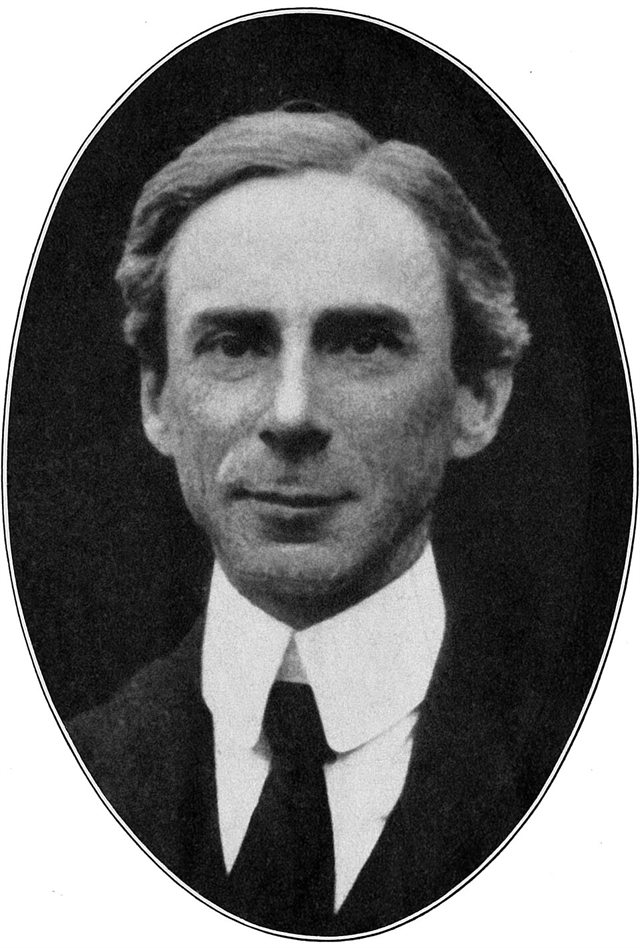
Who Asked Who Made God · Philosopher & Campaigner · 1872–1970
The logician and Nobel laureate who argued in Why I Am Not a Christian (1927) and in a 1948 BBC debate with Frederick Copleston that the first-cause and design arguments fail, and who spent his old age campaigning against nuclear weapons.
Why Russell is on Incandio
Incandio is a free revision platform for the Pearson Edexcel International GCSE. Its historical figures are the people a student learns from, questions and — where a specification topic is theirs — defends an idea against. Bertrand Russell can be questioned here in a dramatised, historically grounded portrayal, and the five-chapter life below is written to be read alongside the course.
Who was Russell?
Russell was born in 1872 at Trellech, Monmouthshire, the grandson of the Prime Minister Lord John Russell. Orphaned young, he was raised by his grandmother at Pembroke Lodge. He gave up religious belief as a teenager after reading John Stuart Mill. At Cambridge he worked on the foundations of mathematics and wrote Principia Mathematica (1910–13) with A. N. Whitehead. A pacifist in the First World War, he lost his Trinity lectureship in 1916 and was imprisoned for six months in 1918. His 1927 lecture Why I Am Not a Christian attacked the first-cause, natural-law and design arguments and the moral argument. In 1948 he debated Father Frederick Copleston on BBC radio, arguing that the universe needs no explanation beyond itself. He won the Nobel Prize in Literature in 1950, was first president of CND in 1958 and was jailed again for a week in 1961 aged eighty-nine. He died in Wales in 1970.
Major achievements
- Co-wrote Principia Mathematica (1910–13) and discovered Russell's paradox (1901)
- Gave the lecture Why I Am Not a Christian (1927)
- Debated Frederick Copleston on the existence of God on BBC radio (1948)
- Won the Nobel Prize in Literature (1950)
- Co-authored the Russell–Einstein Manifesto (1955) and was first president of CND (1958)
Life in brief
- 1872 — Born at Trellech: Grandson of Lord John Russell.
- 1901 — Russell's paradox: A contradiction at the foundations of mathematics.
- 1918 — Brixton prison: Six months for an anti-war article.
- 1927 — Why I Am Not a Christian: Lecture to the National Secular Society, Battersea.
- 1948 — The Copleston debate: BBC Third Programme, on the existence of God.
- 1950 — Nobel Prize in Literature
- 1958 — First president of CND
- 1970 — Dies 2 February: At Plas Penrhyn, Wales.
Explore the life of Russell — five chapters
- Pembroke Lodge — An orphan, a grandmother, and a godfather he never met
- The Paradox — Trying to build mathematics on logic alone
- Brixton — A pacifist in a nation at war
- Battersea and the BBC — Why I Am Not a Christian, and an evening with Father Copleston
- The Last Campaigns — A manifesto, a march, and a week in prison at eighty-nine
Read the five-chapter life of Bertrand Russell →
Begin
- Start a conversation with Russell — a dramatised, historically grounded AI portrayal
- Read the Historical Brief
- Explore the life of Russell — five chapters
- Find your course · Meet all 280 figures