Explore Their Life · Pearson Edexcel International GCSE revision on Incandio
B. R. Ambedkar: A Life in Five Chapters
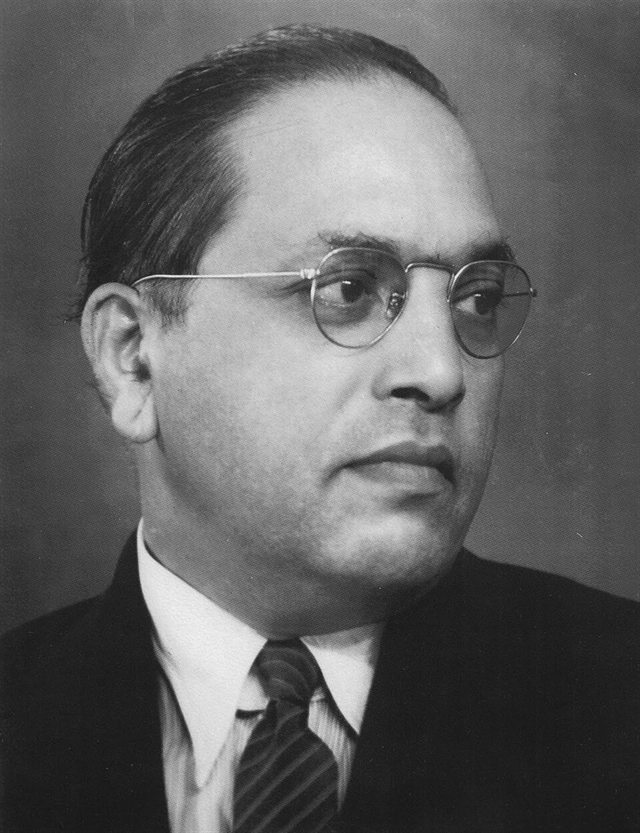
1891–1956
A boy made to sit on a sack outside the classroom, who took doctorates at Columbia and London, wrote the constitution of India, and left the religion he was born into on the last day of his life's argument.
Ambedkar was the best-educated Indian politician of his generation and the only major one from an untouchable caste. These five chapters follow the sack outside the classroom, the degrees, the fight with Gandhi over separate electorates, the drafting of the constitution, and the conversion at Nagpur weeks before he died.
The five chapters
- The Sack Outside the Classroom — Educated and untouchable at the same time
- Columbia and London — More degrees than anybody else in Indian politics
- The Poona Pact — A fast, and an agreement made under it
- The Constitution — The longest written constitution in the world, and who drafted it
- Nagpur — Leaving the religion, twenty-one years after announcing he would
Chapter 1 · The Sack Outside the Classroom
Educated and untouchable at the same time
1891 – 1913 · Mhow · Satara · Bombay
Bhimrao Ramji Ambedkar was born in 1891 at Mhow, into a Mahar family. The Mahars were an untouchable caste, outside the four-fold varna order, whose contact was held by caste Hindus to pollute. His father served in the British Indian Army, which meant that unlike almost every other Mahar child he went to school at all.
What school consisted of he described precisely. He was not permitted to sit with the other children; he brought a piece of sacking to sit on outside the classroom door and took it home each day because the sweeper would not touch it. He could not drink from the school water tap: a peon poured water from a height into his cupped hands, and on days when the peon was absent he did not drink.
He recorded a journey as a boy to visit his father, when a bullock-cart driver who had accepted the fare discovered the family's caste and made them travel while he walked, and no one at the halt would give them water.
He was the first of his community to enter Elphinstone College in Bombay. A teacher who had been kind to him gave him the surname Ambedkar, after the teacher's own village, and it replaced the one that identified where he was from.
Nothing in his later argument is abstract. Every part of it describes a day he had had.
Why this matters
Ambedkar's case against caste was built from documented daily experience rather than from theory, which is why it is so difficult to answer.
A sack carried to school and back. What would you ask him?
Ask Ambedkar
- “What did carrying the sack to school every day teach you?”
- “How did your father's army service change what was possible for you?”
- “Why did a teacher give you his own village's name?”
- “Was the water tap worse than the classroom?”
- “Did education protect you from any of it?”
Chapter 2 · Columbia and London
More degrees than anybody else in Indian politics
1913 – 1923 · New York · London · Bonn
A scholarship from the Maharaja of Baroda took Ambedkar to Columbia University in New York in 1913. He read economics under John Dewey, whose ideas about democracy as a shared way of living he cited for the rest of his life, and took a doctorate.
He went on to the London School of Economics and Gray's Inn, ran out of money and had to return to India, worked to fund himself and went back, and eventually held a doctorate from Columbia, a doctorate of science from London, and a call to the English bar. No other Indian politician of the era had anything like it.
He also discovered, in New York and London, what it was to live where his caste was invisible. He said that it was the first time he had been treated as a person rather than as a category, and the contrast when he returned was violent: in Baroda, obliged to work for the state that had funded him, he could not find lodgings, was thrown out of a Parsi inn where he had registered under a false name, and had files thrown onto his desk rather than handed to him. He left within weeks.
He set up as a barrister and a teacher, founded newspapers, and began organising. In 1927 he led the Mahad satyagraha — a march to drink from a public tank that untouchables were barred from — and later that year publicly burned a copy of the Manusmriti, the text used to justify the caste order.
Why this matters
Ambedkar returned from two of the best universities in the world to a state where he could not rent a room, and the contrast is the engine of everything he did.
Two doctorates and a Parsi inn. What would you ask him?
Ask Ambedkar
- “What did New York show you that Bombay could not?”
- “What happened when you went back to Baroda?”
- “Why burn the Manusmriti in public?”
- “What was the point of drinking from a tank you could not use again?”
- “Did John Dewey's ideas survive contact with India?”
Chapter 3 · The Poona Pact
A fast, and an agreement made under it
1930 – 1936 · London · Yeravda Jail · Poona
At the Round Table Conferences in London, Ambedkar argued that the Depressed Classes were a separate element in Indian society and needed separate electorates — their own constituencies, in which only they voted, so that their representatives were chosen by them and not by the caste Hindu majority. Gandhi opposed him absolutely, on the grounds that it would divide Hinduism permanently and that untouchability was a matter for Hindus to reform from within.
In 1932 the British Communal Award granted separate electorates. Gandhi, in prison at Yeravda, announced a fast unto death against it.
What followed put Ambedkar in an impossible position. If Gandhi died, the responsibility would be laid at his door and the consequences for his community, in every village in India, would have been immediate. He negotiated. The Poona Pact of September 1932 abandoned separate electorates in exchange for a much larger number of seats reserved for the Depressed Classes within the common electorate.
He never accepted that this was a bargain freely made. He wrote afterwards that he had been compelled by a threat to a man's life to sign away the one guarantee his people had won, and that reserved seats in a general electorate meant representatives acceptable to caste Hindus rather than chosen by untouchables.
His book Annihilation of Caste, written in 1936 as an address he was then prevented from giving, argues that caste cannot be reformed, only destroyed, and that this requires abandoning the scriptures that authorise it. Gandhi replied in print; Ambedkar published the reply and his answer to it in later editions.
Why this matters
The Poona Pact is the sharpest disagreement in Indian nationalist politics, and Ambedkar always described it as a concession extracted rather than a compromise reached.
A fast, and a signature under it. What would you ask him?
Ask Ambedkar
- “Why did separate electorates matter so much to you?”
- “What did Gandhi's fast leave you able to do?”
- “Were reserved seats worth anything at all?”
- “Why can caste not be reformed from inside?”
- “Did you and Gandhi want the same thing by different means?”
Chapter 4 · The Constitution
The longest written constitution in the world, and who drafted it
1947 – 1951 · Delhi
In 1947 Nehru made Ambedkar the first Law Minister of independent India, and the Constituent Assembly made him chairman of the drafting committee. It was a striking appointment: the man who had opposed Congress on the deepest question in Indian politics was given the drafting of the state's founding document.
The constitution that emerged in 1950 is the longest in the world and it does specific things. It abolishes untouchability outright in Article 17 and makes its practice an offence. It guarantees equality before the law and prohibits discrimination on grounds of religion, race, caste, sex or place of birth. It provides reservation of seats and posts for the Scheduled Castes and Tribes. It establishes universal adult suffrage immediately, in a country where most adults could not read — a decision far bolder than anything Britain or the United States had done at a comparable stage.
Ambedkar was clear about its limits. In his final speech to the Assembly he said that India was entering a life of contradictions: political equality of one person one vote, and social and economic inequality that denied it; and that if the contradiction were not removed those denied would blow up the structure of political democracy the Assembly had built.
He resigned from the cabinet in 1951, principally over the stalling of the Hindu Code Bill, which he had drafted and which reformed marriage, divorce and inheritance in Hindu law. It passed in pieces after he had gone.
Why this matters
The Indian constitution abolished untouchability in a single article and granted universal suffrage immediately, and the man who drafted it said in the same room that political equality alone would not hold.
A constitution drafted by the man who had opposed its authors. What would you ask him?
Ask Ambedkar
- “Why did Congress ask you to chair the drafting committee?”
- “Why grant universal suffrage immediately?”
- “What did you mean about a life of contradictions?”
- “Why resign over the Hindu Code Bill?”
- “Can a constitution change how people behave in a village?”
Chapter 5 · Nagpur
Leaving the religion, twenty-one years after announcing he would
1935 – 1956 · Yeola · Nagpur · Delhi
In 1935, at a conference at Yeola, Ambedkar said that he had been born a Hindu but would not die one. He then spent twenty-one years studying the alternatives, and considered Sikhism, Islam and Christianity before settling on Buddhism, on the grounds that it had originated in India, that it rejected caste, and that it rested on reason rather than on revelation.
On 14 October 1956 at Nagpur he took the vows of a Buddhist along with several hundred thousand followers, in one of the largest religious conversions ever recorded. He administered twenty-two vows of his own composition, which explicitly rejected the Hindu deities and the doctrine of caste.
He was already extremely ill with diabetes and its complications. He had finished the manuscript of The Buddha and His Dhamma days earlier. He died in his sleep on 6 December 1956, seven weeks after the conversion.
His reputation in India has grown enormously since, and it has grown from below: he is on more statues in India than any other figure, put up by the communities he organised rather than by governments, and Ambedkar Jayanti is observed across the country. Successive governments that had little use for him while he lived have since claimed him.
The honest thing to say is that both his achievements and his warning stand. Untouchability is unlawful and reservations are constitutional, and caste discrimination in employment, marriage and violence is documented in India every year.
Why this matters
Ambedkar announced in 1935 that he would leave Hinduism and did it in 1956, seven weeks before he died, with several hundred thousand people.
Twenty-one years between the announcement and the act. What would you ask him?
Ask Ambedkar
- “Why did it take twenty-one years to choose?”
- “Why Buddhism rather than Islam or Christianity?”
- “What were the twenty-two vows for?”
- “Can leaving a religion change a social order?”
- “What would you say to governments that claim you now?”
What Ambedkar changed
Ambedkar drafted the constitution of the world's largest democracy, abolished untouchability in law, secured reservations for the communities excluded by caste, and granted universal adult suffrage to a country most of whose adults could not read. He also argued, in the Constituent Assembly itself, that political equality without social and economic equality would not survive — and the argument about whether he was right is conducted in India every year.
A debate that continues
Was the Poona Pact a workable compromise or a surrender extracted by a threat to Gandhi's life? Ambedkar's own account and the Gandhian one cannot both be right, and both are still argued.
Keep exploring — ask Ambedkar
- “Can a law abolish a social practice?”
- “Should a minority be represented by people its own members choose alone?”
- “Is leaving a religion a political act?”
Related lives
- Mahatma Gandhi — Mahatma · Father of the Indian Nation
- Jawaharlal Nehru — One Press Conference, In July 1946
- Martin Luther King Jr. — Reverend · Nobel Laureate · Prophet
Related themes
Caste and untouchability · The Indian constitution · Social reform and law
Continue on Incandio
- Talk to Ambedkar — every question on this page is one tap from being asked, and the same page carries the Historical Brief, the achievements and the timeline
- All 280 figures · Incandio — learn every idea, teach it, then defend it