Historical figure · Pearson Edexcel International GCSE revision on Incandio
Edmund Burke
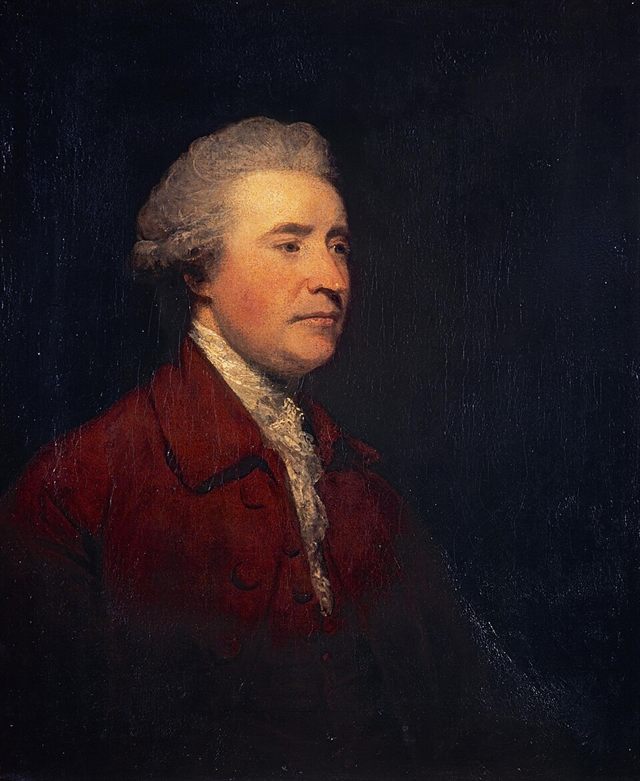
Who Distrusted the Blueprint · Statesman & Political Writer · 1729 – 1797
The Irish-born MP who defended the American colonists, spent fourteen years impeaching a governor of Bengal, and then wrote the most influential attack ever made on abstract rights.
Defend these ideas against Burke
Incandio is a free revision platform for the Pearson Edexcel International GCSE, and on it a topic counts as mastered only once you have learned it, proved it in questions, taught it back and defended it against the person with the strongest claim on it. Edmund Burke is that person for 4 topics on the course:
- Human rights — Religious Studies · Islam
- Human rights — Religious Studies · Hinduism
- Human rights — Religious Studies · Christianity
- Human rights — Religious Studies · Buddhism
Who was Burke?
Burke was born in Dublin in 1729 to a Protestant attorney and a Catholic mother, was educated at Trinity College, and came to London intending the law and abandoning it. He entered the House of Commons in 1765 as a Rockingham Whig and stayed in Parliament for nearly thirty years. He was never given high office. What he had instead was the ability to write, and he used it on three causes that his later reputation tends to hide. He argued through the 1770s that the American colonists were asserting the rights of Englishmen and that the ministry's policy was both unjust and stupid. He campaigned for the relief of Catholic disabilities in Ireland, at the cost of his seat at Bristol. And from 1786 he led the impeachment of Warren Hastings, Governor-General of Bengal, over the conduct of the East India Company, prosecuting the case for fourteen years and speaking for four days at the opening; Hastings was acquitted and Burke was left exhausted and mocked. Then came 1790 and the Reflections on the Revolution in France, written when most of his own party were welcoming events in Paris. Its argument is that rights are not deduced from a theory of man in the abstract but inherited as a concrete entitlement within a particular society, and that a generation which tears up its inheritance in the name of a principle will find it has destroyed the only machinery by which anything was actually protected. He asked what use it is to discuss a man's abstract right to food or medicine when the question is how he is to get any. The book cost him Fox's friendship and split the Whigs. He died in 1797 with the war he had predicted still running.
Major achievements
- Reflections on the Revolution in France (1790), the founding text of modern conservatism
- Led the impeachment of Warren Hastings from 1786, speaking four days at the opening
- Argued through the 1770s for conciliation with the American colonies
- Campaigned for the relief of Catholic disabilities, and lost his Bristol seat for it
Life in brief
- 1729 — Born in Dublin: To a Protestant attorney and a Catholic mother.
- 1765 — Enters Parliament: As a Rockingham Whig; he stays nearly thirty years.
- 1775 — Speech on Conciliation with America: Arguing the colonists claim the rights of Englishmen.
- 1780 — Loses the Bristol seat: Partly over Catholic relief and free trade with Ireland.
- 1788 — Opens the Hastings impeachment: Speaking for four days in Westminster Hall.
- 1790 — Reflections on the Revolution in France: Written while his own party welcomed the Revolution.
- 1791 — Breaks with Fox: Publicly, in the Commons, and permanently.
- 1797 — Dies at Beaconsfield: The war he predicted still running.
Explore the life of Burke — five chapters
- A Dublin Outsider in London — Two religions in one household
- The American Argument — Conciliation, and why the ministry was being stupid
- Fourteen Years Against Warren Hastings — What a company did in Bengal
- The Reflections — 1790, and the abstract right to food
- Breaking with Fox — A friendship ended in public
Read the five-chapter life of Edmund Burke →
Begin
- Start a conversation with Burke — a dramatised, historically grounded AI portrayal
- Read the Historical Brief
- Explore the life of Burke — five chapters
- Find your course · Meet all 280 figures