Historical figure · Pearson Edexcel International GCSE revision on Incandio
Galen
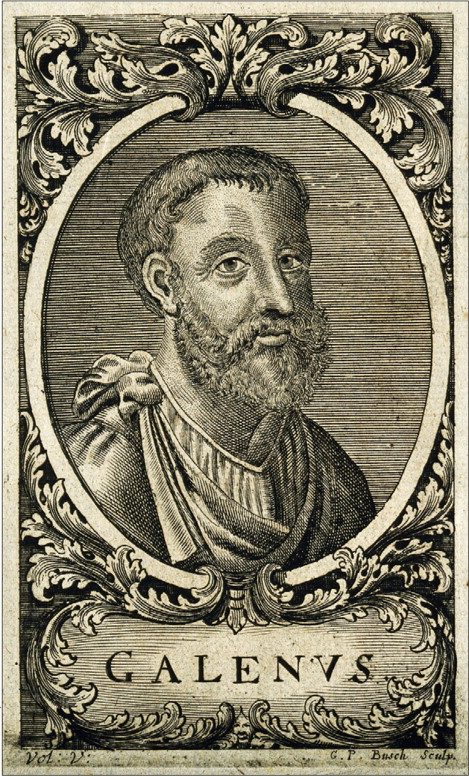
The Physician Who Ruled for Fourteen Centuries · Physician & Anatomist · c. 129 – c. 216 AD
The Greek physician of the Roman Empire whose writings on anatomy, the four humours and treatment by opposites became the authority of European and Islamic medicine for some fourteen hundred years.
Why Galen is on Incandio
Incandio is a free revision platform for the Pearson Edexcel International GCSE. Its historical figures are the people a student learns from, questions and — where a specification topic is theirs — defends an idea against. Galen can be questioned here in a dramatised, historically grounded portrayal, and the five-chapter life below is written to be read alongside the course.
Who was Galen?
Galen was born in Pergamon around 129 AD, the son of a wealthy architect, Nicon, who set him to medicine after a dream. He studied at Smyrna, Corinth and Alexandria, and from about 157 was physician to the gladiators of the high priest of Asia in Pergamon, where wounds taught him anatomy. In 162 he went to Rome and became famous for public demonstrations on living animals — most famously cutting the nerves of a pig's larynx to show that the voice is controlled from the brain. He showed that arteries carry blood, not air. He left Rome during the pestilence of 166, was recalled by Marcus Aurelius, and served the imperial family, including Commodus. Because human dissection was not allowed, he dissected apes, pigs and oxen and assumed humans were built the same — which produced lasting errors. He developed the Hippocratic theory of the four humours, treated by opposites and by bloodletting, and wrote an enormous body of work; much was lost in the fire of 192. His date of death is uncertain: ancient and Arabic sources point to somewhere between about 200 and 216.
Major achievements
- Proved by experiment that the arteries contain blood, not air
- Showed with the pig demonstration that the brain, through the nerves, controls the voice
- Systematised Hippocratic medicine into a theory of four humours and treatment by opposites that lasted for centuries
- Insisted that the physician learn anatomy by observation and dissection
- Wrote a body of medical work so large that it shaped Islamic and medieval European teaching
Life in brief
- c. 129 — Born in Pergamon: The year is approximate.
- c. 157 — Physician to the gladiators: Learns anatomy from wounds in Pergamon.
- 162 — Arrives in Rome: Public demonstrations make him famous.
- 166 — Leaves Rome during the pestilence: Recalled by Marcus Aurelius soon after.
- 192 — Fire at the Temple of Peace: Many of his books and drugs are destroyed.
- c. 216 — Dies: Sources disagree; some place his death around 200.
Explore the life of Galen — five chapters
- A Dream in Pergamon — An architect's son sent to medicine by a god
- Surgeon to the Gladiators — Wounds as windows into the body
- The Squealing Pig — Anatomy as public theatre in Rome
- Blood, Phlegm and Bile — The theory that ruled medicine
- The Fire and the Long Afterlife — Books lost in a night, authority kept for centuries
Read the five-chapter life of Galen →
Begin
- Start a conversation with Galen — a dramatised, historically grounded AI portrayal
- Read the Historical Brief
- Explore the life of Galen — five chapters
- Find your course · Meet all 280 figures