Explore Their Life · Pearson Edexcel International GCSE revision on Incandio
Harper Lee: A Life in Five Chapters
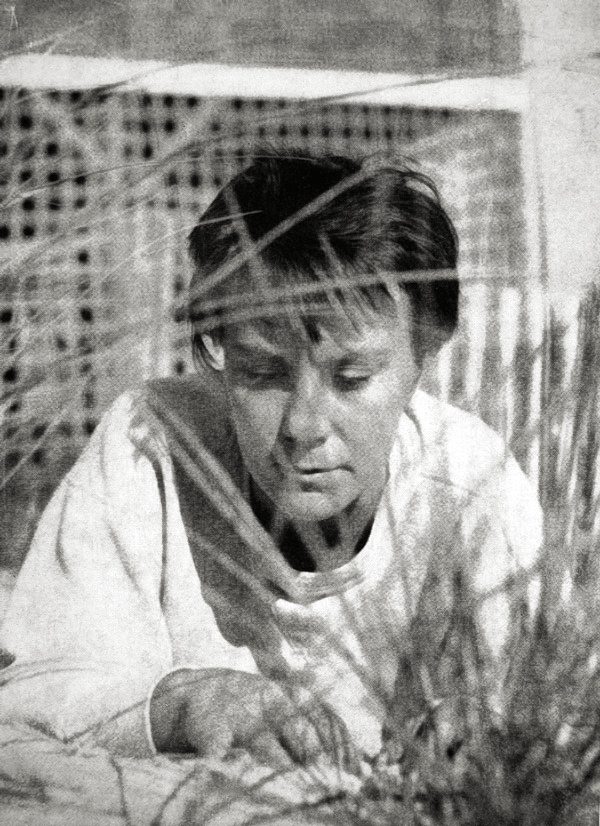
1926–2016
She wrote one of the most read novels in the English language, refused to explain it for fifty years, and then a second book appeared that changed how people read the first.
*To Kill a Mockingbird* has sold over forty million copies and is taught in classrooms worldwide. Its author gave almost no interviews after 1964, helped Truman Capote research *In Cold Blood* without adequate credit, and published a second book at eighty-nine under circumstances that were investigated. These five chapters follow the record.
The five chapters
- Monroeville — A lawyer father, a strange neighbour, and a boy called Truman
- A Year's Wages — A Christmas present, and two years of rewriting
- Kansas — The research she did for In Cold Blood
- What the Novel Does and Does Not Do — Fifty years of praise and objection
- Go Set a Watchman — A second book, fifty-five years later
Chapter 1 · Monroeville
A lawyer father, a strange neighbour, and a boy called Truman
1926 – 1949 · Monroeville, Alabama · Tuscaloosa · Oxford
Nelle Harper Lee was born on 28 April 1926 in Monroeville, Alabama, a small county town, the youngest of four. She used her middle name professionally because she did not want to be called Nellie.
Her father, Amasa Coleman Lee, was a lawyer, a newspaper owner and a state legislator. In 1919 he defended two Black men, a father and son, accused of murdering a white storekeeper. Both were convicted, hanged and mutilated. He never took another criminal case. He is the origin of Atticus Finch, though the fictional lawyer's politics are a good deal more advanced than the real man's, at least until his later years.
Her mother suffered from mental illness and was often withdrawn.
Next door lived the Faulk family, whose young relative Truman Persons — later Truman Capote — spent his summers there, dumped by his mother. He and Nelle were inseparable: an odd, small, precocious boy and a tomboy who fought other children, sharing a typewriter her father gave them. He becomes Dill in the novel. A reclusive neighbour who was said never to leave his house supplied Boo Radley.
She studied at Huntingdon College and then law at the University of Alabama, spending a summer on exchange at Oxford, and left in 1949 six months short of a degree — to her father's considerable disappointment — and moved to New York to write.
She worked as an airline reservations clerk and wrote in the evenings for seven years.
Why this matters
Almost everything in Mockingbird has a documented Monroeville original — which is why the novel reads as testimony as much as invention.
You have the town the novel came from. What would you ask her?
Ask Harper
- “How close is Atticus Finch to your father?”
- “What happened in your father's 1919 case?”
- “What was Truman Capote like as a child?”
- “Why leave law school six months from a degree?”
- “What was Monroeville like in the 1930s?”
Chapter 2 · A Year's Wages
A Christmas present, and two years of rewriting
1956 – 1960 · New York
At Christmas 1956 Lee's friends Michael and Joy Brown — he was a Broadway composer who had just had a windfall — gave her an envelope. Inside was a note saying they were giving her a year's wages so that she could write whatever she pleased.
She took it. She quit the airline job and wrote.
What she delivered to the publisher J. B. Lippincott in 1957 was a manuscript called *Go Set a Watchman*, about a grown woman returning to Alabama from New York. Her editor, Tay Hohoff, thought the flashbacks to the narrator's childhood were the best part of it and told her the book she should write was that one.
Two years of rewriting followed — Hohoff described it as more than editing and closer to reconstruction — and by all accounts it was arduous. Lee at one point threw the manuscript out of a window into the snow and had to be talked into retrieving it.
*To Kill a Mockingbird* was published on 11 July 1960 and won the Pulitzer Prize the following year. The 1962 film, with Gregory Peck as Atticus, made it permanent; Lee and Peck became close friends, and she gave him her father's pocket watch after his Academy Award.
The novel is narrated by Scout Finch, looking back on ages six to nine in a Depression-era Alabama town. Her father defends Tom Robinson, a Black man falsely accused of raping a white woman, and loses despite demonstrating that the accusation is impossible. Alongside it runs the children's fear of the unseen neighbour, Boo Radley, who saves their lives.
The two plots make one argument: that people are destroyed by what their neighbours assume about them.
“You never really understand a person until you consider things from his point of view.”
— Harper Lee, To Kill a Mockingbird, chapter 3, 1960
Why this matters
Mockingbird exists because an editor identified a better book inside a weaker one — the clearest single example in American publishing of what editing can do.
You have the book being made. What would you ask her?
Ask Harper
- “What did the Browns' gift actually make possible?”
- “How much did Tay Hohoff change the book?”
- “Why tell the story through a child?”
- “How do the Tom Robinson and Boo Radley plots connect?”
- “Did you throw the manuscript into the snow?”
Chapter 3 · Kansas
The research she did for In Cold Blood
1959 – 1966 · Holcomb, Kansas · New York
In November 1959 a family of four was murdered on a farm near Holcomb, Kansas. Truman Capote was sent by *The New Yorker* to write about the effect on the town, and asked Lee to come with him as, in his phrase, his assistant researchist.
The arrangement worked because of a plain fact: Capote was a small, flamboyant, high-voiced New Yorker in a conservative Kansas farming town, and people would not talk to him. Lee was plain-spoken, from a small southern town, and put people at ease. She befriended the wife of the lead investigator, which opened the case files, and she took extensive notes — by some accounts running to hundreds of pages — which Capote drew on heavily.
*In Cold Blood* was published in 1966 to enormous success and made Capote's fortune. He dedicated it to Lee and his partner Jack Dunphy. He did not describe her contribution in the text, and in interviews he gave the impression the research had been his.
By several accounts the friendship never recovered. When Lee won the Pulitzer for *Mockingbird* and Capote did not for *In Cold Blood*, the imbalance worsened. He drank heavily and the relationship faded; Lee did not attend his memorial in 1984.
Meanwhile she stopped giving interviews. She gave her last substantial one in 1964, in which she said she had hoped for a quick and merciful death at the hands of reviewers and had instead been given a form of encouragement she had not expected.
She worked for years on a non-fiction book about an Alabama preacher accused of murdering relatives for insurance money, provisionally called *The Reverend*. She never finished it.
Why this matters
Lee's uncredited research for In Cold Blood is a documented case of a woman's substantial contribution being absorbed into a male colleague's celebrated work.
You have Kansas. What would you ask her?
Ask Harper
- “Why would people in Holcomb talk to you and not Capote?”
- “How much of In Cold Blood came from your notes?”
- “What happened to your friendship afterwards?”
- “Why did you stop giving interviews?”
- “What happened to The Reverend?”
Chapter 4 · What the Novel Does and Does Not Do
Fifty years of praise and objection
*To Kill a Mockingbird* is among the most taught novels in the English-speaking world and among the most frequently challenged in American schools. Both facts are worth taking seriously.
The case for it is strong. It gives young readers a clear, patient account of how prejudice operates in a community; the courtroom scenes make the mechanics of injustice legible; and Scout's narration lets a reader see adult hypocrisy through eyes that have not yet learned to accept it. Generations of American lawyers have said they entered the profession because of Atticus Finch.
The objections are also substantial, and most come from Black critics and educators rather than from those who want it banned for language.
Tom Robinson has almost no interior life. He is the case, not a character; he is described, defended and mourned, but the novel is not interested in what he thinks. Calpurnia exists largely in relation to the Finch family. The moral drama belongs to a white lawyer and his children, which makes it what critics call a white saviour narrative: racism is presented as something to be nobly opposed by decent white people rather than resisted by those subjected to it. The novelist Toni Morrison and others have argued that this is precisely why it has been so comfortable for white American readers for so long.
The use of racial slurs, unavoidable in the material, has produced repeated removals from school reading lists, sometimes at the request of Black families and sometimes over their objections.
Atticus's advice to Scout — that you never understand a person until you climb into their skin and walk around in it — is applied in the novel to the Ewells and to Boo Radley, and rather less to Tom Robinson's family.
None of this requires abandoning the book. It requires teaching it with the argument attached.
Why this matters
Mockingbird is the standard case for how a well-intentioned novel about racism can centre white moral experience — an argument every student who reads it should encounter.
You have the argument about the book. What would you ask her?
Ask Harper
- “Why does Tom Robinson have so little inner life?”
- “Is the novel a white saviour story?”
- “Should the book still be set in schools?”
- “Why did so many lawyers say Atticus made them join the profession?”
- “What did you want a young reader to take from it?”
Chapter 5 · Go Set a Watchman
A second book, fifty-five years later
2007 – 2016 and after · Monroeville · New York
Lee lived quietly between Monroeville and New York, followed golf and baseball, wrote letters, and turned down almost every request. She received the Presidential Medal of Freedom in 2007.
That same year she had a stroke, and afterwards lived in an assisted living facility with impaired sight and hearing.
In February 2015 her lawyer announced that the manuscript of *Go Set a Watchman* had been found and would be published. The circumstances were immediately questioned: Lee was eighty-eight, in poor health, and her sister Alice — a lawyer who had protected her interests for decades — had died two months earlier. The state of Alabama opened an investigation into possible elder abuse; investigators interviewed Lee and concluded the claims were unfounded, and Lee's own statement said she was happy as hell.
The book was published in July 2015 and sold over a million copies in its first week.
Its content distressed readers. In *Watchman*, set twenty years later, Scout returns from New York to discover that her father attends a citizens' council meeting and holds segregationist views, arguing that Black Alabamians are not ready for full civil rights. Readers who had grown up on Atticus as a moral ideal felt betrayed.
Scholars have been calmer, and largely agree it is best understood as the earlier draft that Tay Hohoff sent Lee away to rewrite — a first attempt, published as though it were a sequel. Read that way, it shows a novelist working out her material, and it is genuinely interesting: the disillusionment of a daughter who discovers that her father is a man of his place and time is the harder book, and Hohoff may have been right that the childhood one would reach more people.
Lee died on 19 February 2016, aged eighty-nine.
Why this matters
The publication of Go Set a Watchman raised a real question about consent and capacity in publishing, and permanently complicated the reading of a novel millions had taken as settled.
You have the second book. What would you ask her?
Ask Harper
- “Did you want Go Set a Watchman published?”
- “Is the Atticus of Watchman the same man?”
- “Which was the harder book to write?”
- “Why did you never publish another novel?”
- “What was it like to be famous and not want to be?”
What Harper changed
To Kill a Mockingbird has sold over forty million copies, remains among the most taught novels in the English-speaking world, and shaped how generations of readers first encountered American racial injustice. Lee also did substantial uncredited research for In Cold Blood, one of the founding works of literary non-fiction.
A debate that continues
Critics contest whether the novel's white-centred perspective limits its value as an account of racism, and the circumstances of Go Set a Watchman's publication in 2015 remain a live question about consent and capacity.
Keep exploring — ask Harper
- “How much of the novel came from things you actually saw?”
- “What did you think of the film?”
- “What would you change if you wrote it now?”
Related lives
- Maya Angelou — The Caged Bird's Voice
- John Steinbeck — Chronicler of the Dispossessed
- Arthur Miller — Conscience of the American Stage
Related themes
To Kill a Mockingbird · Race and justice in the American South · Authorship and editing
Debate Harper in the Agora
Reading is the start. On Incandio an idea counts as mastered only once you have argued it against the person with the strongest claim on it, in structured rounds marked against published descriptors.
- Argue Against Atticus — “Atticus Finch is not the moral hero this novel presents him as.”
Continue on Incandio
- Talk to Harper — every question on this page is one tap from being asked, and the same page carries the Historical Brief, the achievements and the timeline
- All 280 figures · Incandio — learn every idea, teach it, then defend it