Historical figure · Pearson Edexcel International GCSE revision on Incandio
Ibn Rushd
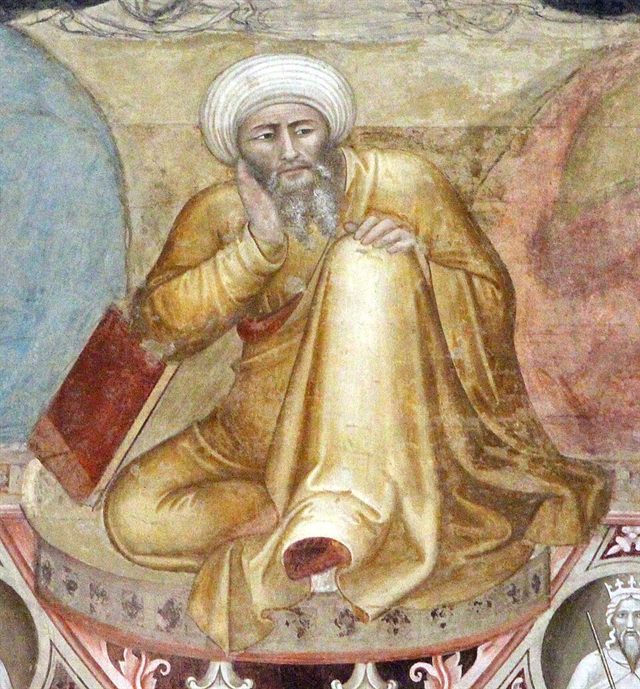
Who Answered The Incoherence · Jurist, Physician & Philosopher · 1126–1198
The chief judge of Córdoba who wrote the commentaries that carried Aristotle into medieval Europe, argued that revelation and demonstration cannot conflict, and was exiled for it near the end of his life.
Defend these ideas against Ibn Rushd
Incandio is a free revision platform for the Pearson Edexcel International GCSE, and on it a topic counts as mastered only once you have learned it, proved it in questions, taught it back and defended it against the person with the strongest claim on it. Ibn Rushd is that person for one topic on the course:
- The universe and the place of human beings — Religious Studies · Islam
Who was Ibn Rushd?
Ibn Rushd was born at Córdoba in 1126 into a family of chief judges — both his father and his grandfather had held the office he would hold — and was trained in law, medicine and philosophy. He was introduced at the Almohad court by Ibn Tufayl. The caliph Abu Yaqub Yusuf asked him what the philosophers held about whether the world had a beginning; Ibn Rushd, aware of how dangerous the question was, was cautious, and the caliph answered it himself at length, which settled the matter of what kind of court this was. He was commissioned to explain Aristotle plainly, and spent most of his working life doing it — short, middle and long commentaries on nearly the whole corpus. He served as judge at Seville and then at Córdoba, and as physician to the caliph. He wrote the Incoherence of the Incoherence, answering al-Ghazali's attack on the philosophers argument by argument, and the Decisive Treatise, which argues from inside Islamic law that philosophical study is not merely permitted but obligatory for those capable of it — and that where a demonstration and the apparent sense of a text pull apart, the text must be interpreted, because truth does not contradict truth. Around 1195, in a changed political climate, he fell out of favour: his books were burnt in public and he was banished to Lucena. The sentence was lifted shortly before he died at Marrakesh in 1198.
Major achievements
- Commentaries on nearly the whole of Aristotle, in three levels of detail
- The Decisive Treatise (Fasl al-Maqal), c. 1179
- The Incoherence of the Incoherence, answering al-Ghazali argument by argument
- Chief judge of Córdoba, the office his father and grandfather had held
Life in brief
- 1126 — Born at Córdoba: Into a family of chief judges.
- c. 1169 — Presented at court: By Ibn Tufayl; asked about the eternity of the world.
- 1169 — Judge at Seville: While beginning the Aristotle commentaries.
- c. 1179 — The Decisive Treatise: Argues philosophy is required of those able.
- 1182 — Physician to the caliph: And chief judge of Córdoba.
- 1195 — Banished to Lucena: His books burnt in public.
- 1198 — Dies at Marrakesh: The sentence lifted shortly before.
Explore the life of Ibn Rushd — five chapters
- A Family of Judges — Law first, and never afterwards abandoned
- The Caliph's Question — A commission that took thirty years
- The Decisive Treatise — A legal ruling that philosophy is required
- Answering the Incoherence — A century-late reply, argument by argument
- The Books in the Street — Disgrace, exile, and a reputation made elsewhere
Read the five-chapter life of Ibn Rushd →
Begin
- Start a conversation with Ibn Rushd — a dramatised, historically grounded AI portrayal
- Read the Historical Brief
- Explore the life of Ibn Rushd — five chapters
- Find your course · Meet all 280 figures