Historical figure · Pearson Edexcel International GCSE revision on Incandio
Jawaharlal Nehru
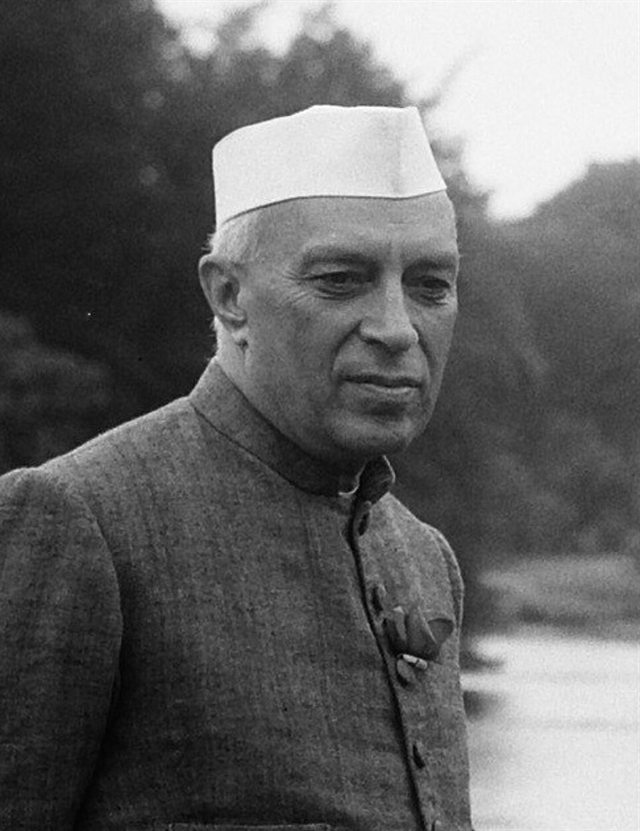
One Press Conference, In July 1946 · Congress President & Prime Minister · 1889–1964
The Congress leader imprisoned for nine years who became India's first Prime Minister, and whose July 1946 press conference Jinnah cited when he walked away from the Cabinet Mission Plan.
Defend these ideas against Nehru
Incandio is a free revision platform for the Pearson Edexcel International GCSE, and on it a topic counts as mastered only once you have learned it, proved it in questions, taught it back and defended it against the person with the strongest claim on it. Jawaharlal Nehru is that person for one topic on the course:
- Quit India and the Cripps Mission — History · Colonial rule and the nationalist challenge in India, 1919–47
Who was Nehru?
Born in Allahabad in 1889 to a wealthy Congress family, educated at Harrow and Trinity College Cambridge and called to the bar at the Inner Temple, Nehru was drawn into the movement by Gandhi and imprisoned for a total of about nine years. He was Congress President in 1929, 1936–37 and 1946, pressing the party towards complete independence and towards socialism and industrial planning. On 10 July 1946 he told a Bombay press conference that the Constituent Assembly would be sovereign and free to modify the Cabinet Mission Plan; Jinnah cited that sentence when the League withdrew its acceptance. Nehru took office as Prime Minister on 15 August 1947 and served until his death in 1964.
Major achievements
- Pressed Congress to adopt complete independence as its aim at Lahore in 1929
- Led India as its first Prime Minister for seventeen years
- Built a secular constitutional settlement in a country partitioned on religious lines
- Founded the non-aligned movement with Nasser and Tito
Life in brief
- 1889 — Born in Allahabad: Educated at Harrow and Trinity College Cambridge.
- 1929 — Congress President at Lahore: Complete independence adopted as the aim.
- 1942 — Quit India and prison: Imprisoned until 1945, his longest term.
- 1946 — 10 July, Bombay: Says the Constituent Assembly will be free to modify the plan.
- 1947 — Prime Minister: Takes office on 15 August.
- 1964 — Dies in office: After seventeen years as Prime Minister.
Explore the life of Nehru — five chapters
- Harrow and Allahabad — A childhood between two countries and belonging to neither
- Nine Years Inside — Where the books were written
- The Transfer of Power — Midnight, and the accounting afterwards
- Building a State — Elections, dams, and a constitution that outlasted him
- 1962 — The war that ended him
Read the five-chapter life of Jawaharlal Nehru →
Begin
- Start a conversation with Nehru — a dramatised, historically grounded AI portrayal
- Read the Historical Brief
- Explore the life of Nehru — five chapters
- Find your course · Meet all 280 figures