Explore Their Life · Pearson Edexcel International GCSE revision on Incandio
John Snow: A Life in Five Chapters
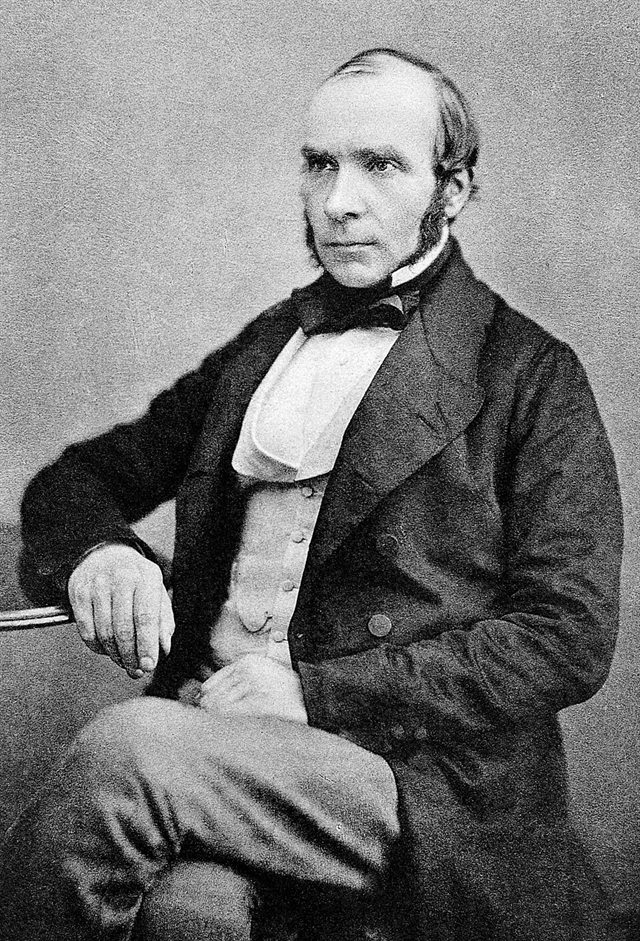
1813–1858
A labourer's son who gave chloroform to Queen Victoria, proved that cholera travelled in water, was rejected by the government of the day, and died at forty-five without ever seeing a germ.
Snow did two entirely separate pieces of first-rank work and is remembered for a pump handle. These five chapters follow the apprenticeship in a cholera-struck colliery, the anaesthetics that made him famous in his lifetime, Broad Street, the experiment that actually proved the case, and a rejection that delayed the conclusion for years.
The five chapters
- Killingworth — An apprentice sent to a colliery in an epidemic
- The Anaesthetist — The work he was actually famous for
- Broad Street — The map, the pump, and what the handle did not do
- The Grand Experiment — Three hundred thousand people and two water companies
- Rejected — The right answer, refused, for the want of a mechanism
Chapter 1 · Killingworth
An apprentice sent to a colliery in an epidemic
1813 – 1836 · York · Newcastle · Killingworth
John Snow was born in York in 1813, the eldest of nine children of a labourer who worked at a coal yard by the river in one of the poorest and most flood-prone parts of the city. The house was near where the drains ran.
He was apprenticed at fourteen to a surgeon-apothecary in Newcastle. In 1831 cholera reached Britain for the first time, and his master sent him — an eighteen-year-old apprentice — to the colliery village of Killingworth to treat the miners. He watched the disease kill people over hours, in a community where men worked underground for long shifts with no sanitary arrangements at all, ate below ground with unwashed hands, and where whole families drank from the same sources.
He never wrote that Killingworth gave him the theory. What it gave him was a set of observations that did not fit the accepted explanation, and the memory of them is visible in his later work: cholera struck the gut first rather than the lungs, which is not what a disease carried in bad air should do, and it passed between people who shared food and water rather than between people who shared air.
In 1836 he walked most of the way from Newcastle to London — a journey of some hundreds of miles — to enrol as a student at the Hunterian School of Medicine. He qualified in 1838, became a vegetarian and a teetotaller, and set up in practice in Soho.
Why this matters
Snow's scepticism about miasma began with an eighteen-year-old's observations in a colliery, not with a theory he read.
An apprentice in a colliery epidemic, and a walk to London. What would you ask him?
Ask Snow
- “What did you see at Killingworth that did not fit the miasma explanation?”
- “Why does it matter that cholera strikes the gut and not the lungs?”
- “What was an apprenticeship to a surgeon-apothecary actually like?”
- “Why walk to London rather than take the coach?”
- “Did growing up beside the drains in York shape what you noticed?”
Chapter 2 · The Anaesthetist
The work he was actually famous for
1846 – 1858 · London · Buckingham Palace
Ether reached London in 1846 and chloroform followed in 1847, and both were given by anybody who happened to be holding the sponge: a student, a porter, the surgeon's assistant. Doses were guessed. People died.
Snow made anaesthesia into a subject. He worked out how much vapour a given volume of air would carry at a given temperature, designed inhalers that delivered a measured concentration rather than a soaked cloth, published tables, and studied the depth of narcosis in stages so that a practitioner could tell where a patient was. He became the first person in Britain who could sensibly be called a specialist anaesthetist, and surgeons asked for him by name.
In April 1853 he was called to Buckingham Palace and administered chloroform to Queen Victoria at the birth of Prince Leopold, in small measured doses on a handkerchief. He did it again in 1857 for Princess Beatrice.
It mattered far beyond the palace. There had been serious objection to the use of anaesthesia in childbirth on religious grounds, and clerical opposition did not survive the Queen having used it. Its use spread quickly afterwards.
In his lifetime this was his reputation. The cholera work was a minority interest of a man known as the best anaesthetist in England, and the two are almost never taught together.
Why this matters
Snow was famous in his lifetime as an anaesthetist, and the Queen's use of chloroform in 1853 is why anaesthesia in childbirth became normal.
A measured dose on a handkerchief at Buckingham Palace. What would you ask him?
Ask Snow
- “How did you work out how much chloroform a patient was receiving?”
- “What was it like to be called to Buckingham Palace?”
- “Why did anyone object to pain relief in childbirth?”
- “How dangerous was anaesthesia before you standardised it?”
- “Which work did you expect to be remembered for?”
Chapter 3 · Broad Street
The map, the pump, and what the handle did not do
August – September 1854 · Soho · Broad Street
In late August 1854 cholera broke out in Soho, a few streets from Snow's house, and killed several hundred people in about ten days. It was one of the most concentrated outbreaks ever recorded in Britain.
Snow went round the district with a list of deaths from the General Register Office and asked, at each address, where the household drew its water. He drew the result as a map with a bar for each death at the house it occurred in, and the deaths clustered around the pump in Broad Street.
The anomalies did more work than the cluster. The workhouse in the same street had its own well and almost no deaths among several hundred inmates. The brewery on the street had its own supply and its men drank beer, and had none. A widow in Hampstead who had liked the taste of Broad Street water and had it carted to her every few days died of cholera, as did a niece who visited her, and neither had been in Soho.
On 7 September he persuaded the parish Board of Guardians to remove the pump handle, and they did so the next day.
The outbreak was already declining. Snow said so himself. Removing the handle probably prevented a resurgence and it did not stop the epidemic, and the version in which one man ends an outbreak by taking off a handle is the part of the story that is not true. What was decisive was the map, the anomalies and the questions asked at the doors.
Why this matters
The Broad Street investigation is the foundation of epidemiology, and the pump handle — the part everybody remembers — is the least important thing in it.
A map, a workhouse, a brewery and a widow in Hampstead. What would you ask him?
Ask Snow
- “Why did the workhouse and the brewery matter so much to your argument?”
- “What did the widow in Hampstead prove?”
- “Was removing the pump handle worth doing if the outbreak was already falling?”
- “How did you persuade the Board of Guardians?”
- “Why draw it as a map at all?”
Chapter 4 · The Grand Experiment
Three hundred thousand people and two water companies
1854 – 1855 · South London · The Thames
The work Snow himself thought decisive was not Broad Street. It was in south London, where two companies supplied water to the same districts, sometimes to adjoining houses in the same street, and where the residents had not chosen and mostly did not know which company served them.
The Lambeth company had moved its intake upstream of the London sewage discharges in 1852. The Southwark and Vauxhall company had not. Snow called it an experiment on the grandest scale: over three hundred thousand people of every class, divided into two groups by a decision none of them had made, in the same air, the same streets and the same conditions.
He went from house to house establishing which company supplied each, and where householders did not know he developed a chemical test on a water sample, because the two supplies had different salt contents.
The result was that cholera mortality among Southwark and Vauxhall customers was many times that among Lambeth customers in the same neighbourhoods. It is the first large controlled comparison in the history of public health, and it disposes of every objection about air, poverty, occupation and altitude at once, because both groups shared them.
It is what should be taught as Snow's achievement. It is harder to draw than a map, which is probably why the pump handle won.
Why this matters
The south London comparison is the piece of work that actually proved the case, and it was a controlled study before anybody had a word for one.
Two companies, one street, three hundred thousand people. What would you ask him?
Ask Snow
- “Why was the south London study stronger evidence than Broad Street?”
- “How did you find out which company supplied a house?”
- “What objections did the two-group design answer at once?”
- “How long did the door-to-door work take you?”
- “Did you think this would settle it?”
Chapter 5 · Rejected
The right answer, refused, for the want of a mechanism
1855 – 1858 · London · Westminster
In 1855 a parliamentary committee took evidence on the sanitary condition of London, and Snow gave it. The Board of Health's own committee on the 1854 epidemic examined his conclusions and rejected them, stating that the evidence did not support the theory that cholera was communicated through drinking water.
There were two reasons and one of them was reasonable. Snow could not say what was in the water. He could show that people who drank it died and that people who did not drink it did not, but he had no organism to point to, and the scientific establishment of 1855 was not obliged to accept a cause it could not identify. Germ theory was six years away and Koch's cholera vibrio was nearly thirty.
The second reason was less respectable. Snow had also given evidence for the offensive trades — tanners, boilers of bones — against a bill to restrict them, on the grounds that smells did not transmit disease, which was correct and made him look like a man arguing for industry against public health. The Lancet's obituary of him in 1858 was three sentences long and mentioned only the anaesthetics.
He died in June 1858 of a stroke, at forty-five, in the week the Great Stink closed Parliament. The sewers Bazalgette then built removed cholera from London — for reasons Snow had established and Chadwick's followers did not accept.
The Lancet published a retraction of its obituary in 2013, a hundred and fifty-five years late.
Why this matters
Snow was rejected because he could not name the agent, which is a reasonable scientific objection and was still wrong.
A right answer refused, and an obituary of three sentences. What would you ask him?
Ask Snow
- “Could you have persuaded them without naming what was in the water?”
- “Was giving evidence for the offensive trades a mistake?”
- “What would germ theory have given you in 1855?”
- “Did Bazalgette's sewers vindicate you or Chadwick?”
- “How should a scientist argue for a conclusion they cannot yet explain?”
What Snow changed
Snow established that cholera is waterborne twenty-nine years before the organism was identified, and the methods he used to do it — mapping cases, questioning households, comparing two populations that differ in one respect — are the methods of epidemiology. He also made anaesthesia a measured, specialist practice and gave chloroform to Queen Victoria, which is what he was famous for while he was alive.
A debate that continues
Was the Board of Health's rejection of Snow a failure of imagination or a defensible refusal to accept a cause with no identified agent? Historians of science disagree about how much the 1855 committee can fairly be blamed.
Keep exploring — ask Snow
- “Should evidence be acted on before the mechanism is understood?”
- “Why is the pump handle remembered and the south London study forgotten?”
- “Can being right for the wrong reason still save lives?”
Related lives
- Edwin Chadwick — Wrong Theory, Right Drains
- Robert Koch — The Method Was The Argument
- Louis Pasteur — Father of Germ Theory
Related themes
Cholera and public health · The origins of epidemiology · Anaesthesia
Continue on Incandio
- Talk to Snow — every question on this page is one tap from being asked, and the same page carries the Historical Brief, the achievements and the timeline
- All 280 figures · Incandio — learn every idea, teach it, then defend it