Historical figure · Pearson Edexcel International GCSE revision on Incandio
John Stuart Mill
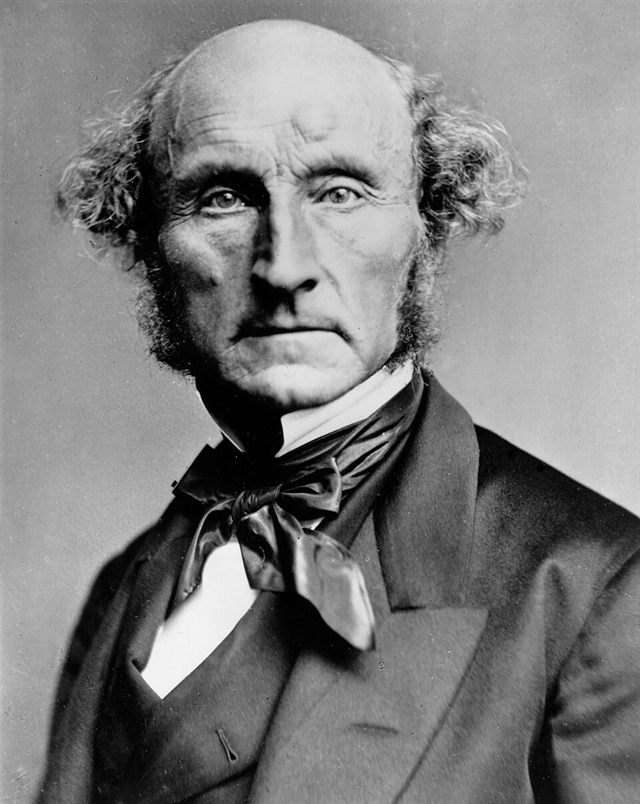
Who Drew the Line Around Other People · Philosopher & MP · 1806–1873
The philosopher who wrote the principle the modern argument about law and morality is still conducted with, spent thirty-five years at a desk in the East India Company, and moved the first parliamentary amendment for women's suffrage.
Defend these ideas against John
Incandio is a free revision platform for the Pearson Edexcel International GCSE, and on it a topic counts as mastered only once you have learned it, proved it in questions, taught it back and defended it against the person with the strongest claim on it. John Stuart Mill is that person for 6 topics on the course:
- Sin and crime — Religious Studies · Sikhism
- Sin and crime — Religious Studies · Judaism
- Sin and crime — Religious Studies · Islam
- Sin and crime — Religious Studies · Hinduism
- Sin and crime — Religious Studies · Christianity
- Sin and crime — Religious Studies · Buddhism
Who was John?
John Stuart Mill was born at Pentonville in 1806 and educated entirely by his father James, on Bentham's principles and as a deliberate experiment: Greek at three, Latin at eight, no holidays, and no boys his own age in case they made him ordinary. At twenty he asked himself whether achieving every object he was working for would make him happy, answered no, and spent months unable to feel anything at all. He credited Wordsworth's poetry with beginning to end it — a resource his education had given him no reason to expect. From 1823 he worked at the East India Company, rising to Examiner of Indian Correspondence, until the Company was wound up in 1858; every book he wrote was written alongside that job. He knew Harriet Taylor for two decades while she was married to another man, married her in 1851 after her husband's death, and lost her in 1858 at Avignon, where he then took a house to be near her grave. On Liberty appeared in 1859, dedicated to her and credited by Mill as effectively her work as much as his; its central claim is that power may be exercised over somebody against their will only to prevent harm to others, and that neither their own good nor anybody's disapproval is a sufficient warrant. Utilitarianism followed in 1863, revising the system he was raised in by arguing that pleasures differ in kind and not only in quantity. The Subjection of Women came in 1869. He sat as MP for Westminster from 1865 to 1868 and in 1867 moved an amendment to the Reform Bill to replace the word 'man' with 'person', which was defeated by 196 votes to 73 and was the first time the question reached the floor. He died at Avignon in 1873 and is buried beside Harriet.
Major achievements
- On Liberty (1859), which set the terms of the modern argument about law and morality
- Utilitarianism (1863), revising Bentham by distinguishing higher and lower pleasures
- The Subjection of Women (1869)
- The 1867 amendment to substitute 'person' for 'man' in the Reform Bill
Life in brief
- 1806 — Born at Pentonville: Educated by his father as a deliberate experiment.
- 1823 — Enters the East India Company: A career that ran alongside all the writing.
- 1826 — The crisis: At twenty, he could not find any object worth wanting.
- 1851 — Marries Harriet Taylor: After a friendship of some twenty years.
- 1859 — On Liberty: Published the year after Harriet's death, and dedicated to her.
- 1865 — MP for Westminster: Elected without campaigning in the usual way.
- 1867 — The suffrage amendment: 'Person' for 'man'; defeated 196 to 73.
- 1873 — Dies at Avignon: Buried beside Harriet.
Explore the life of John — five chapters
- An Education Designed by Somebody Else — Greek at three, and no other children
- The Question at Twenty — Suppose you got everything you are working for
- Twenty Years, and Then Seven — A collaboration nobody would credit
- One Very Careful Sentence — And everything it does not settle
- One Parliament — 'Person' for 'man', defeated 196 to 73
Read the five-chapter life of John Stuart Mill →
Begin
- Start a conversation with John — a dramatised, historically grounded AI portrayal
- Read the Historical Brief
- Explore the life of John — five chapters
- Find your course · Meet all 280 figures