Historical figure · Pearson Edexcel International GCSE revision on Incandio
Lucretius
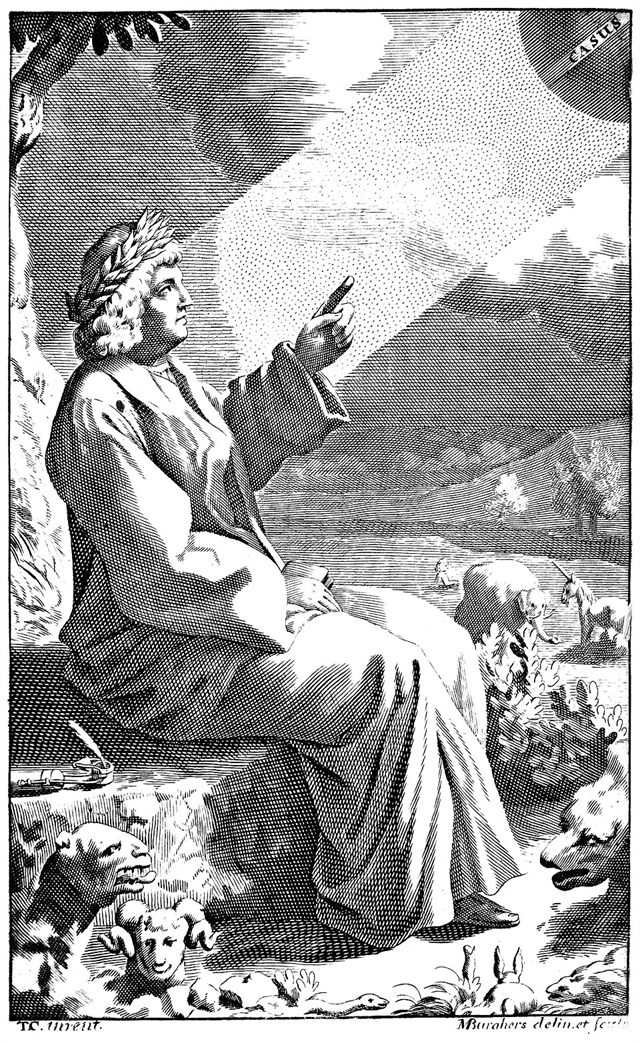
Who Wrote Physics as a Poem · Poet & Philosopher · c. 99 – c. 55 BC
The Roman poet who set out to cure his readers of the fear of death by explaining, in six books of hexameter verse, that everything is atoms and empty space and that the mind is made of matter.
Defend these ideas against Lucretius
Incandio is a free revision platform for the Pearson Edexcel International GCSE, and on it a topic counts as mastered only once you have learned it, proved it in questions, taught it back and defended it against the person with the strongest claim on it. Lucretius is that person for 6 topics on the course:
- Human nature and the human condition — Religious Studies · Sikhism
- Human nature and the human condition — Religious Studies · Judaism
- Human nature and the human condition — Religious Studies · Islam
- Human nature and the human condition — Religious Studies · Hinduism
- Human nature and the human condition — Religious Studies · Christianity
- Human nature and the human condition — Religious Studies · Buddhism
Who was Lucretius?
Almost nothing certain is known about the life of Lucretius, and saying so plainly is the honest place to start. He was a Roman of the first century BC, writing while the Republic was tearing itself apart, and his single surviving work — De Rerum Natura, On the Nature of Things — is addressed to a patron named Memmius, probably the praetor Gaius Memmius. Cicero's brother Quintus read the poem, and Cicero mentions it in a letter of 54 BC, which is the firmest date attached to it. A hostile Christian note written more than four centuries later claims he was driven mad by a love potion and killed himself in his forties; there is no independent evidence for it and the story looks like polemic, but it is repeated so often that a learner meets it before they meet the poem. What survives is the work, and the work is extraordinary. It is a complete physics, ethics and psychology, argued in verse, expounding the system of Epicurus, whom Lucretius treats as a liberator rather than as a teacher. Nothing comes from nothing; everything is made of indivisible particles moving in void; the world was not designed and shows it, being three-quarters mountain, marsh and sea. Book III is the part that matters most for this course: some thirty arguments that the mind is bodily — it grows with the body, is disturbed by wine and by disease, fails with age, and is affected by a blow to the head — and therefore ends with the body. From this he draws the conclusion the whole poem exists for: death is nothing to us, because where death is, we are not. He wanted this to be a consolation, not a taunt, and says so. The manuscript was nearly lost entirely; a single copy found in a German monastery in 1417 by Poggio Bracciolini is why we have it at all.
Major achievements
- De Rerum Natura, the only complete Epicurean system to survive from antiquity
- The fullest ancient argument that mind and soul are bodily and mortal (Book III)
- The symmetry argument about death, still discussed in philosophy today
- An account of the world's formation without design, from atoms and chance
Life in brief
- c. 99 BC — Born: Almost nothing about his life is securely recorded.
- — — Writes De Rerum Natura: Six books of hexameter verse addressed to Memmius.
- 54 BC — Cicero mentions the poem: In a letter to his brother Quintus — the firmest date attached to it.
- c. 55 BC — Dies: The poem appears to be unfinished.
- 1417 — The poem is recovered: Poggio Bracciolini finds a manuscript in a German monastery.
Explore the life of Lucretius — five chapters
- A Life We Do Not Have — What can and cannot honestly be said
- Atoms and Empty Space — A universe with nothing behind it
- The Mind Is Made of Matter — Book III, and thirty ways of saying it
- Death Is Nothing to Us — The argument the whole poem was built for
- The Poem That Nearly Vanished — 1417, and a German monastery
Read the five-chapter life of Lucretius →
Begin
- Start a conversation with Lucretius — a dramatised, historically grounded AI portrayal
- Read the Historical Brief
- Explore the life of Lucretius — five chapters
- Find your course · Meet all 280 figures