Explore Their Life · Pearson Edexcel International GCSE revision on Incandio
Nelson Mandela: A Life in Five Chapters
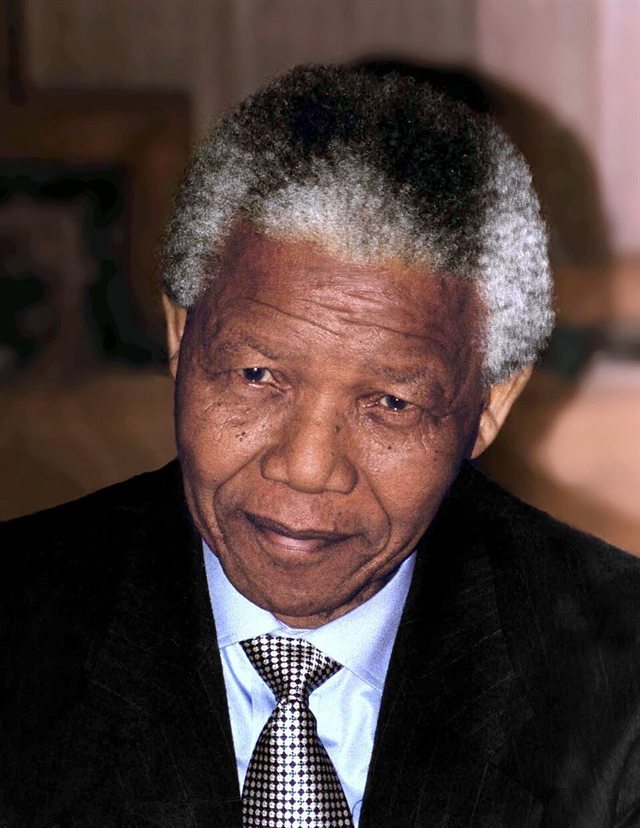
1918–2013
A lawyer who took up armed struggle, spent twenty-seven years in prison, and came out to negotiate with the government that had jailed him.
Mandela is often remembered as a gentle symbol of forgiveness, which removes the hardest and most interesting parts of his life: he founded an armed wing, refused conditional release for years, and made the deliberate political calculation that reconciliation would serve his people better than revenge. These five chapters follow the strategist.
The five chapters
- From Mvezo to Johannesburg — A chief's son, a mission school, and a runaway
- From Defiance to Umkhonto we Sizwe — Why he abandoned non-violence
- Rivonia and Robben Island — A speech from the dock and twenty-seven years
- Walking Out, and Keeping the Country Together — Four years when it could have collapsed
- Truth, Rugby and What Was Left Undone — Reconciliation, and the inequality that remained
Chapter 1 · From Mvezo to Johannesburg
A chief's son, a mission school, and a runaway
1918 – 1943 · Mvezo · Mqhekezweni · Fort Hare · Johannesburg
He was born on 18 July 1918 in the village of Mvezo in the Transkei and named Rolihlahla, a Xhosa name that colloquially means troublemaker. His father was a counsellor to the Thembu royal house and lost his chieftaincy after defying a colonial magistrate. On his first day at a Methodist school a teacher gave him the English name Nelson, as was routine.
When his father died, the boy was taken into the household of the Thembu regent at Mqhekezweni, where he watched the regent's court in session. He later said his idea of leadership came from those meetings: everyone spoke, the leader listened and summarised at the end, and consensus mattered more than command.
Mission education followed at Clarkebury and Healdtown, then the University of Fort Hare, then almost the only university open to Black South Africans. He was expelled in 1940 after joining a student boycott of the representative council.
Rather than accept a marriage the regent had arranged, he ran away to Johannesburg in 1941. He worked as a night watchman at a mine, then as an articled clerk at a law firm, finished his degree by correspondence and began studying law at Wits. In Johannesburg he met Walter Sisulu and Oliver Tambo, and in 1944 they founded the ANC Youth League to push an older, cautious organisation toward mass action.
Four years later the National Party won power and began legislating apartheid into a complete system.
Why this matters
Mandela's political education came from a traditional court and a mission school before it came from Marxism or liberalism — which is why his leadership style was consultative rather than commanding.
You have met the young man before the struggle. What would you ask him?
Ask Mandela
- “What did watching the regent's court teach you about leading?”
- “Why were you expelled from Fort Hare?”
- “Why did you run away to Johannesburg?”
- “What did apartheid legislation actually change after 1948?”
- “What did the Youth League want that the old ANC did not?”
Chapter 2 · From Defiance to Umkhonto we Sizwe
Why he abandoned non-violence
1952 – 1962 · Johannesburg · Sharpeville · Rivonia
In 1952 Mandela was volunteer-in-chief of the Defiance Campaign, in which thousands deliberately broke apartheid laws and courted arrest. That year he and Oliver Tambo opened the first Black-owned law firm in South Africa, and were overwhelmed with clients facing pass-law and eviction cases.
The Freedom Charter of 1955, adopted at a mass congress, declared that South Africa belonged to all who lived in it, Black and white — a multiracial commitment that mattered enormously later. Mandela was among 156 people charged in the Treason Trial that ran from 1956 to 1961; all were acquitted.
The turning point was Sharpeville. On 21 March 1960 police fired on a crowd protesting the pass laws, killing 69 people, many shot in the back. The government declared a state of emergency and banned the ANC.
Mandela concluded that non-violence had been a tactic, not a principle, and that it had been answered with bullets. In 1961 he helped found Umkhonto we Sizwe, the Spear of the Nation, and became its commander. Its initial strategy was sabotage of installations chosen to avoid loss of life, on the reasoning that it would damage the economy and give the state something to negotiate about. He travelled abroad for military training and support.
He was arrested in August 1962 near Howick, after a tip-off — later reporting indicated an American intelligence source — and sentenced to five years for leaving the country and inciting a strike.
Why this matters
Mandela's turn to armed struggle is essential to understanding him: he was not a pacifist, and he argued explicitly that the choice had been made by a government that met peaceful protest with lethal force.
You have the decision that defined his life. What would you ask him?
Ask Mandela
- “Why did you conclude non-violence had failed?”
- “How did you choose targets that would not kill people?”
- “Why did the Freedom Charter insist South Africa belonged to everyone?”
- “What was it like running a law firm under apartheid?”
- “Do you accept that armed struggle cost lives?”
Chapter 3 · Rivonia and Robben Island
A speech from the dock and twenty-seven years
1963 – 1990 · Pretoria · Robben Island · Pollsmoor
In 1963 police raided a farm at Rivonia and seized documents implicating the ANC's leadership. Mandela, already in prison, was tried with them on charges carrying the death penalty.
On 20 April 1964 he spoke from the dock for about four hours. Rather than deny the sabotage, he explained why it had been chosen, and ended by saying he had cherished the ideal of a democratic and free society in which all persons lived together in harmony and with equal opportunities — an ideal he hoped to live for, but for which, if needs be, he was prepared to die. The judge gave life imprisonment.
On Robben Island, prisoners broke limestone in a quarry whose glare permanently damaged his eyes; Black prisoners received the worst rations and shortest trousers by racial classification. He organised anyway. The prisoners ran what they called the University of Robben Island, teaching each other; he studied law by correspondence, and learned Afrikaans, on the reasoning that you must know your opponent's language and literature to negotiate with him.
He lost the years his children grew up in and was refused permission to attend his mother's funeral and his eldest son's.
In 1985 President Botha offered release if he renounced violence. Mandela's reply, read out publicly by his daughter, asked what freedom he was being offered when the organisation of the people remained banned, and said only free men could negotiate. He stayed in prison another five years, and from 1986 began secret talks on his own initiative — without telling the ANC leadership at first, a risk that could have destroyed him.
“It is an ideal for which I am prepared to die.”
— Statement from the dock, Rivonia Trial, 20 April 1964
Why this matters
Mandela's refusal of conditional release in 1985 turned imprisonment into a source of moral authority — and his decision to open talks alone showed the willingness to take personal risks that made a settlement possible.
You have twenty-seven years in a sentence. What would you ask him?
Ask Mandela
- “Why did you admit the sabotage instead of defending yourself?”
- “Why did you learn Afrikaans in prison?”
- “How did prisoners educate each other on Robben Island?”
- “Why refuse release in 1985?”
- “Why start talks without telling your own organisation?”
Chapter 4 · Walking Out, and Keeping the Country Together
Four years when it could have collapsed
1990 – 1994 · Cape Town · Boipatong · Johannesburg
Mandela walked out of Victor Verster Prison on 11 February 1990, aged seventy-one, watched live around the world. What followed was not a smooth transition but four of the most violent years in South African history: roughly 14,000 people died in political violence between 1990 and 1994, much of it between ANC supporters and the Inkatha Freedom Party, and a state 'third force' was later shown to have fuelled it.
Twice the process nearly broke. After the Boipatong massacre in 1992 the ANC suspended talks. In April 1993 the popular communist leader Chris Hani was assassinated by a white extremist, and the country expected an explosion. It was Mandela, not the president, who went on national television, noting that a white Afrikaner woman had risked her life to identify the killer, and asking South Africans not to let the murder destroy what they were building. Many observers regard that broadcast as the moment civil war was avoided.
He negotiated with F. W. de Klerk, whose government had legalised the ANC and released him, and with whom he shared the Nobel Peace Prize in 1993 — a pairing Mandela accepted while remaining publicly critical of de Klerk's record.
On 27 April 1994 South Africans of all races voted together for the first time, standing in queues that stretched for miles. Mandela became president on 10 May.
He served one term and stepped down in 1999 — a decision of enormous importance on a continent where liberation leaders had routinely stayed for life.
Why this matters
The 1990–94 negotiation is the leading modern example of a peaceful transfer of power from a repressive regime, and it depended on both sides' leaders restraining their own supporters.
You are at the point where it could have gone either way. What would you ask him?
Ask Mandela
- “What did you say to the country after Chris Hani was killed?”
- “How close did South Africa come to civil war?”
- “How did you negotiate with the men who imprisoned you?”
- “Why did you accept a shared Nobel Prize with de Klerk?”
- “Why leave office after one term?”
Chapter 5 · Truth, Rugby and What Was Left Undone
Reconciliation, and the inequality that remained
1994 – 2013 · Pretoria · Johannesburg · Qunu
As president, Mandela's central project was holding a country together that many expected to fragment. The Truth and Reconciliation Commission, chaired by Archbishop Desmond Tutu, offered amnesty in exchange for full public disclosure of politically motivated crimes. It produced an extraordinary public record of what the state had done, and it left many families angry that killers walked free and that reparations were minimal — a criticism that remains live.
His symbolic acts were deliberate and effective: keeping Afrikaner civil servants in post, visiting the widow of the architect of apartheid, and wearing the Springbok jersey — a hated symbol of white South Africa — to present the 1995 Rugby World Cup to the captain in front of a stadium of Afrikaners chanting his name.
What reconciliation did not do was redistribute. The negotiated settlement protected existing property, and South Africa entered the twenty-first century among the most unequal societies on earth, with land ownership and wealth still overwhelmingly racially patterned. Critics, including many in the ANC's own left, argue Mandela's government conceded too much economically to secure a political settlement. Defenders say the alternative was capital flight or civil war.
He was also slow on HIV/AIDS while in office and later said so openly, becoming a prominent campaigner and announcing publicly in 2005 that his son Makgatho had died of the disease in order to break the stigma.
He died on 5 December 2013, aged ninety-five, and was buried at Qunu.
Why this matters
South Africa's transition succeeded politically and left its economic inequality largely intact — which is why Mandela's legacy is genuinely contested inside the country he founded.
You have the presidency and its unfinished business. What would you ask him?
Ask Mandela
- “Was amnesty for confessed killers a fair price for the truth?”
- “Why wear the Springbok jersey in 1995?”
- “Did you concede too much on land and wealth?”
- “Why were you slow to act on HIV and AIDS?”
- “What did twenty-seven years take from you personally?”
What Mandela changed
Mandela led the negotiated end of apartheid and the creation of a constitutional democracy with one of the most protective bills of rights in the world. The Truth and Reconciliation Commission became a model studied by post-conflict societies from Latin America to the Balkans, and his voluntary departure after one term set a precedent for African leadership.
A debate that continues
Inside South Africa the argument continues over whether the settlement traded economic justice for political freedom, and whether the Truth and Reconciliation Commission delivered accountability or allowed perpetrators to escape it.
Keep exploring — ask Mandela
- “How do you forgive without letting injustice go unanswered?”
- “What did you learn in prison that changed your politics?”
- “What would you want the next generation to finish?”
Related lives
- Desmond Tutu — Voice of the Rainbow Nation
- Mahatma Gandhi — Mahatma · Father of the Indian Nation
- Martin Luther King Jr. — Reverend · Nobel Laureate · Prophet
Related themes
Apartheid and South Africa · Transitional justice · Decolonisation in Africa
Continue on Incandio
- Talk to Mandela — every question on this page is one tap from being asked, and the same page carries the Historical Brief, the achievements and the timeline
- All 280 figures · Incandio — learn every idea, teach it, then defend it