Explore Their Life · Pearson Edexcel International GCSE revision on Incandio
Saladin: A Life in Five Chapters
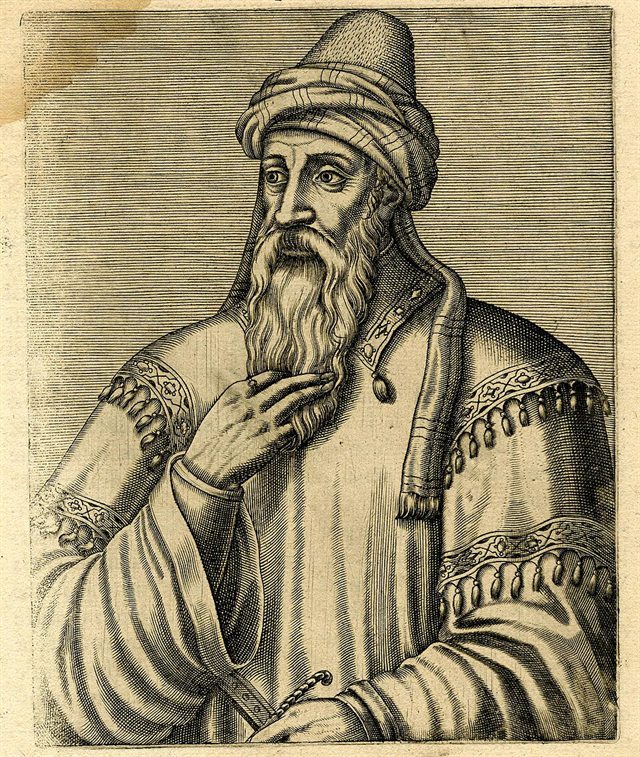
1137–1193
The Muslim sultan who united a divided region, recaptured Jerusalem from the Crusaders, and earned lasting respect even from his enemies.
Saladin led the Muslim world's response to the Crusades and became one of the most respected figures of the medieval age — admired by Muslims and, unusually, by many of his Christian opponents too. These five chapters follow his rise, his recapture of Jerusalem, his famous struggle with Richard the Lionheart, and the debate over his enduring reputation.
The five chapters
- A Rise Through Service — From officer to ruler of Egypt
- Unity and the Battle of Hattin — Turning the tide against the Crusaders
- The Recapture of Jerusalem — Mercy where mercy was not expected
- Saladin and the Lionheart — A struggle of mutual respect
- The Making of a Legend — Respected across the divide
Chapter 1 · A Rise Through Service
From officer to ruler of Egypt
c.1137 – 1174 · Syria · Egypt
Saladin, known in the Muslim world as Salah al-Din, was born around 1137 into a family of Kurdish origin serving Muslim rulers in the region of Syria. He grew up during the era of the Crusades, when Christian armies from Europe had captured territory in the Middle East, including the holy city of Jerusalem, and established Crusader states along the eastern Mediterranean coast. The Muslim world of the time was politically divided, and this disunity had helped the Crusaders succeed.
Saladin's early career was in the service of a powerful Muslim leader named Nur al-Din, who worked to unite Muslim forces against the Crusaders. As a young man, Saladin took part in campaigns in Egypt, and through a combination of ability, opportunity and circumstance, he rose to become the effective ruler of Egypt, one of the wealthiest and most important lands in the region.
Saladin was known for his personal piety, his generosity, and his sense of duty to the Muslim cause. Rather than simply enjoying his new power, he set about a larger project: uniting the divided Muslim lands of Egypt and Syria under a single leadership. He understood, as Nur al-Din had, that the Crusader states could only be seriously challenged if the fragmented Muslim world stopped fighting among itself and combined its strength. Building that unity would be the essential foundation of everything he later achieved.
Why this matters
Saladin understood that Muslim disunity had allowed the Crusaders to succeed, so uniting the region became the essential foundation of his later victories.
You have seen Saladin rise to rule Egypt. What would you ask him about his early career?
Ask Saladin
- “What were the Crusades, and how had they affected the region?”
- “How did the divisions in the Muslim world help the Crusaders?”
- “How did you rise from an officer to the ruler of Egypt?”
- “How did your faith shape your sense of duty?”
- “Why did uniting Egypt and Syria matter so much to your plans?”
Chapter 2 · Unity and the Battle of Hattin
Turning the tide against the Crusaders
1174 – 1187 · Syria · Egypt · Hattin
Over many years, Saladin worked to bring the Muslim lands of Egypt and Syria under his control, sometimes through diplomacy and alliance, sometimes through warfare against rival Muslim rulers. This process was neither quick nor bloodless, and Saladin has been criticised by some for fighting fellow Muslims to build his power. But by the 1180s he had largely succeeded, creating a unified Muslim state that surrounded the Crusader kingdom and could bring far greater strength to bear against it.
With the Muslim world united behind him, Saladin turned his full attention to the Crusaders. The decisive moment came in 1187 at the Battle of Hattin. Saladin skilfully manoeuvred the main Crusader army into a trap in the dry, waterless hills, cutting them off from water in the punishing heat. Exhausted and desperate with thirst, the Crusader force was overwhelmingly defeated. It was a catastrophic loss for the Crusader states, destroying the bulk of their fighting strength in a single day.
Hattin left the Crusader kingdom almost defenceless. With their army shattered, city after city fell to Saladin's forces in the weeks that followed. The way now lay open to the greatest prize of all — Jerusalem itself, the holy city sacred to Muslims, Christians and Jews alike, which the Crusaders had held for nearly ninety years. Saladin was about to achieve the goal that had eluded the Muslim world for generations.
Why this matters
The victory at Hattin destroyed the Crusader army and opened the road to Jerusalem, marking the turning point of the struggle in the Holy Land.
You have seen Saladin unite the region and win at Hattin. What would you ask him about these campaigns?
Ask Saladin
- “How did you unite the Muslim lands of Egypt and Syria?”
- “How do you respond to criticism that you fought fellow Muslims to gain power?”
- “How did you trap and defeat the Crusader army at Hattin?”
- “Why was Hattin such a devastating blow to the Crusaders?”
- “Why did so much depend on retaking Jerusalem?”
Chapter 3 · The Recapture of Jerusalem
Mercy where mercy was not expected
1187 · Jerusalem
In 1187, following his victory at Hattin, Saladin captured Jerusalem, the city sacred to three great religions and the ultimate goal of his campaign. It was the crowning achievement of his life and a moment of enormous significance for the Muslim world, which had longed to recover the holy city for nearly a century.
What happened next became central to Saladin's lasting reputation. When the Crusaders had first taken Jerusalem in 1099, they had massacred many of the city's Muslim and Jewish inhabitants — a bloody event remembered with horror. When Saladin retook the city, he acted very differently. Rather than take revenge in kind, he negotiated the surrender, allowed many inhabitants to ransom their freedom and leave safely, and treated the defeated with notable restraint. He even, by many accounts, showed generosity to those who could not afford the ransom. Christian holy sites and pilgrims were, in general, respected.
Saladin's conduct at Jerusalem — merciful where cruelty was expected and had precedent — deeply impressed observers on both sides, and it is a major reason he was remembered so favourably even by his Christian enemies. It should not be idealised into a simple fairy tale; Saladin was a hard commander who could be ruthless when he judged it necessary, and his mercy also served practical and political purposes. But the contrast with the earlier Crusader massacre was real and striking, and it established Saladin as a model of honourable conduct in war that has endured for centuries.
Why this matters
Saladin's restraint at Jerusalem, in contrast to the earlier Crusader massacre, shaped his reputation as a model of honour in war and shows that conquest need not mean slaughter.
You have seen Saladin retake Jerusalem with unexpected restraint. What would you ask him about it?
Ask Saladin
- “Why did you choose mercy when you recaptured Jerusalem?”
- “How did your conduct differ from the Crusaders' capture in 1099?”
- “Was your mercy purely honourable, or also strategic?”
- “How did you treat Christian holy sites and pilgrims?”
- “Why should we be careful not to idealise your reputation for mercy?”
Chapter 4 · Saladin and the Lionheart
A struggle of mutual respect
1189 – 1192 · The Holy Land · Acre · Jaffa
The fall of Jerusalem shocked Christian Europe and prompted a major new expedition, the Third Crusade, led by some of Europe's most powerful rulers — most famously King Richard the Lionheart of England. For several years, Saladin and the Crusaders, with Richard as their leading commander, fought a hard and evenly matched struggle along the coast of the Holy Land.
Both sides won victories and suffered setbacks. This was a brutal war with real atrocities, and it should not be romanticised: after the Crusaders captured the city of Acre, for example, Richard had a large number of Muslim prisoners killed, an act of great cruelty. Saladin, too, could be harsh with enemies. War in this period was savage on all sides.
Yet within this violence, a genuine mutual respect developed between Saladin and Richard, which became famous. Stories circulated — some true, some embellished by later storytellers — of the two leaders exchanging gifts and courtesies, of Saladin sending fruit and even his own physician when Richard fell ill. They never met face to face, but each recognised in the other a worthy and honourable opponent. In the end, neither side could win a total victory. In 1192 they agreed a treaty: Saladin kept Jerusalem, but Christian pilgrims were guaranteed safe access to the holy places. It was a pragmatic compromise that ended the fighting without either commander being truly defeated.
Why this matters
The struggle between Saladin and Richard shows both the brutality of the Crusades and the possibility of respect between enemies, ending in a realistic compromise rather than total victory.
You have seen Saladin's famous struggle with Richard the Lionheart. What would you ask him about it?
Ask Saladin
- “What was the Third Crusade, and who led it against you?”
- “How did respect develop between you and Richard the Lionheart?”
- “How much of the chivalry between you and Richard is true, and how much is legend?”
- “How brutal was the fighting during the Third Crusade?”
- “Why did the war end in a compromise rather than total victory?”
Chapter 5 · The Making of a Legend
Respected across the divide
Saladin died in 1193 in Damascus, not long after his great struggle with the Crusaders ended. It is often noted that despite ruling a wealthy empire, he had given away most of his personal fortune in charity and left very little money behind — a fact remembered as a sign of his generosity and lack of greed.
His reputation grew into something remarkable. In the Muslim world, he is honoured as a hero who united the region and recovered Jerusalem, a symbol of just and successful leadership. More unusually, he was also admired in Christian Europe. Medieval and later European writers, even though he had been their enemy, portrayed Saladin as a model of chivalry, honour and generosity — sometimes idealising him far beyond the historical reality. His image as the 'noble Saracen' became a lasting part of European storytelling.
Historians today try to see the real Saladin behind these legends. He was a genuinely capable, pious and often generous leader, but also a shrewd politician and a hard commander who fought fellow Muslims to gain power and could be ruthless in war. His reputation for mercy was real but not unlimited. The idealised, almost saintly image owes much to later storytellers on both sides. What makes Saladin so historically interesting is precisely this: he is a rare figure respected across a bitter religious and cultural divide, and studying him teaches us both about the Crusades and about how legends form around real people, growing grander and simpler than the truth.
Why this matters
Saladin is a rare figure honoured by both sides of a bitter conflict, and his idealised legend shows how storytelling can transform a complex real person into a symbol.
You have seen how Saladin became a legend. What would you ask him about his lasting reputation?
Ask Saladin
- “Why did you give away most of your personal wealth?”
- “Why were you admired even by your Christian enemies in Europe?”
- “How did later storytellers idealise you beyond the reality?”
- “What does your memory mean in the Muslim world today?”
- “How can studying you teach us about how legends form?”
What Saladin changed
Saladin united the Muslim lands of Egypt and Syria, recaptured Jerusalem from the Crusaders in 1187, and fought the Third Crusade to a compromise that ended the fighting. Remembered for his restraint and generosity, he became a rare figure honoured on both sides of a bitter conflict — and a lasting symbol of honourable leadership in war.
A debate that continues
Historians debate how much of Saladin's saintly reputation matches reality: was he the merciful, chivalrous hero of legend, or a shrewd, sometimes ruthless politician whose idealised image owes much to later storytellers on both sides? Most see a genuinely capable and often generous leader behind an exaggerated myth.
Keep exploring — ask Saladin
- “How did you really regard Richard the Lionheart as an opponent?”
- “Why did mercy matter to you when you retook Jerusalem?”
- “How do you feel about being idealised by later storytellers?”
Related lives
- Richard I of England — Coeur de Lion · The Lionheart
- Charlemagne — Emperor of the West · Father of Europe
- Genghis Khan — Great Khan · Ruler Under Heaven
Related themes
The Crusades · Honour in warfare · How legends form around real people
Continue on Incandio
- Talk to Saladin — every question on this page is one tap from being asked, and the same page carries the Historical Brief, the achievements and the timeline
- All 280 figures · Incandio — learn every idea, teach it, then defend it