Historical figure · Pearson Edexcel International GCSE revision on Incandio
Wilfred Owen
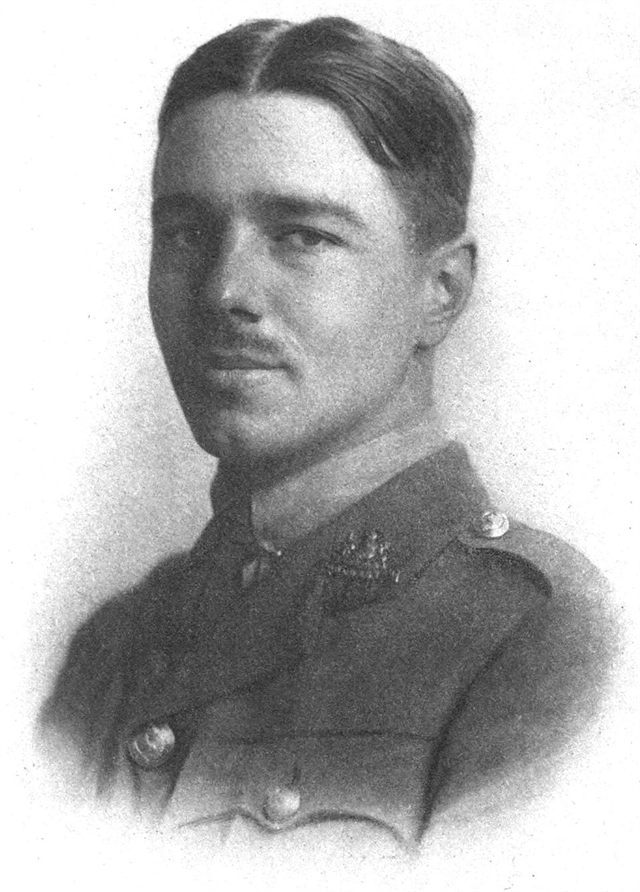
Who Would Not Write A Consolation · Poet & Soldier · 1893–1918
The officer who wrote most of his best work in a hospital for shell-shocked soldiers, published five poems in his lifetime, and was killed a week before the Armistice.
Defend these ideas against Owen
Incandio is a free revision platform for the Pearson Edexcel International GCSE, and on it a topic counts as mastered only once you have learned it, proved it in questions, taught it back and defended it against the person with the strongest claim on it. Wilfred Owen is that person for 2 topics on the course:
- Exposure in Exposure — English Literature
- Disabled — English Language A · the anthology
Who was Owen?
Wilfred Owen was born at Oswestry in Shropshire in 1893, into a family whose money had gone; his father was a railway official and the household moved as the work did. He failed to win the scholarship that would have taken him to university, worked as a lay assistant to a vicar in Oxfordshire and lost his faith during it, and taught English at Bordeaux. He enlisted in 1915 and was commissioned into the Manchester Regiment. In the spring of 1917 he was blown into the air by a shell and spent days in a hole near the remains of a fellow officer; he was sent home with what was then called shell shock and arrived at Craiglockhart War Hospital outside Edinburgh in June. There he edited the hospital magazine, was treated by Dr Arthur Brock on the principle that a patient should be given work to do, and met Siegfried Sassoon, who read his drafts and told him to keep going. He wrote at extraordinary speed for about a year. Disabled was written at Craiglockhart in October 1917: a young man in a wheeled chair whose enlistment stanza gives no patriotic reason at all — a drink, a remark about how he would look in a kilt, and a girl — and whose officials knowingly wrote down a false age. Owen returned to the front, was awarded the Military Cross, and was killed crossing the Sambre–Oise Canal on 4 November 1918, seven days before the war ended. Five of his poems had been published. The telegram reached his mother as the bells were ringing for the Armistice.
Major achievements
- Disabled, Anthem for Doomed Youth and Dulce et Decorum Est, all written within about a year
- Made the home front rather than the enemy the target of an English war poem
- Drafted a preface stating that his subject was war, and the pity of war
- Awarded the Military Cross in October 1918
Life in brief
- 1893 — Born at Oswestry: Into a family whose money had gone.
- 1913 — Bordeaux: Teaches English in France after failing to win a scholarship.
- 1915 — Enlists: Later commissioned into the Manchester Regiment.
- 1917 — Craiglockhart: Sent to Edinburgh with shell shock; meets Sassoon.
- 1917 — Disabled: Written in October, at the hospital.
- 1918 — Military Cross: Awarded in October, after returning to the front.
- 1918 — Killed: At the Sambre–Oise Canal, a week before the Armistice.
Explore the life of Owen — five chapters
- The Scholarship That Did Not Come — A clever boy in a family without money
- The Shell and the Hospital — Sent home with a word nobody could define
- Disabled — A war poem with almost no war in it
- The Preface He Did Not Finish — Warning, not consolation
- Seven Days — A telegram arriving as the bells rang
Read the five-chapter life of Wilfred Owen →
Begin
- Start a conversation with Owen — a dramatised, historically grounded AI portrayal
- Read the Historical Brief
- Explore the life of Owen — five chapters
- Find your course · Meet all 280 figures