Historical figure · Pearson Edexcel International GCSE revision on Incandio
Carl Linnaeus
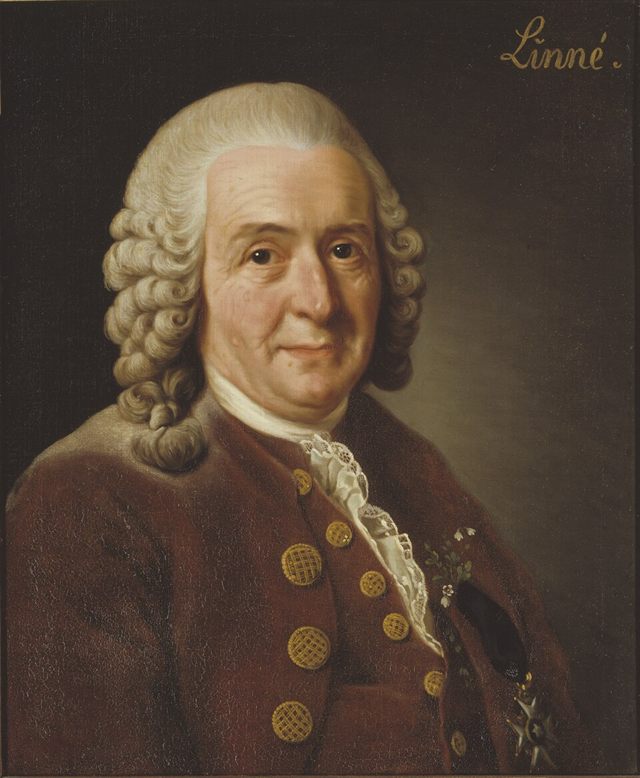
Who Gave Every Living Thing Its Name · Naturalist & Physician · 1707–1778
The Swedish naturalist who arranged the whole living world into nested ranks and gave every species a fixed two-part name — the system biology still uses.
Defend these ideas against Linnaeus
Incandio is a free revision platform for the Pearson Edexcel International GCSE, and on it a topic counts as mastered only once you have learned it, proved it in questions, taught it back and defended it against the person with the strongest claim on it. Carl Linnaeus is that person for 3 topics on the course:
- The Four Eukaryote Groups — Biology
- Flowers, Pollination and Fertilisation — Biology
- Populations, Ecosystems and Sampling with Quadrats — Biology
Who was Linnaeus?
Carl Linnaeus was born in 1707 at Råshult in Småland, the son of a curate who kept a garden and taught him the names of plants before he could read well. He was an indifferent schoolboy, was very nearly apprenticed to a shoemaker, and was rescued by a physician who noticed how much botany he already knew. He studied medicine at Lund and Uppsala, and in 1732 travelled alone through Lapland, walking and riding some hundreds of miles and cataloguing what grew there. In 1735, in the Netherlands, he published the first edition of Systema Naturae: twelve folio sheets that set out the whole of nature in three kingdoms — animal, vegetable and mineral — arranged in ranks of class, order, genus and species. He sorted plants by counting the reproductive parts of their flowers, a scheme he described himself as artificial and defended on the grounds that it worked and could be taught to anyone. Its real power arrived with the tenth edition of 1758, in which he applied consistent two-part names to every animal: a genus and a species, so that the same organism carried the same name in every country. He divided living things into exactly two kingdoms, placing the fungi among the plants because they neither moved nor had blood, and gathering the microscopic organisms he could not place into a single genus he named Chaos. From Uppsala, where he was professor of medicine and botany and had the botanic garden replanted to his own design, he sent seventeen former students — his 'apostles' — out to collect on four continents. Seven of them died on those journeys. He died in 1778.
Major achievements
- Published Systema Naturae in 1735, arranging the whole of nature into nested ranks
- Established binomial nomenclature — a genus and a species name for every organism
- Applied two-part names consistently to the animal kingdom in the tenth edition, 1758
- Described and named around 7,700 plant species and 4,400 animal species
- Made the Lapland journey of 1732 and published its flora
Life in brief
- 1707 — Born at Råshult: In Småland, the son of a curate with a garden.
- 1732 — The Lapland journey: Travels alone through the far north cataloguing its plants.
- 1735 — Systema Naturae: Twelve folio sheets set out the three kingdoms of nature in ranks.
- 1741 — Professor at Uppsala: Takes the chair of medicine and botany and replants the garden.
- 1753 — Species Plantarum: Two-part names applied throughout the plants — the starting point of botanical naming.
- 1758 — The tenth edition: Binomial names extended consistently to every animal.
- 1778 — Dies at Uppsala: With the system established and its meaning still a century away.
Explore the life of Linnaeus — five chapters
- Nearly a Shoemaker — A boy who learned plants before he could read well
- Lapland, Alone — Hundreds of miles north at twenty-five
- Twelve Sheets for the Whole of Nature — Systema Naturae, 1735
- Two Words, Everywhere, For Ever — Binomial names, and the apostles who filled the system
- Wrong About Nearly Everything the Names Meant — Fixed species, two kingdoms, and a page that did great harm
Read the five-chapter life of Carl Linnaeus →
Begin
- Start a conversation with Linnaeus — a dramatised, historically grounded AI portrayal
- Read the Historical Brief
- Explore the life of Linnaeus — five chapters
- Find your course · Meet all 280 figures