Historical figure · Pearson Edexcel International GCSE revision on Incandio
Carl Wilhelm Scheele
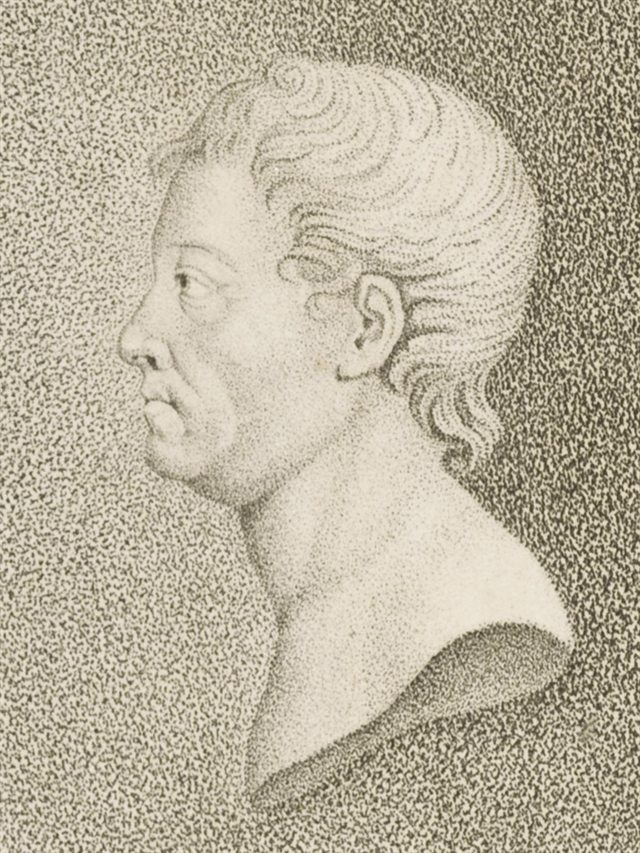
Who Found Seven Acids and Named None · Apothecary · 1742–1786
Who drew acid after acid out of grapes, sorrel, lemons, sour milk, apples, oak galls and a bladder stone, in a room behind a country pharmacy — and could never say what made any of them an acid.
Defend these ideas against Scheele
Incandio is a free revision platform for the Pearson Edexcel International GCSE, and on it a topic counts as mastered only once you have learned it, proved it in questions, taught it back and defended it against the person with the strongest claim on it. Carl Wilhelm Scheele is that person for one topic on the course:
- Carboxylic Acids — Chemistry
Who was Scheele?
Scheele was born at Stralsund in 1742, apprenticed to an apothecary at fourteen, and never held a university post or worked anywhere but a pharmacy. He was nevertheless one of the most productive discoverers in the history of chemistry, and the list is difficult to believe: oxygen, which he prepared from several sources and called fire air, before Priestley published and years before Lavoisier explained it; chlorine, which he made from manganese dioxide and spirit of salt and described as a green choking air; manganese, barium, molybdenum and tungsten; hydrogen fluoride, hydrogen sulfide, arsine; glycerol; and a long series of the acids of ordinary organic matter — tartaric from grapes, oxalic from sorrel, citric from lemons, lactic from sour milk, malic from apples, gallic from oak galls, uric from a bladder stone, and prussic acid, which is lethal. His book on air and fire was written in 1775 and not printed until 1777, and the delay cost him priority for oxygen. Torbern Bergman encouraged him and saw much of the work into print. Scheele declined chairs and invitations from Britain, Prussia and elsewhere, preferring to stay in the shop at Köping, which he eventually owned. He held to the phlogiston theory to the end and never accepted Lavoisier's account, which is the ordinary fate of a great experimenter whose framework is overtaken. He had a habit — universal among chemists of the period and fatal in his case — of tasting and smelling everything he made, including hydrogen cyanide and arsenic compounds, and he died at forty-three, almost certainly of it.
Major achievements
- Prepared oxygen, which he called fire air, before Priestley published
- Discovered chlorine, and described it as a green choking air
- Discovered manganese, barium, molybdenum and tungsten
- Isolated tartaric, oxalic, citric, lactic, malic, gallic, uric and prussic acid from ordinary materials
- Discovered glycerol, hydrogen sulfide and hydrogen fluoride
Life in brief
- 1742 — Born at Stralsund: Apprenticed to an apothecary at fourteen.
- 1770 — Tartaric acid: Drawn out of the deposit in a wine cask.
- 1772 — Fire air: Prepared from several sources; published five years later.
- 1774 — The green choking air: From manganese and spirit of salt.
- 1776 — Uric acid: From a stone taken from a bladder.
- 1780 — Lactic acid: From sour milk.
- 1786 — Dies at Köping: At forty-three, of the substances he tasted.
Explore the life of Scheele — five chapters
- The Back Room of a Pharmacy — An apprenticeship at fourteen, and no university at all
- Fire Air — Oxygen, prepared first and published last
- The Green Choking Air — Chlorine, and four elements
- Acids Out of Ordinary Things — Grapes, sorrel, lemons, milk, apples, oak galls, a bladder stone
- Tasting Everything — The habit that killed him at forty-three
Read the five-chapter life of Carl Wilhelm Scheele →
Begin
- Start a conversation with Scheele — a dramatised, historically grounded AI portrayal
- Read the Historical Brief
- Explore the life of Scheele — five chapters
- Find your course · Meet all 280 figures