Historical figure · Pearson Edexcel International GCSE revision on Incandio
Cesare Beccaria
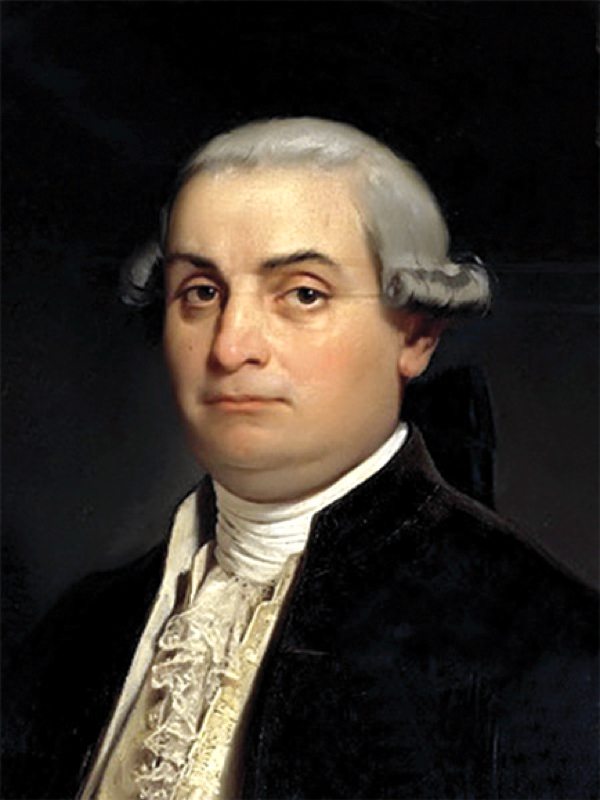
Who Said Certainty Deters, Not Cruelty · Jurist & Economist · 1738–1794
The Milanese aristocrat whose short book On Crimes and Punishments (1764) argued against torture and the death penalty and for punishments that are proportionate, prompt and certain.
Why Beccaria is on Incandio
Incandio is a free revision platform for the Pearson Edexcel International GCSE. Its historical figures are the people a student learns from, questions and — where a specification topic is theirs — defends an idea against. Cesare Beccaria can be questioned here in a dramatised, historically grounded portrayal, and the five-chapter life below is written to be read alongside the course.
Who was Beccaria?
Beccaria was born in Milan in 1738 and educated by the Jesuits at Parma, which he resented. He took a law degree at Pavia. With the brothers Pietro and Alessandro Verri he joined the reforming Accademia dei Pugni and wrote for their journal Il Caffè. Encouraged by them, he wrote On Crimes and Punishments, published anonymously in 1764. It argued that punishment is justified only to prevent harm to society, that certainty deters better than severity, that torture is irrational and that the death penalty is neither useful nor necessary. Translated into French in 1766 with a commentary attributed to Voltaire, it was read across Europe and in America, and was placed on the Catholic Index of Forbidden Books. Beccaria visited Paris in 1766 but returned early, and his friendship with the Verris broke down. He spent the rest of his life as a professor of public economy and an official in the Austrian administration of Lombardy. He died in Milan in 1794.
Major achievements
- Wrote On Crimes and Punishments (1764), one of the founding texts of modern criminal law
- Made the first sustained Enlightenment case against the death penalty
- Argued against torture, influencing its abolition across Europe
- Influenced Leopold of Tuscany, whose code of 1786 abolished the death penalty
- Professor of public economy in Milan from 1768
Life in brief
- 1738 — Born in Milan
- 1758 — Law degree at Pavia
- 1761 — Marries Teresa Blasco: His father confines him to the house.
- 1764 — On Crimes and Punishments: Published anonymously at Livorno.
- 1766 — Paris and the Index: French translation; the book is condemned in Rome.
- 1768 — Professor of public economy
- 1786 — Tuscany abolishes the death penalty: Under Leopold, influenced by the book.
- 1794 — Dies 28 November: In Milan.
Explore the life of Beccaria — five chapters
- A Marquis Under House Arrest — Jesuits, a law degree, and a forbidden marriage
- The Academy of Fists — Young reformers, a coffee-house journal, and a subject chosen for him
- On Crimes and Punishments — Proportion, certainty, and the case against torture
- The War of the Nation — Against the death penalty — with two exceptions
- From Milan to the World — Tuscany, Philadelphia, and a quiet civil servant
Read the five-chapter life of Cesare Beccaria →
Begin
- Start a conversation with Beccaria — a dramatised, historically grounded AI portrayal
- Read the Historical Brief
- Explore the life of Beccaria — five chapters
- Find your course · Meet all 280 figures