Explore Their Life · Pearson Edexcel International GCSE revision on Incandio
Cesare Beccaria: A Life in Five Chapters
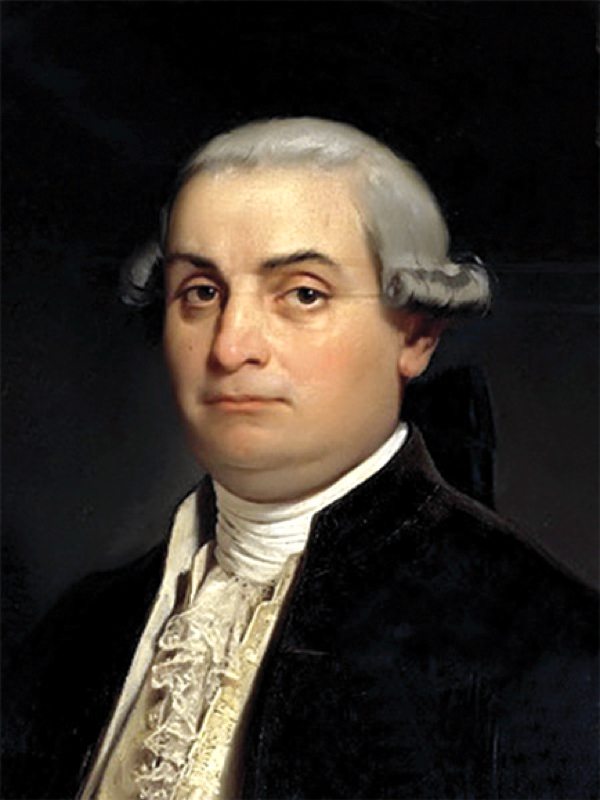
1738–1794
A shy Milanese marquis who wrote one short book at twenty-six, argued that torture and the death penalty are useless as well as cruel, and changed the criminal law of Europe and America.
Beccaria wrote almost nothing else of importance, disliked fame, quarrelled with the friends who helped him, and spent his later life as a civil servant. Yet On Crimes and Punishments is one of the most influential books ever written about law. These five chapters follow his unhappy youth, the Academy of Fists, the book, its fame, and its consequences.
The five chapters
- A Marquis Under House Arrest — Jesuits, a law degree, and a forbidden marriage
- The Academy of Fists — Young reformers, a coffee-house journal, and a subject chosen for him
- On Crimes and Punishments — Proportion, certainty, and the case against torture
- The War of the Nation — Against the death penalty — with two exceptions
- From Milan to the World — Tuscany, Philadelphia, and a quiet civil servant
Chapter 1 · A Marquis Under House Arrest
Jesuits, a law degree, and a forbidden marriage
1738 – 1762 · Milan · Parma · Pavia
Cesare Beccaria was born in Milan on 15 March 1738, the eldest son of a noble family. Milan was then part of the Austrian Habsburg empire, governed from Vienna, with a legal system built up over centuries of Roman law, local custom and royal decree. It was complicated, often secret, and harsh.
At eight he was sent to the Jesuit college at Parma. He later described the education as fanatical and said it had stifled him. He was clever but timid, and found the lessons of rote learning and obedience suffocating. He went on to study law at the University of Pavia and graduated in 1758. He did not much enjoy that either.
In 1760 he fell in love with Teresa Blasco, the daughter of an army officer of lower rank and modest fortune. His father thought the match beneath the family and forbade it. Beccaria insisted. His father obtained an order to confine him to the family house for three months. Beccaria married her anyway in 1761, and for a time the couple lived in poverty until there was a reconciliation.
The episode matters more than a family quarrel. Beccaria had experienced, at first hand, a power that could confine a person without a trial, at the request of a powerful man, for reasons that had nothing to do with any crime. He also began reading the French writers of the Enlightenment — above all Montesquieu, whose Persian Letters and Spirit of the Laws, he later said, converted him to philosophy.
He was twenty-three, unhappy, and looking for something to do.
Why this matters
Beccaria's own confinement without trial, and his reading of Montesquieu, prepared him to see the law as something that should be reasoned and limited.
A Jesuit college, a forbidden marriage, and a father who locked him in. What would you ask him?
Ask Beccaria
- “How did being confined by your father's order shape your ideas about punishment?”
- “What did you dislike so much about your Jesuit education?”
- “Why did reading Montesquieu convert you to philosophy?”
- “What was wrong with the criminal law of Milan when you were young?”
- “Was marrying Teresa against your father's wishes worth the cost?”
Chapter 2 · The Academy of Fists
Young reformers, a coffee-house journal, and a subject chosen for him
1761 – 1764 · Milan
In Milan Beccaria fell in with a group of young men led by the brothers Pietro and Alessandro Verri. They called themselves the Accademia dei Pugni — the Academy of Fists — perhaps because their arguments were so fierce. They read the French and English writers of the Enlightenment, discussed economics, politics and law, and wanted to reform Lombardy.
From 1764 they published a journal called Il Caffè, named after the coffee-houses where educated people met to talk. It mixed essays on trade, science, language and society, and Beccaria contributed to it.
Pietro Verri, ten years older, saw that Beccaria had a brilliant mind and very little discipline. He encouraged him to write. Beccaria's first essay was on the disorder of the currency in Milan. Then Pietro suggested a subject: criminal justice. Alessandro Verri held an official post as a protector of prisoners and had seen the prisons and the courts from the inside, including the use of torture to extract confessions.
Beccaria wrote the book in under a year, in 1763–64, mostly in the Verris' house. Pietro later said that he had organised and copied out the manuscript, which Beccaria wrote in scattered pieces. Alessandro provided information about actual practice. How much the book owes to the brothers has been argued about ever since.
The group knew the subject was dangerous. Criticising the courts and the church's role in punishment could lead to prosecution. So the book was printed outside Milan, at Livorno in Tuscany, in 1764, with no author's name on it.
Why this matters
On Crimes and Punishments was the product of a reforming circle, not a lone genius, and the dispute over the Verris' share is part of its history.
A coffee-house journal, two brothers, and a subject handed to him. What would you ask him?
Ask Beccaria
- “Why did you publish On Crimes and Punishments anonymously and outside Milan?”
- “How much of the book belongs to Pietro and Alessandro Verri?”
- “What had Alessandro Verri seen in the prisons that went into your book?”
- “Why was the group called the Academy of Fists?”
- “Why did a coffee-house matter to reformers in the eighteenth century?”
Chapter 3 · On Crimes and Punishments
Proportion, certainty, and the case against torture
1764 · Livorno
Beccaria's book is short and argued from first principles. People, he says, give up a small part of their liberty to the state in exchange for security. The state's right to punish comes only from that agreement, and so it may punish only as much as is needed to protect society. Anything more is tyranny.
From this he draws a series of conclusions. Laws must be clear, written and public, so that everyone knows what is forbidden. Judges should apply the law, not invent it. Accusations should not be secret. Punishments should be proportionate to the harm done to society: the greater the harm, the greater the punishment, but never more than needed.
Most importantly, he argues that what deters crime is not the severity of a punishment but its certainty and promptness. A mild punishment that is sure to follow quickly deters more than a terrible one that probably will not happen. Cruel punishments harden people and make the law itself seem brutal.
He attacks torture with particular force. Torture was then a normal part of criminal procedure across much of Europe, used to force confessions. Beccaria argued that it tests a person's ability to bear pain, not their guilt. The strong criminal resists and goes free; the weak innocent confesses and is condemned. It punishes before guilt is proven.
He also separates crime from sin. Crimes are harms to society, which human law can judge. Sins are offences against God, which only God can judge. The state should not try to punish a person's soul.
He measured laws by 'the greatest happiness shared among the greatest number'.
“la massima felicità divisa nel maggior numero (the greatest happiness shared among the greatest number)”
— Cesare Beccaria, Dei delitti e delle pene (1764), introduction
Why this matters
Beccaria's principles — proportion, certainty over severity, no torture, crime distinct from sin — underpin modern ideas of justice and debates on punishment.
A contract, a scale of punishments, and a case against the rack. What would you ask him?
Ask Beccaria
- “Why do you say the certainty of punishment deters more than its severity?”
- “Why does torture punish the weak innocent and free the strong guilty?”
- “What is the difference between a crime and a sin?”
- “Why must laws be written down and published for everyone?”
- “Where does a government's right to punish come from in your view?”
Chapter 4 · The War of the Nation
Against the death penalty — with two exceptions
1764 – 1766 · Milan · Paris · Rome
The most famous chapter of Beccaria's book argues against the death penalty. He asks by what right people can kill their fellow citizens. In the social contract, nobody gave the state the right to take their life, because nobody can give away what they do not own. The death penalty is therefore not a right but 'a war of the nation against a citizen'.
He also argues that it does not work. An execution is a terrible but brief spectacle, and people forget it quickly or come to treat it as entertainment. Lifelong penal servitude — a person made to work for society for life, visible to all — is a longer and more effective deterrent. And when the state kills deliberately and coldly, it teaches the very lesson it forbids: that killing can be justified.
But Beccaria allowed two exceptions. Execution might be necessary when a person, even in prison, still had connections and power that threatened the security of the nation — in times of revolution or anarchy — or when killing them was the only way to deter others from crime. In ordinary times under settled law, he believed, neither applied.
The book was a sensation. A French translation by André Morellet appeared in 1766, and Voltaire wrote a commentary on it. Beccaria was invited to Paris in 1766 and went with Alessandro Verri, but he was shy, homesick and missed his wife, and went home early. The Verris felt he had taken the fame for shared work, and the friendship broke down.
In 1766 the Catholic Church placed the book on the Index of Forbidden Books.
Why this matters
Beccaria's chapter on the death penalty is the foundation of the modern abolitionist argument, and his exceptions show that his position was not absolute.
A war of the nation against a citizen, and two exceptions. What would you ask him?
Ask Beccaria
- “Why do you call the death penalty a war of the nation against a citizen?”
- “Why would lifelong penal servitude deter more than an execution?”
- “In what situations would you still allow the death penalty?”
- “How can a state that executes people teach them not to kill?”
- “Why was your book placed on the Index of Forbidden Books?”
Chapter 5 · From Milan to the World
Tuscany, Philadelphia, and a quiet civil servant
1766 – 1794 · Milan · Tuscany · America
After 1766 Beccaria wrote little of significance. Catherine the Great invited him to Russia to help reform its laws; he declined. In 1768 he became professor of public economy — what we would call economics — in Milan, and from 1771 he served in the Austrian government of Lombardy, working on currency, weights and measures, and public administration. He was a capable, unexciting official.
His book, meanwhile, travelled further than he ever did. It was translated into English, German, Spanish and other languages. Rulers who wished to appear enlightened read it. In 1786 Grand Duke Leopold of Tuscany issued a new criminal code that abolished the death penalty and torture — the first modern state to do so — and it was strongly influenced by Beccaria.
In America, John Adams quoted Beccaria in court in 1770 when defending the British soldiers accused over the Boston Massacre. Thomas Jefferson copied long passages into his notebooks. The ban on 'cruel and unusual punishments' in the American Bill of Rights reflects the same ideas. In Britain, Jeremy Bentham took up the phrase about the greatest happiness and built a philosophy on it.
In 1791–92 Beccaria served on a commission reforming Lombardy's criminal law and, with two colleagues, argued against the death penalty again. His first wife had died in 1774; he remarried quickly. His daughter Giulia became the mother of Alessandro Manzoni, Italy's great novelist.
Beccaria died of a stroke in Milan on 28 November 1794. His arguments are still used in every debate about the death penalty.
Why this matters
Beccaria's influence on Tuscany, America and Bentham shows how one short book reshaped criminal law and the abolitionist movement.
A declined invitation from Russia, a code in Tuscany, and a lawyer in Boston. What would you ask him?
Ask Beccaria
- “Why did you refuse Catherine the Great's invitation to Russia?”
- “How did your book influence Tuscany's abolition of the death penalty in 1786?”
- “Why did John Adams quote you in defending soldiers after the Boston Massacre?”
- “Why did you write so little after On Crimes and Punishments?”
- “What did Jeremy Bentham take from your phrase about the greatest happiness?”
What Beccaria changed
Beccaria gave Europe and America the core principles of modern criminal justice: clear published laws, proportionate punishment, certainty over severity, no torture, and a strong presumption against the death penalty. His book shaped Leopold's Tuscan code, the American Bill of Rights and Bentham's utilitarianism.
A debate that continues
Is Beccaria's case against the death penalty strongest as an argument about deterrence and usefulness, or as an argument about the rights a state can never have?
Keep exploring — ask Beccaria
- “Does the death penalty deter crime better than imprisonment?”
- “Is torture ever justified?”
- “Should a crime and a sin ever be punished in the same way?”
Related lives
- Jeremy Bentham — Who Wanted the Suffering Counted
- Voltaire — Philosophe · Voice of the Enlightenment
- Elizabeth Fry — Who Asked the Prisoners to Vote on the Rules
Related themes
The death penalty · Aims of punishment · Torture and human rights · The Enlightenment
Continue on Incandio
- Talk to Beccaria — every question on this page is one tap from being asked, and the same page carries the Historical Brief, the achievements and the timeline
- All 280 figures · Incandio — learn every idea, teach it, then defend it