Explore Their Life · Pearson Edexcel International GCSE revision on Incandio
Charlotte Brontë: A Life in Five Chapters
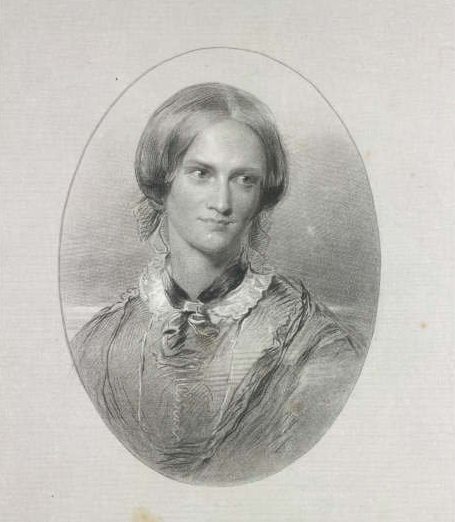
1816–1855
A Yorkshire parson's daughter who buried five siblings, fell hopelessly in love in Brussels, and published Jane Eyre as 'Currer Bell' so that critics would judge the book and not the woman.
Charlotte Brontë is often pictured as a lonely genius on a windswept moor. The truth is sharper: a working teacher and governess, a fierce satirist, and a professional writer who fought to be read on equal terms. These chapters follow the school that killed her sisters, the imaginary kingdoms of childhood, Brussels, the success of Jane Eyre, and the year that left her the last of six children.
The five chapters
- Haworth and Cowan Bridge — A motherless household and a school that killed two sisters
- Glass Town and Roe Head — Tiny books, imaginary kingdoms and a poet laureate's warning
- Brussels — A governess, a teacher in Belgium and letters that were never answered
- Currer Bell — Two copies, a rejected novel and a sensation
- The Last Sister — Three deaths in eight months, two more novels and a late marriage
Chapter 1 · Haworth and Cowan Bridge
A motherless household and a school that killed two sisters
1816 – 1825 · Thornton · Haworth · Cowan Bridge
Charlotte Brontë was born on 21 April 1816 at Thornton, near Bradford, the third of six children of Patrick Brontë and Maria Branwell. Patrick was the son of a poor farming family in County Down in Ireland who had won his way to Cambridge and into the Church of England, changing the family name from Brunty on the way. In 1820 he became perpetual curate of Haworth, a hillside mill township above Keighley. It was not the remote village of legend: it was crowded, with poor sanitation and very high death rates, and the parsonage looked out over a packed graveyard.
Charlotte's mother died of cancer in September 1821. Her aunt, Elizabeth Branwell, came from Cornwall to run the house. In 1824 Patrick sent four of his daughters — Maria, Elizabeth, Charlotte and later Emily — to the new Clergy Daughters' School at Cowan Bridge in Lancashire, a cheap school for the children of poor clergymen run by the Evangelical Reverend William Carus Wilson.
The food was bad, the discipline harsh and the buildings damp. Illness spread. Maria, the eldest and the cleverest, was sent home with tuberculosis and died in May 1825, aged eleven; Elizabeth followed in June, aged ten. Patrick brought Charlotte and Emily home.
Charlotte never forgave the school. More than twenty years later she drew on it for Lowood in Jane Eyre, with its starved and frozen girls and its hypocritical patron Mr Brocklehurst, and many readers saw Maria in the patient, dying Helen Burns.
Why this matters
Lowood, Brocklehurst and Helen Burns grew from Charlotte's own childhood experience; Jane Eyre's anger at religious hypocrisy and cruelty to children was personal.
A crowded parsonage, a lost mother and a school she never forgave. What would you ask her?
Ask Brontë
- “How much of Lowood is the school at Cowan Bridge?”
- “Is Helen Burns a portrait of your sister Maria?”
- “Why did a clergyman's school treat clergymen's daughters so harshly?”
- “What was Haworth really like, beyond the moors people imagine?”
- “How did your father's journey from Ireland to Cambridge shape your family?”
Chapter 2 · Glass Town and Roe Head
Tiny books, imaginary kingdoms and a poet laureate's warning
1826 – 1838 · Haworth · Roe Head, Mirfield
In June 1826 Patrick brought home a box of twelve wooden toy soldiers for his son Branwell. The four surviving children seized them, named them, and built around them an imaginary world — first Glass Town, then the kingdom of Angria for Charlotte and Branwell, and Gondal for Emily and Anne. For years they wrote its history, politics, scandals and romances in minute handwriting in tiny books small enough for the soldiers to read. Charlotte's Angrian stories were full of passionate aristocrats, rebellions and dangerous love affairs. It was an extraordinary apprenticeship in storytelling.
In 1831 Charlotte went as a pupil to Miss Wooler's school at Roe Head, near Mirfield, where she made two lifelong friends, Ellen Nussey and the outspoken Mary Taylor. In 1835 she returned there as a teacher. She found teaching exhausting and was often miserable, longing for her imaginary world while trying to drill dull girls in grammar. She suffered something close to a breakdown.
In December 1836 she sent some of her poems to Robert Southey, the Poet Laureate, asking for his opinion. In March 1837 he replied kindly but firmly that she had a gift, but that literature cannot be the business of a woman's life, and it ought not to be. Charlotte thanked him and said she would try to follow his advice. She kept the letter, and she did not follow it.
Why this matters
Southey's answer is exactly the attitude Jane Eyre argues against — that a woman's mind should be confined to duties and kept from ambition.
Twelve toy soldiers, a teacher's despair and a letter from the Poet Laureate. What would you ask her?
Ask Brontë
- “What did writing the Angria stories teach you about storytelling?”
- “How did you feel when Southey said literature could not be a woman's business?”
- “Why did teaching at Roe Head make you so unhappy?”
- “Why did you write the Glass Town books so tiny?”
- “What did Mary Taylor's opinions about women's work teach you?”
Chapter 3 · Brussels
A governess, a teacher in Belgium and letters that were never answered
1839 – 1845 · Stonegappe · Rawdon · Brussels
Like many educated women without money, Charlotte had only one real way to earn a living: teaching, either in a school or as a governess in a private family. In 1839 and again in 1841 she worked as a governess. She hated it. A governess was neither a servant nor a member of the family, often ignored by her employers and mocked by the children. Jane Eyre's position at Thornfield, socially stranded between the household and the drawing room, comes from experience.
The sisters planned to open their own school, and to qualify they needed languages. In February 1842 Charlotte and Emily went to the Pensionnat Heger in Brussels, run by Madame Zoë Heger and her husband Constantin, a brilliant and demanding teacher. When their aunt died that October they went home; in January 1843 Charlotte returned alone as a teacher.
She fell deeply in love with Monsieur Heger, a married man with a family. He did not return her feelings in the same way, and Madame Heger grew cold. Lonely and miserable, Charlotte made a confession in a Catholic church although she was a firm Protestant. She left Brussels in January 1844 and wrote to Heger several times in passionate, desperate letters. He stopped answering. Four of the letters survive: he tore some up and they were stitched back together, probably by his wife.
The school plan failed — no pupils came to Haworth. Branwell, meanwhile, was dismissed from a tutoring post in 1845 after an affair with his employer's wife, and began to collapse into drink and opium.
Why this matters
The figure of a poor, intelligent woman who loves a man above her in power — and who must choose self-respect over him — came out of Brussels.
A governess, a classroom in Brussels and letters torn up and stitched together. What would you ask her?
Ask Brontë
- “Why was a governess so lonely in a Victorian household?”
- “Did loving Monsieur Heger shape Jane's love for Rochester?”
- “Why did you write to Heger again when he stopped answering?”
- “Why did no pupils ever come to the school at Haworth?”
- “How did Branwell's collapse affect the sisters' writing?”
Chapter 4 · Currer Bell
Two copies, a rejected novel and a sensation
1845 – 1848 · Haworth · Manchester · London
In 1845 Charlotte found a notebook of Emily's poems and was struck by their power. The three sisters published a joint collection in 1846 at their own expense: Poems by Currer, Ellis and Acton Bell. They chose names that might be male or female because, Charlotte later explained, women writers were liable to be judged with prejudice. The book sold two copies.
Each sister also wrote a novel. Emily's Wuthering Heights and Anne's Agnes Grey were accepted; Charlotte's The Professor was rejected again and again. In August 1846 she took her father to Manchester for an operation on his cataracts, and while he lay recovering in a darkened room she began a new novel.
The firm of Smith, Elder and Co. had rejected The Professor kindly, asking for something more exciting. She sent them Jane Eyre: An Autobiography, 'edited by Currer Bell'. It was published in October 1847 and was an immediate success. Readers were gripped by its first-person heroine — poor, plain and fiercely independent — who claims that her soul is equal to Rochester's and refuses to become his mistress.
Critics argued about whether Currer Bell was a man or a woman, and judged the book accordingly; one reviewer called it anti-Christian. In July 1848 Charlotte and Anne travelled to London to prove to George Smith that the Bells were separate people. Modern readers also ask hard questions about Bertha Mason, Rochester's Creole wife from Jamaica, whom the novel describes in animal, racialised terms; the novel's power and its prejudices have to be read together.
“Conventionality is not morality. Self-righteousness is not religion.”
— Preface to the second edition of Jane Eyre, December 1847
Why this matters
Jane Eyre's demand for equality, and the critics' reaction to a woman writing it, are the context for questions on gender, class and religion in the novel.
A pen name, a darkened room in Manchester and a novel London could not stop talking about. What would you ask her?
Ask Brontë
- “Why did you choose a name like Currer Bell instead of your own?”
- “Why did you make Jane poor and plain rather than a beautiful heroine?”
- “How do you answer readers troubled by the way the novel portrays Bertha Mason?”
- “Why did one reviewer call Jane Eyre anti-Christian?”
- “Is Jane's decision to leave Thornfield about faith, self-respect or both?”
Chapter 5 · The Last Sister
Three deaths in eight months, two more novels and a late marriage
1848 – 1855 · Haworth · Scarborough · London
Charlotte's success was followed almost at once by catastrophe. Branwell died on 24 September 1848, aged thirty-one, wrecked by drink, opium and tuberculosis. Emily caught a cold at his funeral, refused all medical help and died of tuberculosis on 19 December, aged thirty. Anne fell ill too; Charlotte took her to the sea at Scarborough, where she died on 28 May 1849, aged twenty-nine. Charlotte was left alone in the parsonage with her elderly father.
She kept working. Shirley (1849), set among the Luddite machine-breakers of Yorkshire, was finished in grief. She visited London, met William Thackeray and was introduced to literary society, though she found it painful. In 1850 she met the novelist Elizabeth Gaskell, who became a close friend. She also wrote prefaces defending her dead sisters' novels from critics. Her last completed novel, Villette (1853), drew on Brussels and is now often thought her finest.
Her father's curate, Arthur Bell Nicholls, had loved her for years. When he proposed in December 1852 Patrick Brontë was furious and Nicholls left Haworth. Charlotte came to respect his steadiness, and her father eventually relented. They married on 29 June 1854.
Within months she was pregnant and severely ill with constant sickness. She died on 31 March 1855, aged thirty-eight. The cause is still debated; many think it was a dangerous complication of pregnancy. Patrick, who had outlived his wife and all six children, asked Mrs Gaskell to write her life. The Professor was published in 1857.
Why this matters
Charlotte wrote her later novels as the last of six children, and much of what readers first believed about the Brontës came from the grief-shaped biography her friend wrote.
Three deaths in eight months, a late marriage and a pen that did not stop. What would you ask her?
Ask Brontë
- “How did you keep writing Shirley after Branwell, Emily and Anne died?”
- “Why did you defend your sisters' novels so fiercely after their deaths?”
- “Why did your father object so strongly to Arthur Bell Nicholls?”
- “What did Elizabeth Gaskell understand about you that London society did not?”
- “Did your own late marriage change what you thought about Jane's ending?”
What Brontë changed
Jane Eyre gave English fiction a new kind of heroine — poor, plain, passionate and morally independent — speaking directly to the reader. It shaped the novel of inner life and remains one of the most widely read Victorian novels, while its portrayal of Bertha Mason prompted later writers, most famously Jean Rhys in Wide Sargasso Sea, to answer it back.
A debate that continues
Critics debate whether Jane Eyre is a radical feminist novel or a conservative one that rewards its heroine with marriage and money, and how far its treatment of Bertha Mason reflects the racism and colonial assumptions of its time.
Keep exploring — ask Brontë
- “Is Jane Eyre's ending a victory or a compromise?”
- “Why did women writers of the 1840s hide behind ambiguous names?”
- “How should a modern reader respond to the portrayal of Bertha Mason?”
Related lives
- Jane Austen — Novelist of Manners & Marriage
- George Eliot — Author of Middlemarch
- Mary Shelley — Mother of Science Fiction
- Charles Dickens — The Inimitable · Chronicler of London
Related themes
The nineteenth-century novel · Women writers and pen names · Victorian education · Gender and class in fiction
Continue on Incandio
- Talk to Brontë — every question on this page is one tap from being asked, and the same page carries the Historical Brief, the achievements and the timeline
- All 280 figures · Incandio — learn every idea, teach it, then defend it