Historical figure · Pearson Edexcel International GCSE revision on Incandio
David Lloyd George
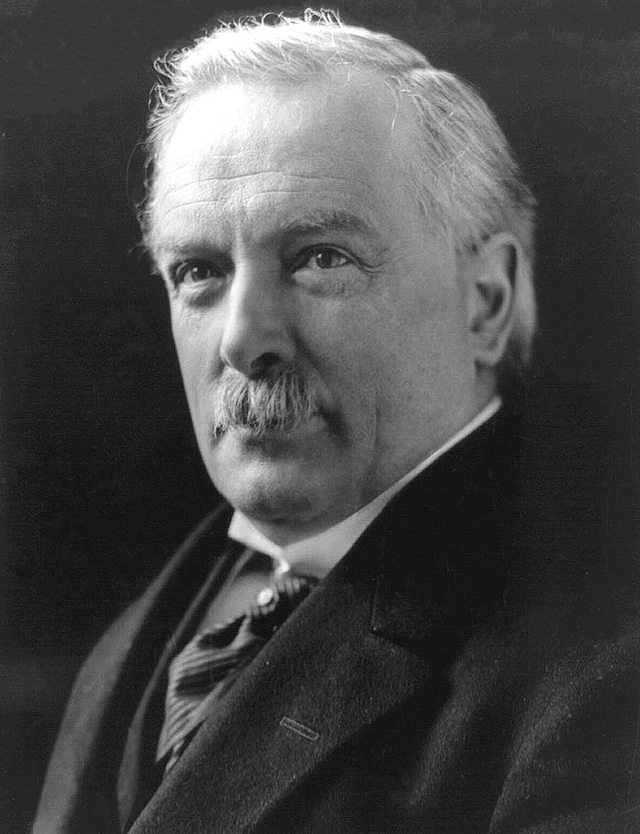
The Cottage-Bred Solicitor Who Ran An Empire · Chancellor & Prime Minister · 1863–1945
The radical Chancellor of the People's Budget and National Insurance, and the Prime Minister who ran the war from 1916 and distrusted his own generals.
Defend these ideas against Lloyd George
Incandio is a free revision platform for the Pearson Edexcel International GCSE, and on it a topic counts as mastered only once you have learned it, proved it in questions, taught it back and defended it against the person with the strongest claim on it. David Lloyd George is that person for 2 topics on the course:
- The Liberal reforms, 1906–11 — History · Changes in medicine, c1848–c1948
- The Ludendorff offensive and the Hundred Days — History · The origins and course of the First World War, 1905–18
Who was Lloyd George?
Born in Manchester in 1863 and raised in Llanystumdwy by his uncle, a shoemaker and preacher, Lloyd George qualified as a solicitor and entered Parliament at twenty-seven. As Chancellor he introduced old age pensions in 1908, fought the House of Lords over the People's Budget of 1909, and carried the National Insurance Act of 1911, which covered the worker against sickness and unemployment but not his family. He became Minister of Munitions in 1915 and Prime Minister in December 1916. He distrusted Haig, withheld reinforcements from him in early 1918 to prevent another offensive, and set out the case against him at length in memoirs published after Haig was dead and could not answer.
Major achievements
- Introduced old age pensions in 1908 and the National Insurance Act in 1911
- Carried the People's Budget of 1909 and broke the Lords' veto
- Reorganised munitions production from 1915
- Led the coalition government that won the war
Life in brief
- 1863 — Born in Manchester: Raised in Llanystumdwy by a shoemaker uncle.
- 1908 — Old age pensions: Introduced as Chancellor of the Exchequer.
- 1909 — The People's Budget: Rejected by the Lords and carried after two elections.
- 1911 — National Insurance: Covers the worker against sickness and unemployment.
- 1916 — Prime Minister: From December, running the war from the cabinet room.
- 1933 — War Memoirs: Published after Haig's death, with the case against him at full length.
Explore the life of Lloyd George — five chapters
- Llanystumdwy — Raised by a shoemaker who taught him to argue
- The People's Budget — Pensions, insurance, and the end of the Lords' veto
- The Man Who Won the War — Munitions, convoys, and a Prime Minister at war with his own generals
- Paris and Ireland — Between Wilson and Clemenceau, and a treaty signed under a threat
- Twenty-Three Years Out — A political fund, a memoir, and a visit to Berchtesgaden
Read the five-chapter life of David Lloyd George →
Begin
- Start a conversation with Lloyd George — a dramatised, historically grounded AI portrayal
- Read the Historical Brief
- Explore the life of Lloyd George — five chapters
- Find your course · Meet all 280 figures