Explore Their Life · Pearson Edexcel International GCSE revision on Incandio
David Lloyd George: A Life in Five Chapters
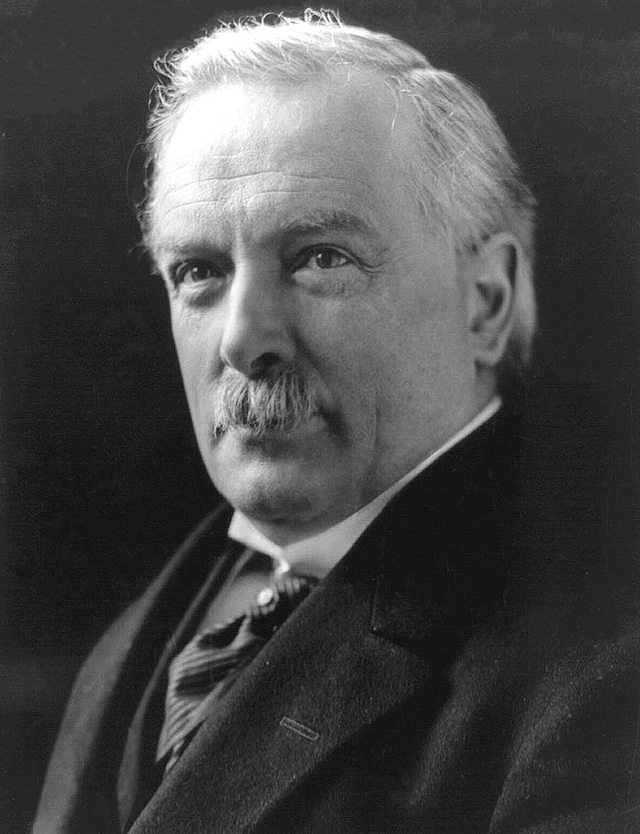
1863–1945
A Welsh-speaking shoemaker's nephew who invented the old age pension, broke the House of Lords, won a world war, split his own party for ever, and sold peerages to pay for it.
Lloyd George changed Britain more than any other prime minister of the century and left almost nothing organised behind him. These five chapters follow the village in Caernarfonshire, the People's Budget, the wartime premiership, Paris and Ireland, and a long, brilliant, discreditable afterwards.
The five chapters
- Llanystumdwy — Raised by a shoemaker who taught him to argue
- The People's Budget — Pensions, insurance, and the end of the Lords' veto
- The Man Who Won the War — Munitions, convoys, and a Prime Minister at war with his own generals
- Paris and Ireland — Between Wilson and Clemenceau, and a treaty signed under a threat
- Twenty-Three Years Out — A political fund, a memoir, and a visit to Berchtesgaden
Chapter 1 · Llanystumdwy
Raised by a shoemaker who taught him to argue
1863 – 1890 · Manchester · Llanystumdwy · Portmadoc
David Lloyd George was born in Manchester in 1863 and his father died when he was a year old. His mother took the children home to Llanystumdwy in Caernarfonshire, to her brother Richard Lloyd, a shoemaker and unpaid Baptist minister, who raised him.
Richard Lloyd is the most important person in the story. He was a self-taught man who ran the village chapel, argued theology and politics with anybody who came into the workshop, taught his nephew Latin and French out of borrowed books, and paid for his articles as a solicitor. Lloyd George added Lloyd to his own name in his uncle's honour and used it for the rest of his life.
He grew up Welsh-speaking, Nonconformist and outside the English establishment in every way that mattered in the 1870s: no public school, no university, no Anglican church. He qualified as a solicitor in 1884 and made his name in cases against the tithe and against the Anglican landowners of North Wales.
He was elected for Caernarfon Boroughs in 1890 by nineteen votes and held the seat for fifty-five years.
His first national notoriety came from opposing the South African War. At Birmingham Town Hall in 1901 a crowd stormed the meeting; the police got him out of the building disguised as a constable. He was not a pacifist. He objected to that war, and the courage it took is a fact about him that his later reputation obscures.
Why this matters
Lloyd George came into British politics from entirely outside its institutions, and everything he did to them was done by somebody who owed them nothing.
A shoemaker's workshop and a seat won by nineteen votes. What would you ask him?
Ask Lloyd George
- “What did your uncle Richard actually teach you?”
- “What did being Welsh-speaking and Nonconformist cost you at Westminster?”
- “Why oppose the South African War when it was so unpopular to do so?”
- “What happened at Birmingham Town Hall?”
- “Did practising as a solicitor shape how you did politics?”
Chapter 2 · The People's Budget
Pensions, insurance, and the end of the Lords' veto
1905 – 1914 · The Treasury · Limehouse · Westminster
Lloyd George became Chancellor of the Exchequer in 1908 and used the office to build the beginnings of a welfare state.
The Old Age Pensions Act of 1908 gave a non-contributory pension to people over seventy, means-tested and small, and it was the first time the British state had paid money to the old as of right rather than through the Poor Law. Old people queued at post offices to collect it and many of them refused to believe it was not charity.
The People's Budget of 1909 was designed to pay for pensions and for dreadnoughts by taxing land and high incomes: a super-tax, increased death duties, and duties on land values. The House of Lords rejected it, which by convention it could not do to a finance bill. Two general elections in 1910 and a threat to create hundreds of peers produced the Parliament Act of 1911, which removed the Lords' power to veto legislation permanently.
The National Insurance Act of 1911 followed: contributions from worker, employer and state, providing a panel doctor and sickness benefit for insured workers, and unemployment benefit in certain trades.
His speeches in these years — at Limehouse and elsewhere — were deliberately class-provocative and made him hated in a way no Chancellor had been. He also nearly destroyed himself in 1912 in the Marconi affair, having bought shares in the American Marconi company while the government was negotiating with its British affiliate, and survived a parliamentary inquiry that divided on party lines.
Why this matters
The Parliament Act, the old age pension and national insurance all came out of one Chancellorship, and the first was the price of the other two.
A budget the Lords rejected and a veto that did not survive it. What would you ask him?
Ask Lloyd George
- “Why tax land specifically?”
- “Did you expect the Lords to reject it?”
- “What did the first pensioners think they were being given?”
- “Why make national insurance contributory rather than free?”
- “How did you survive the Marconi affair?”
Chapter 3 · The Man Who Won the War
Munitions, convoys, and a Prime Minister at war with his own generals
1915 – 1918 · Whitehall · Downing Street · France
The shell crisis of 1915 made Lloyd George Minister of Munitions, and the department he built is his clearest administrative achievement: new national factories, women brought into munitions work in enormous numbers, and shell output raised to a level the army had not thought possible.
He became Secretary of State for War in 1916 and then, in December, Prime Minister — by combining with Conservatives and press proprietors to bring down Asquith, the leader of his own party. The Liberal Party never recovered, and the split is one of the reasons Labour replaced it.
As Prime Minister he governed through a War Cabinet of five with a proper secretariat, which is the origin of the modern Cabinet Office. He forced the convoy system on a reluctant Admiralty in 1917, which is the decision that defeated the U-boat campaign and may be the single most important thing he did in the war.
He also spent two years trying and failing to remove Haig and Robertson, and could not, because the generals had the King, the Conservative Party and the press behind them. In 1918 he was accused in the Commons by General Maurice of having misled Parliament about the strength of the army in France — the charge being that he had withheld reserves to prevent another offensive. He survived the debate, and the question of whether the charge was true is still argued.
He won the coupon election of December 1918 as the man who had won the war, at the head of a coalition dominated by Conservatives.
Why this matters
Lloyd George's war premiership produced the convoy system and the modern Cabinet Office, and it destroyed the Liberal Party.
A Prime Minister who could not sack his own commander-in-chief. What would you ask him?
Ask Lloyd George
- “How did you force convoys on the Admiralty?”
- “Why could you not remove Haig?”
- “Did you withhold reserves from France in early 1918?”
- “Was splitting the Liberal Party worth the premiership?”
- “What did the Ministry of Munitions change for women?”
Chapter 4 · Paris and Ireland
Between Wilson and Clemenceau, and a treaty signed under a threat
1919 – 1922 · Paris · Versailles · London · Chanak
At the Paris Peace Conference Lloyd George occupied the position between Wilson, who wanted a settlement on principle, and Clemenceau, who wanted France made permanently safe. He had won an election on making Germany pay and he privately thought a punitive peace would not hold; his Fontainebleau memorandum of March 1919 warned that terms which humiliated Germany would produce another war.
He then agreed to most of them. Reparations were left to a commission rather than fixed, which he later defended as leaving room for revision and which in practice produced years of instability.
In Ireland his record is the hardest thing in his career to set out fairly. His government authorised the Auxiliaries and the Black and Tans, whose reprisals in 1920 and 1921 did enormous damage to Britain's position and to a great many people. He then negotiated the Anglo-Irish Treaty of December 1921, and secured it in the final hours by telling the Irish delegates that refusal meant immediate and terrible war. The Treaty created the Irish Free State and partition, and it produced the Irish Civil War.
He fell in October 1922 over the Chanak crisis, when Conservative backbenchers meeting at the Carlton Club voted to leave the coalition rather than risk a war with Turkey under his leadership.
He was fifty-nine and had been Prime Minister for six years. He never held office again for the remaining twenty-three years of his life.
Why this matters
Lloyd George warned in writing that a punitive peace would produce another war, and then signed one — and the Irish Treaty was obtained with an ultimatum.
A memorandum at Fontainebleau and an ultimatum in Downing Street. What would you ask him?
Ask Lloyd George
- “Why sign terms your own memorandum had warned against?”
- “Why leave reparations to a commission rather than fix a figure?”
- “What did you authorise in Ireland in 1920?”
- “Was the ultimatum to the Irish delegates a negotiation?”
- “Why did the Conservatives finally abandon you?”
Chapter 5 · Twenty-Three Years Out
A political fund, a memoir, and a visit to Berchtesgaden
1922 – 1945 · Churt · Berchtesgaden · Caernarfonshire
Lloyd George spent the rest of his life expecting to be recalled and was not. He led a diminished Liberal Party, produced serious policy — the 1929 programme on unemployment, drafted with Keynes, is the most substantial economic proposal of the interwar years and was ignored — and grew fruit at Churt.
Two things blackened him. The first was the sale of honours. His political fund, built up because he had a party organisation to finance and no party machine behind him, was raised by selling knighthoods, baronetcies and peerages at rates that were widely known. It produced the Honours (Prevention of Abuses) Act 1925 and it left him with money nobody else in politics could explain.
The second was Hitler. In September 1936 he visited Berchtesgaden, was received warmly, and afterwards wrote an article in the Daily Express describing Hitler as the greatest living German and using the phrase the George Washington of Germany. He was impressed by the public works, the apparent absence of unemployment, and the reception he was given as the man who had won the last war. He did not change his position publicly for some time.
He came back into public view in 1940 to help destroy Chamberlain in the Norway debate, and refused Churchill's offer of a place in the government.
He was made Earl Lloyd-George of Dwyfor in the new year of 1945 and died in March, at his home in Caernarfonshire, and was buried on the bank of the river Dwyfor where he had played as a boy.
Why this matters
The man who created the old age pension also sold peerages to fund his own machine and called Hitler the greatest living German in 1936.
A fund, a fruit farm and an article in the Daily Express. What would you ask him?
Ask Lloyd George
- “Why did you need a political fund of your own?”
- “What did you actually see at Berchtesgaden?”
- “Why was the 1929 unemployment programme ignored?”
- “Did you ever expect to return to office?”
- “What do you want to be remembered for?”
What Lloyd George changed
Lloyd George gave Britain the old age pension, national insurance, a Parliament Act that ended the Lords' veto, the Ministry of Munitions, the convoy system and the modern Cabinet Office. He also broke his own party permanently, authorised the reprisals in Ireland, obtained the Anglo-Irish Treaty with an ultimatum, sold peerages to fund his personal machine, and in 1936 wrote publicly in praise of Hitler. He is the strongest single argument that political achievement and political character are separate measurements.
A debate that continues
Did Lloyd George's coalition politics save Britain in 1916 and destroy the Liberal Party unnecessarily, or was the party already finished and the coalition the only way to run the war?
Keep exploring — ask Lloyd George
- “Can a corrupt politician be a great one?”
- “Should a leader sign terms they have argued in writing will cause another war?”
- “Why did the Liberal Party never recover from 1916?”
Related lives
- Douglas Haig — Ask Me What Else Was Available On That Front
- Woodrow Wilson — He Designed It And His Own Senate Refused It
- Winston Churchill — Prime Minister of Great Britain
Related themes
The origins of the welfare state · Britain and the First World War · The Paris Peace Conference
Continue on Incandio
- Talk to Lloyd George — every question on this page is one tap from being asked, and the same page carries the Historical Brief, the achievements and the timeline
- All 280 figures · Incandio — learn every idea, teach it, then defend it