Historical figure · Pearson Edexcel International GCSE revision on Incandio
Douglas Haig
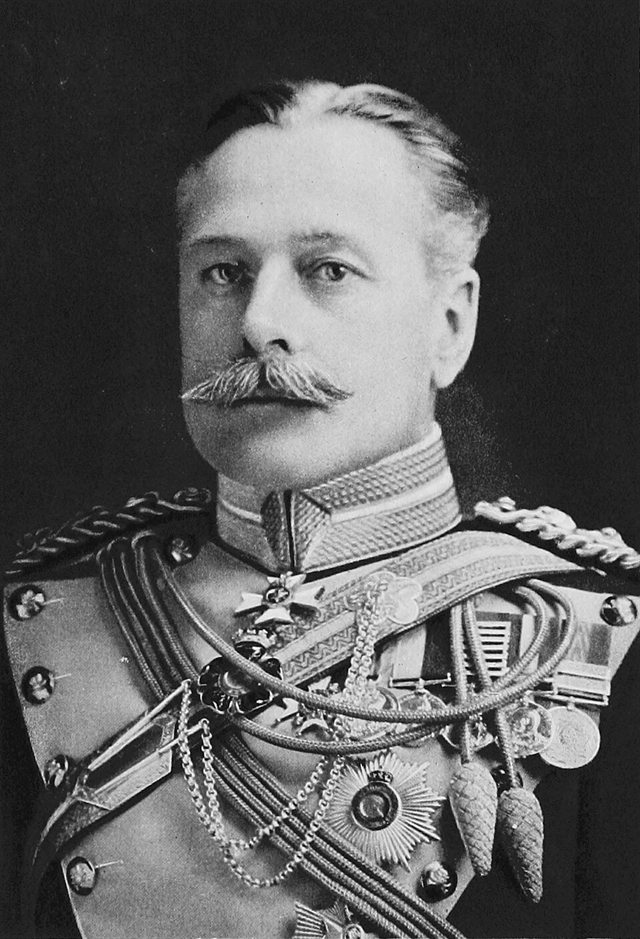
Ask Me What Else Was Available On That Front · Commander-in-Chief, BEF · 1861–1928
The Commander-in-Chief of the British armies in France from December 1915: the Somme, Passchendaele, and the Hundred Days that broke the German line.
Defend these ideas against Haig
Incandio is a free revision platform for the Pearson Edexcel International GCSE, and on it a topic counts as mastered only once you have learned it, proved it in questions, taught it back and defended it against the person with the strongest claim on it. Douglas Haig is that person for one topic on the course:
- The Somme, Passchendaele and the responsibility of Haig — History · The origins and course of the First World War, 1905–18
Who was Haig?
Born in Edinburgh in 1861 into the whisky family, Haig was a cavalryman who served in Sudan and South Africa and took command of the British Expeditionary Force in December 1915. He attacked on the Somme on 1 July 1916, partly to relieve the French at Verdun, and lost nearly sixty thousand casualties on the first day. He attacked again at Arras in 1917 and at Passchendaele from July that year. He held the line through the German spring offensive of March 1918 and then commanded the Hundred Days from 8 August, in which the British armies took more prisoners and guns than all their allies combined and broke the Hindenburg Line. After the war he devoted himself to the British Legion and the poppy appeal.
Major achievements
- Commanded the British armies through the Hundred Days, the most successful campaign in British military history by captures
- Held the line during the German spring offensive of March 1918
- Founded and led the British Legion and the poppy appeal after the war
Life in brief
- 1861 — Born in Edinburgh: A cavalry officer who served in Sudan and South Africa.
- 1915 — Takes command of the BEF: In December, succeeding Sir John French.
- 1916 — The Somme, 1 July: Nearly sixty thousand casualties on the first day.
- 1917 — Passchendaele: The Third Battle of Ypres, from July.
- 1918 — The Hundred Days: From 8 August: the Hindenburg Line is broken.
- 1921 — The British Legion: Founded and led; the poppy appeal begins.
Explore the life of Haig — five chapters
- The Youngest of Eleven — A distiller's son who passed out first from Sandhurst
- The Army He Helped Build — The Haldane reforms, and the part nobody mentions
- The Somme — The first day, and the four months after it
- The Hundred Days — The most successful campaign in British military history
- The Poppy, and the Donkeys — Ten years for the veterans, and ninety years of ridicule
Read the five-chapter life of Douglas Haig →
Begin
- Start a conversation with Haig — a dramatised, historically grounded AI portrayal
- Read the Historical Brief
- Explore the life of Haig — five chapters
- Find your course · Meet all 280 figures