Historical figure · Pearson Edexcel International GCSE revision on Incandio
John Hunter
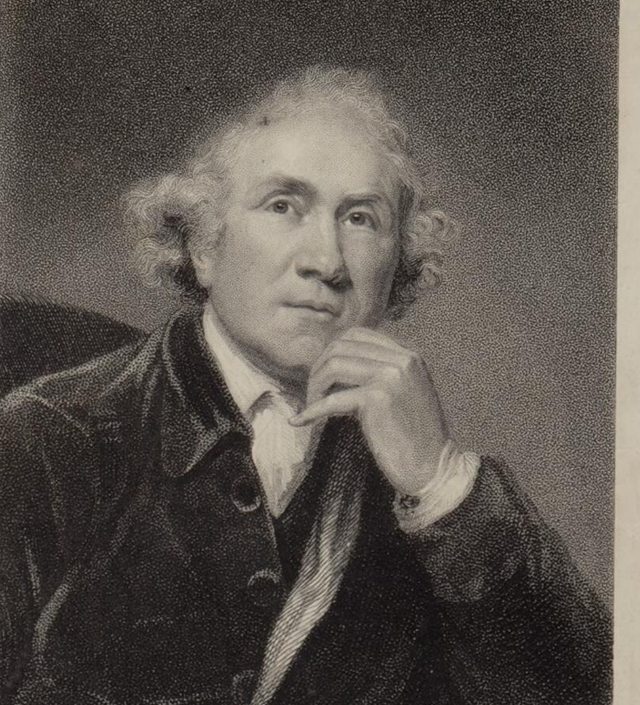
Why Think? Try the Experiment · Surgeon & Anatomist · 1728–1793
The Scottish surgeon who made experiment and observation the basis of surgery, taught Edward Jenner, and built a vast anatomical collection — including the skeleton of Charles Byrne, taken against Byrne's wishes.
Why Hunter is on Incandio
Incandio is a free revision platform for the Pearson Edexcel International GCSE. Its historical figures are the people a student learns from, questions and — where a specification topic is theirs — defends an idea against. John Hunter can be questioned here in a dramatised, historically grounded portrayal, and the five-chapter life below is written to be read alongside the course.
Who was Hunter?
Hunter was born in 1728 at Long Calderwood near East Kilbride, the youngest of ten children, with little formal schooling. In 1748 he joined his brother William's anatomy school in London, dissecting bodies, many supplied by grave-robbers. He trained under William Cheselden and Percivall Pott, then served as an army surgeon in the Seven Years' War, where he concluded that gunshot wounds often healed better without being cut open. In London he became a Fellow of the Royal Society (1767) and surgeon at St George's Hospital (1768). He taught surgery as a science based on physiology and experiment, and his pupils included Edward Jenner. In 1785 he treated a popliteal aneurysm by tying the femoral artery higher in the thigh, avoiding amputation. He assembled some 14,000 preparations. In 1783 he obtained the body of Charles Byrne, a very tall young Irishman who had asked to be buried at sea to escape the anatomists; his skeleton was displayed for over two centuries. Hunter died in 1793 after collapsing at a meeting at St George's.
Major achievements
- Made surgery a scientific discipline based on physiology and experiment
- Developed a successful operation for popliteal aneurysm that avoided amputation
- Trained Edward Jenner and many other leading surgeons
- Built an anatomical collection of some 14,000 preparations, later the Hunterian Museum
- Wrote major treatises on teeth, venereal disease, and the blood, inflammation and gunshot wounds
Life in brief
- 1728 — Born near East Kilbride: The youngest of ten children.
- 1748 — Joins William's anatomy school: Learns dissection in London.
- 1761 — Army surgeon at Belle-Île: Studies gunshot wounds in the Seven Years' War.
- 1768 — Surgeon at St George's Hospital: Begins teaching pupils including Jenner.
- 1783 — Charles Byrne's body: Obtained against Byrne's wishes for burial at sea.
- 1785 — Aneurysm operation: Ties the artery in the thigh and saves the leg.
- 1793 — Dies in London: Collapses at a St George's board meeting.
Explore the life of Hunter — five chapters
- In His Brother's Dissecting Room — A boy who preferred birds to books
- Army Surgeon — Gunshot wounds at Belle-Île and in Portugal
- Try the Experiment — Surgery as a science
- Teacher of Surgeons — Edward Jenner and the Hunterian method
- The Collection and Charles Byrne — Fourteen thousand specimens and one broken promise
Read the five-chapter life of John Hunter →
Begin
- Start a conversation with Hunter — a dramatised, historically grounded AI portrayal
- Read the Historical Brief
- Explore the life of Hunter — five chapters
- Find your course · Meet all 280 figures