Explore Their Life · Pearson Edexcel International GCSE revision on Incandio
John Hunter: A Life in Five Chapters
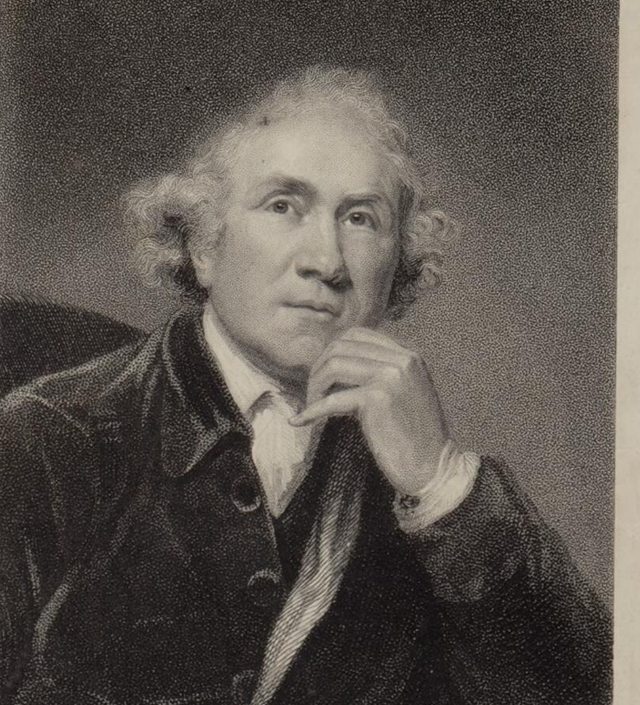
1728–1793
A Scottish farm boy who would not learn his lessons, became London's most famous surgeon, taught Edward Jenner to experiment — and took a young man's body that had been promised to the sea.
John Hunter turned surgery into a science of observation and experiment. He was also a man who depended on grave-robbers and who took Charles Byrne's body against Byrne's wishes. These five chapters follow his apprenticeship in his brother's dissecting room, war surgery, his experimental method, his pupils, and the ethics of his collection.
The five chapters
- In His Brother's Dissecting Room — A boy who preferred birds to books
- Army Surgeon — Gunshot wounds at Belle-Île and in Portugal
- Try the Experiment — Surgery as a science
- Teacher of Surgeons — Edward Jenner and the Hunterian method
- The Collection and Charles Byrne — Fourteen thousand specimens and one broken promise
Chapter 1 · In His Brother's Dissecting Room
A boy who preferred birds to books
1728 – 1760 · Long Calderwood · London
John Hunter was born in 1728 on a farm at Long Calderwood, near East Kilbride in Scotland, the youngest of ten children. Even his birthday is uncertain: the parish register gives 13 February, but he celebrated it on 14 July. He hated school and much preferred watching birds, insects and animals.
In 1748, aged twenty, he went to London to help his elder brother William, a successful anatomist who ran a private anatomy school. John proved brilliant at dissection and preparing specimens.
Anatomy schools needed a constant supply of bodies. Legally, only the bodies of executed murderers could be dissected, and there were far too few. The gap was filled by 'resurrection men', who dug up newly buried bodies — almost always from the graves of the poor, whose families could not afford secure burial. John Hunter dealt with them regularly. This trade caused great fear and anger among ordinary people, and it was not regulated until the Anatomy Act of 1832.
Hunter also studied surgery with the leading London surgeons William Cheselden and Percivall Pott, and spent a short, unhappy time at Oxford, which he left. He later said that the universities wanted to make an old woman of him, stuffing him with Latin and Greek. By 1760 he was a skilled anatomist, but not yet a surgeon with his own practice.
Why this matters
Hunter's training shows how 18th-century anatomy depended on bodies obtained by grave-robbing, mostly from the poor.
A farm boy in a London dissecting room supplied by grave-robbers. What would you ask him?
Ask Hunter
- “Why did you prefer watching animals to sitting in a schoolroom?”
- “Where did the bodies in your brother's anatomy school come from?”
- “Did you ever think about the poor families whose relatives' graves were robbed?”
- “What did William Cheselden and Percivall Pott teach you about surgery?”
- “Why did you leave Oxford so quickly?”
Chapter 2 · Army Surgeon
Gunshot wounds at Belle-Île and in Portugal
1760 – 1763 · Belle-Île · Portugal
In 1760, during the Seven Years' War, Hunter joined the army as a surgeon. He served in the expedition that captured the island of Belle-Île off the coast of Brittany in 1761, and then in Portugal in 1762.
War surgery gave him what it had given Paré two centuries earlier: large numbers of wounds to study. The standard treatment for gunshot wounds was to enlarge the wound with a knife, probe for the bullet and remove any fragments. Hunter observed that this often did more harm than good. Men whose wounds were left alone, he found, frequently healed better than those whose wounds were cut open and searched.
He began to think of surgery differently. The body, he argued, had its own powers of healing; inflammation was part of that process, not just a disease. A good surgeon needed to understand how the body heals and should interfere only when necessary.
These ideas eventually appeared in his great work, A Treatise on the Blood, Inflammation, and Gun-Shot Wounds, published in 1794, the year after his death.
While in Portugal he also studied lizards and other animals, continuing the comparative work he loved. When the war ended in 1763 he returned to London to start a surgical practice of his own. He was thirty-five.
Why this matters
Hunter's war experience led him to the idea that surgeons should understand and support the body's own healing — a key step towards scientific surgery.
Gunshot wounds left alone that healed better than those cut open. What would you ask him?
Ask Hunter
- “Why did you stop cutting open gunshot wounds to search for the bullet?”
- “What did you mean by saying inflammation was part of healing?”
- “How did war surgery at Belle-Île compare with surgery in London?”
- “Why were you studying lizards in Portugal in the middle of a war?”
- “Did you know about Ambroise Paré's work on gunshot wounds?”
Chapter 3 · Try the Experiment
Surgery as a science
1763 – 1786 · London · Earl's Court
Back in London, Hunter built a surgical practice and a reputation. He became a Fellow of the Royal Society in 1767 and surgeon at St George's Hospital in 1768. At his country house in Earl's Court he kept animals — including leopards, buffalo and zebras — for study.
His method was simple to state: observe, experiment and compare. He transplanted a human tooth into a cock's comb to see if it would take. He studied how antlers grow and how bones are remodelled. He compared organs across hundreds of species.
His most famous operation came in December 1785. A coachman had a popliteal aneurysm — a dangerous swelling of the artery behind the knee. The usual treatment was amputation. Hunter, from his studies of how blood finds other routes when one is blocked, tied off the main artery higher up in the thigh instead. Smaller vessels carried blood round, the swelling shrank, and the man kept his leg.
His 1786 Treatise on the Venereal Disease describes an experiment in which pus from a patient with gonorrhoea was used to inoculate a man. A long-repeated story says Hunter inoculated himself. The treatise does not say who the subject was, and historians dispute the claim; it may well have been a patient. Either way, the patient also carried syphilis, and the experiment led Hunter to the wrong conclusion that gonorrhoea and syphilis were one disease.
Why this matters
Hunter made experiment the basis of surgery, though the venereal experiment shows that experiment without good controls could reinforce errors.
A coachman's leg saved, and an experiment that gave the wrong answer. What would you ask him?
Ask Hunter
- “How did studying animals help you treat the coachman's aneurysm?”
- “Why did you put a human tooth into a cock's comb?”
- “Who was the man inoculated in your venereal-disease experiment?”
- “How did your experiment lead you to think gonorrhoea and syphilis were one disease?”
- “Why keep leopards and buffalo at a house in Earl's Court?”
Chapter 4 · Teacher of Surgeons
Edward Jenner and the Hunterian method
1770 – 1793 · London · Berkeley
Hunter was a poor lecturer. He mumbled, read from notes and struggled to explain himself. Yet he was one of the most influential teachers in the history of British medicine, because he taught a way of thinking.
His most famous pupil was Edward Jenner, who lived in Hunter's house as a student in 1770–72 and remained a friend and correspondent for life. When Jenner wrote to him with a theory about the body temperature of hedgehogs in hibernation, Hunter replied in a letter of 1775 with the advice for which he is best remembered — don't just think about it, test it.
Jenner later used that approach in his work on cowpox and smallpox. Jenner's famous vaccination experiment took place in 1796, three years after Hunter's death, so Hunter never saw it. But historians often trace Jenner's method — careful observation, testing an idea on a case, recording the result — back to his training with Hunter.
Other pupils included Astley Cooper, who became one of the leading surgeons of the nineteenth century, and Philip Syng Physick, sometimes called the father of American surgery.
Hunter was quarrelsome. He argued with the other surgeons at St George's and fell out bitterly with his brother William over who deserved credit for discovering how blood circulates in the placenta. The brothers were barely reconciled before William's death in 1783.
“But why think, why not trie the Expt.”
— Letter from John Hunter to Edward Jenner, 1775 (original spelling)
Why this matters
Hunter's most lasting influence was his method, passed on through pupils such as Jenner, linking him to the story of vaccination.
A poor lecturer who taught Jenner to test his ideas. What would you ask him?
Ask Hunter
- “What did you mean when you told Jenner to stop thinking and try the experiment?”
- “What was Edward Jenner like as a student in your house?”
- “How can a man who mumbled through lectures be a great teacher?”
- “Why did you and your brother William quarrel over the placenta?”
- “Why were you always fighting with the surgeons at St George's?”
Chapter 5 · The Collection and Charles Byrne
Fourteen thousand specimens and one broken promise
1783 – 1793, and after · Leicester Square · London
Hunter spent much of his fortune on his collection: around fourteen thousand preparations of human and animal bodies, organs, bones and diseased tissue, arranged to show how living things work. He kept it in a purpose-built museum at his house in Leicester Square.
The collection's most famous item raises the hardest questions about him. Charles Byrne was a young man from Ireland who grew to an exceptional height — over seven feet — because of a condition now known to be caused by a tumour of the pituitary gland. He made a living exhibiting himself in London. As his health failed, Byrne knew that anatomists wanted his body. He arranged for friends to bury him at sea in a lead coffin so that no one could take it.
When Byrne died in June 1783, aged about twenty-two, Hunter paid a large sum — reportedly £500 — to those in charge of the body. It was secretly switched, taken to Hunter, and boiled down to the skeleton. Hunter did this knowing exactly what Byrne had wanted.
Hunter died in October 1793 after collapsing during an angry meeting at St George's Hospital. His collection was bought by the government in 1799 and given to the Company of Surgeons, later the Royal College of Surgeons. Byrne's skeleton was displayed there for over two hundred years. In 2023 the college decided to stop displaying it.
Why this matters
The story of Charles Byrne forces us to weigh scientific progress against the rights and wishes of individuals.
A promise of burial at sea, and a skeleton in a museum. What would you ask him?
Ask Hunter
- “You knew Charles Byrne wanted to be buried at sea — why did you take his body?”
- “What did you hope to learn from Byrne's skeleton?”
- “What was the purpose of arranging fourteen thousand specimens in one museum?”
- “Does scientific knowledge ever justify ignoring a dying man's wishes?”
- “Why did you spend your fortune on specimens rather than on yourself?”
What Hunter changed
Hunter helped turn surgery from a craft into a science grounded in anatomy, physiology and experiment. He trained a generation of surgeons, including Edward Jenner, and his collection became the Hunterian Museum. His career also shows the cost of 18th-century anatomy: bodies taken from the graves of the poor, and Charles Byrne's taken against his express wishes.
A debate that continues
Should Hunter be remembered chiefly as the founder of scientific surgery or as an example of science overriding consent? The Royal College of Surgeons' 2023 decision to stop displaying Byrne's skeleton reopened that debate.
Keep exploring — ask Hunter
- “Can a person's scientific achievements be separated from how they were obtained?”
- “Why was experiment so important to the development of surgery?”
- “Who should decide what happens to a person's body after death?”
Related lives
- Edward Jenner — Father of Vaccination
- Ambroise Paré — I Dressed Him, God Healed Him
- Joseph Lister — Fifteen Years Before They Believed Him
Related themes
Surgery in the 18th century · Anatomy and grave-robbing · Vaccination · Medical ethics
Continue on Incandio
- Talk to Hunter — every question on this page is one tap from being asked, and the same page carries the Historical Brief, the achievements and the timeline
- All 280 figures · Incandio — learn every idea, teach it, then defend it