Historical figure · Pearson Edexcel International GCSE revision on Incandio
Joseph Lister
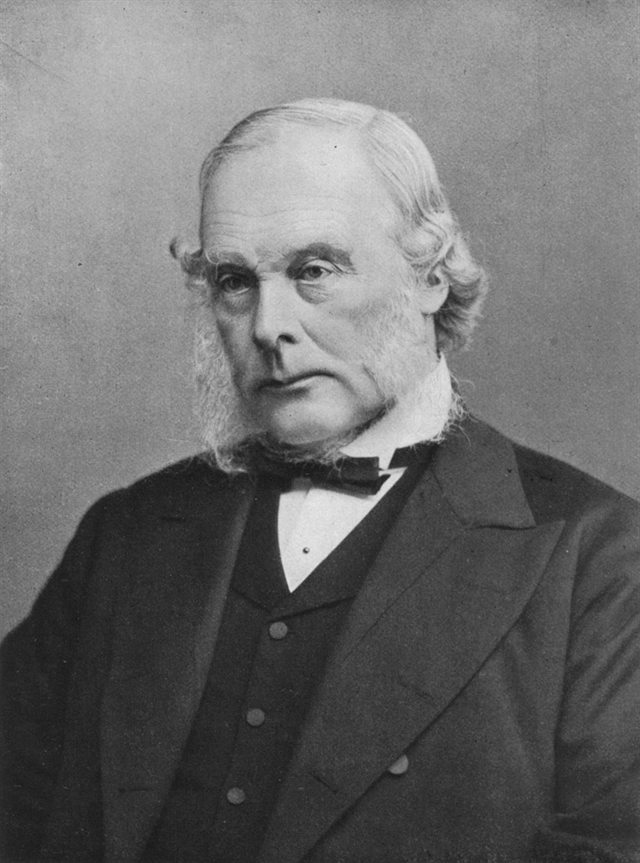
Fifteen Years Before They Believed Him · Surgeon · 1827–1912
The surgeon who read Pasteur, applied carbolic acid to a compound fracture in 1865, and spent fifteen years being resisted by his own profession.
Defend these ideas against Lister
Incandio is a free revision platform for the Pearson Edexcel International GCSE, and on it a topic counts as mastered only once you have learned it, proved it in questions, taught it back and defended it against the person with the strongest claim on it. Joseph Lister is that person for one topic on the course:
- From antiseptic to aseptic surgery — History · Changes in medicine, c1848–c1948
Who was Lister?
Born in 1827 into a Quaker family whose father developed the achromatic microscope lens, Lister worked in Glasgow when he read Pasteur on fermentation and reasoned that if micro-organisms cause putrefaction, killing them before they reach a wound must prevent it. In August 1865 he dressed the compound fracture of an eleven-year-old boy, James Greenlees, with carbolic acid, and the boy kept his leg. He published in The Lancet in 1867 and reported male accident ward mortality falling from about forty-five per cent to fifteen. British surgeons resisted for roughly fifteen years: the spray slowed operations and cracked the hands, his figures came from a single ward with no control, and accepting the method meant accepting that they had been carrying infection themselves. He lived to see antisepsis superseded by asepsis, which was its vindication.
Major achievements
- Applied antiseptic technique to a compound fracture in August 1865 and published in 1867
- Reduced mortality in his own accident ward from about forty-five per cent to fifteen
- Made the germ theory operational in surgery, which is what turned it into medicine
Life in brief
- 1827 — Born at Upton, Essex: Into a Quaker family of scientific instrument makers.
- 1865 — James Greenlees: A compound fracture dressed with carbolic acid in August; the leg is saved.
- 1867 — The Lancet papers: Published March to July.
- 1877 — Moves to King's College London: To argue the method in the capital.
- 1880s — Adoption: British surgery accepts the principle roughly fifteen years after 1865.
- 1912 — Dies at Walmer: Having seen antisepsis replaced by asepsis.
Explore the life of Lister — five chapters
- The Microscope — A Quaker family that made lenses
- Reading Pasteur — Fermentation, putrefaction, and one leap
- James Greenlees — A cart, a broken leg, and a boy who kept it
- The Resistance — Accepted in Munich, argued with in London
- Superseded, and Content To Be — From killing the germs to keeping them out
Read the five-chapter life of Joseph Lister →
Begin
- Start a conversation with Lister — a dramatised, historically grounded AI portrayal
- Read the Historical Brief
- Explore the life of Lister — five chapters
- Find your course · Meet all 280 figures