Historical figure · Pearson Edexcel International GCSE revision on Incandio
Maimonides
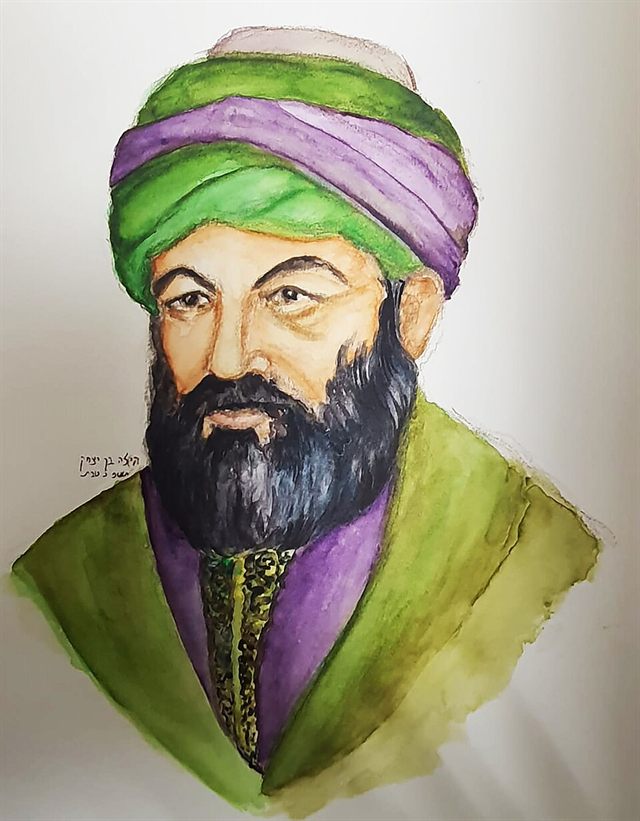
Who Said What God Is Not · Rabbi, Physician & Philosopher · 1138–1204
The rabbi who fled Córdoba as a boy, became court physician in Cairo, codified the whole of Jewish law, and then wrote a book arguing that God can be described only by what God is not.
Defend these ideas against Maimonides
Incandio is a free revision platform for the Pearson Edexcel International GCSE, and on it a topic counts as mastered only once you have learned it, proved it in questions, taught it back and defended it against the person with the strongest claim on it. Maimonides is that person for one topic on the course:
- Ultimate reality — Religious Studies · Judaism
Who was Maimonides?
Moses ben Maimon was born at Córdoba in 1138 into a family of judges. The Almohad conquest ended that life: the family left, moved for years through Iberia and North Africa, spent time at Fez and briefly at Acre, and settled at Fustat near Cairo. His younger brother David supported the household by trading in precious stones and drowned in the Indian Ocean with the family's capital; Maimonides wrote afterwards that he was ill for a year and that the grief did not lift for many more. He turned to medicine and became physician in the household of al-Fadil, the vizier of Saladin's administration, working days long enough that he described patients waiting in his antechamber while he wrote. He produced three great works. The Commentary on the Mishnah made the oral law accessible; the Mishneh Torah, finished about 1180, set out the entire body of Jewish law in ordered Hebrew so that a reader could find an answer without following the argument through the Talmud — which several rabbis resented for precisely that reason. And around 1190 he finished the Guide for the Perplexed, addressed to a reader who knows both philosophy and Torah and cannot see how they fit. Its central argument is deliberately uncomfortable: almost everything said positively about God is false, because it makes God a kind of thing among things. What can honestly be said is what God is not — not a body, not in a place, not subject to change. He died in 1204 and was buried at Tiberias.
Major achievements
- The Mishneh Torah (completed c. 1180), the whole of Jewish law in ordered Hebrew
- The Guide for the Perplexed (c. 1190)
- The Thirteen Principles, still recited in some liturgies
- A working medical practice at the highest level of the Egyptian court
Life in brief
- 1138 — Born at Córdoba: Into a family of judges.
- 1148 — The family leaves: After the Almohad conquest of the city.
- c. 1168 — Commentary on the Mishnah: Completed after years of travel.
- c. 1177 — His brother drowns: With the family's capital, in the Indian Ocean.
- c. 1180 — The Mishneh Torah: The whole of Jewish law, ordered.
- c. 1190 — The Guide for the Perplexed: Written for one pupil, and read by everyone.
- 1204 — Dies in Egypt: Buried at Tiberias.
Explore the life of Maimonides — five chapters
- Out of Córdoba — A family of judges on the road for a decade
- The Loss at Sea — A brother, the family's money, and a grief written down
- The Whole of the Law, in Order — A code that made scholars unnecessary, and annoyed them
- The Guide for the Perplexed — What can honestly be said about God
- The Argument That Followed — Banned, defended, and still consulted
Read the five-chapter life of Maimonides →
Begin
- Start a conversation with Maimonides — a dramatised, historically grounded AI portrayal
- Read the Historical Brief
- Explore the life of Maimonides — five chapters
- Find your course · Meet all 280 figures