Historical figure · Pearson Edexcel International GCSE revision on Incandio
Mary Shelley
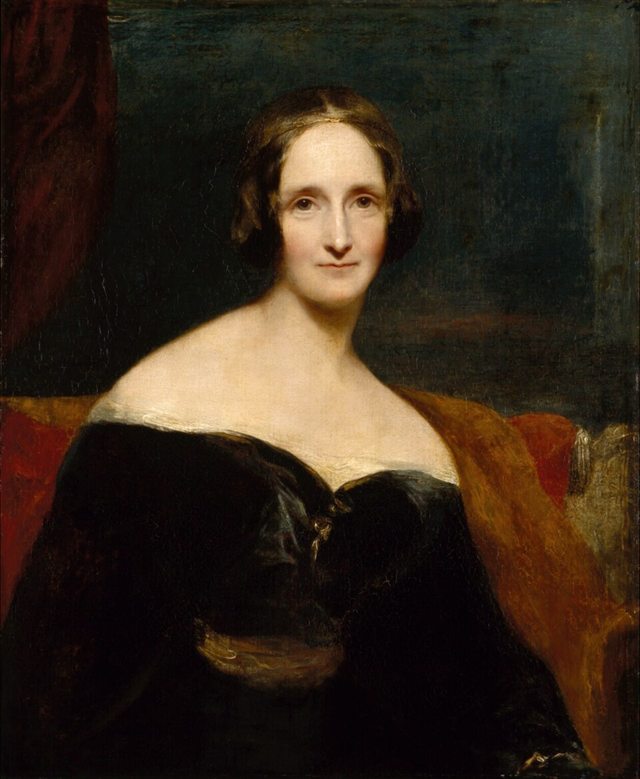
Mother of Science Fiction · Novelist · 1797–1851
The novelist who, at eighteen, conceived 'Frankenstein' — a fable of creation, responsibility and the perils of science that is often called the first work of science fiction.
Defend these ideas against Mary
Incandio is a free revision platform for the Pearson Edexcel International GCSE, and on it a topic counts as mastered only once you have learned it, proved it in questions, taught it back and defended it against the person with the strongest claim on it. Mary Shelley is that person for 9 topics on the course — 8 of them:
- Victor Frankenstein in Frankenstein — English Literature
- The Creature in Frankenstein — English Literature
- Robert Walton in Frankenstein — English Literature
- Elizabeth, Justine and the domestic circle in Frankenstein — English Literature
- Dangerous knowledge and ambition in Frankenstein — English Literature
- Creation and responsibility in Frankenstein — English Literature
- Prejudice, isolation and the outsider in Frankenstein — English Literature
- Nature and the sublime in Frankenstein — English Literature
Who was Mary?
Mary Shelley was the daughter of the philosopher William Godwin and the pioneering feminist Mary Wollstonecraft, who died days after her birth. At eighteen, in the wet summer of 1816 by Lake Geneva, Lord Byron proposed that each of their circle write a ghost story; from a waking dream Mary conceived 'Frankenstein; or, The Modern Prometheus' — a student who assembles and animates a creature, then abandons it in horror and reaps ruin. It is a fable of creation without responsibility, and of the outcast made monstrous by rejection. She was the companion and then wife of the poet Percy Bysshe Shelley; after his drowning in 1822 she raised their son and sustained both his memory and her own pen with novels such as 'The Last Man'. She endured repeated bereavement with quiet resilience.
Major achievements
- Wrote 'Frankenstein', a foundational work of Gothic and science fiction
- Explored the ethics of scientific creation a century before its dilemmas arrived
- Wrote the early apocalyptic novel 'The Last Man'
- Edited and championed the poetry of Percy Bysshe Shelley after his death
- Sustained a literary career as a widow and single mother
Life in brief
- 1797 — Born in London: Her mother dies days later.
- 1814 — Elopes with Shelley: Begins life with the poet Percy Bysshe Shelley.
- 1816 — The ghost-story summer: Conceives 'Frankenstein' at Villa Diodati.
- 1818 — Frankenstein published: Anonymously, to lasting fame.
- 1822 — Percy drowns: She is widowed at 24.
- 1826 — The Last Man: Her apocalyptic novel appears.
- 1851 — Dies: In London, of illness.
Explore the life of Mary — five chapters
- Born to Famous Parents, Raised by Neither — A mother who died, a father who theorised
- The Summer Without a Sun — Lake Geneva, a volcano and a ghost-story competition
- What Frankenstein Is Actually About — Creation, abandonment and responsibility
- Italy, and Almost Everyone Dies — Four years that emptied a household
- Thirty More Years of Work — The Last Man, the editions, and a reputation reclaimed
Read the five-chapter life of Mary Shelley →
Debate Mary in the Agora
Reading is the start. On Incandio an idea counts as mastered only once you have argued it against the person with the strongest claim on it, in structured rounds marked against published descriptors.
- Who Made the Monster — “The creature's violence is the direct product of Victor's abandonment, and the novel holds Victor responsible.”
Begin
- Start a conversation with Mary — a dramatised, historically grounded AI portrayal
- Read the Historical Brief
- Explore the life of Mary — five chapters
- Find your course · Meet all 280 figures