Historical figure · Pearson Edexcel International GCSE revision on Incandio
Robert Louis Stevenson
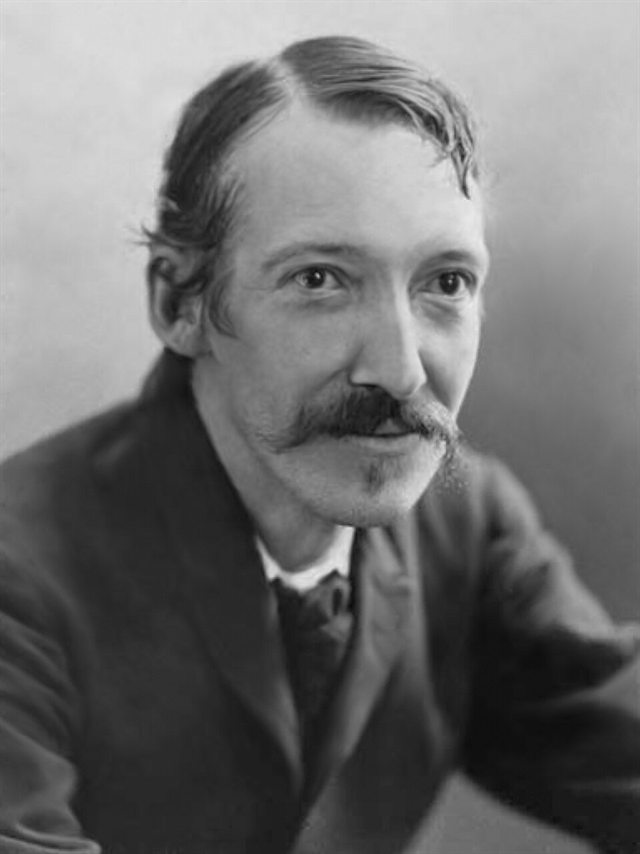
Who Knew Edinburgh Had Two Towns · Novelist · 1850–1894
The Edinburgh engineer's son who wrote Treasure Island, Kidnapped and Strange Case of Dr Jekyll and Mr Hyde, and died in Samoa at forty-four.
Defend these ideas against Stevenson
Incandio is a free revision platform for the Pearson Edexcel International GCSE, and on it a topic counts as mastered only once you have learned it, proved it in questions, taught it back and defended it against the person with the strongest claim on it. Robert Louis Stevenson is that person for 11 topics on the course — 8 of them:
- Dr Henry Jekyll in The Strange Case of Dr Jekyll and Mr Hyde — English Literature
- Edward Hyde in The Strange Case of Dr Jekyll and Mr Hyde — English Literature
- Gabriel John Utterson in The Strange Case of Dr Jekyll and Mr Hyde — English Literature
- Dr Hastie Lanyon in The Strange Case of Dr Jekyll and Mr Hyde — English Literature
- Enfield and Poole in The Strange Case of Dr Jekyll and Mr Hyde — English Literature
- Duality and the divided self in The Strange Case of Dr Jekyll and Mr Hyde — English Literature
- Reputation, secrecy and respectability in The Strange Case of Dr Jekyll and Mr Hyde — English Literature
- Science, religion and the supernatural in The Strange Case of Dr Jekyll and Mr Hyde — English Literature
Who was Stevenson?
Stevenson was born in Edinburgh in 1850, the only child of the lighthouse engineer Thomas Stevenson. Often ill as a child, he was raised partly by his nurse Alison Cunningham, whose fierce Calvinist stories stayed with him. He studied engineering and then law, qualified as an advocate in 1875, and never practised. His rejection of his parents' religion in 1873 caused a bitter family crisis. He wrote essays and travel books, met the American Fanny Osbourne in France in 1876, followed her to California and married her in 1880. Treasure Island (1883) made him popular. Living as an invalid in Bournemouth, he wrote Strange Case of Dr Jekyll and Mr Hyde, published in January 1886, which sold tens of thousands of copies within months and was preached on from pulpits. Kidnapped followed the same year. After his father's death he left Britain for good, sailed the Pacific, and settled in Samoa in 1890, where he took the side of the Samoans against the colonial powers. He died at Vailima on 3 December 1894 and is buried on Mount Vaea above it.
Major achievements
- Strange Case of Dr Jekyll and Mr Hyde (1886)
- Treasure Island (1883), which fixed the popular image of pirates
- Kidnapped (1886) and The Master of Ballantrae (1889)
- A Child's Garden of Verses (1885)
- His open letter defending Father Damien (1890) and A Footnote to History (1892) on Samoa
Life in brief
- 1850 — Born in Edinburgh: Only child of the lighthouse engineer Thomas Stevenson.
- 1875 — Called to the bar: Qualifies as an advocate and never practises.
- 1880 — Marries Fanny Osbourne: In San Francisco, after following her to California.
- 1883 — Treasure Island: His first great popular success.
- 1886 — Strange Case of Dr Jekyll and Mr Hyde: Published by Longmans in January as a shilling paperback.
- 1890 — Settles in Samoa: Builds Vailima above Apia.
- 1894 — Dies at Vailima: 3 December; buried on Mount Vaea.
Explore the life of Stevenson — five chapters
- Two Edinburghs — A lighthouse family, a Calvinist nurse, and a city split in half
- The Velvet Coat — Engineering, law, and a quarrel with his father's God
- Fanny and the Map — France, California, and a treasure island drawn for a boy
- Skerryvore — A nightmare in Bournemouth that became Jekyll and Hyde
- Tusitala — The Pacific, Samoa, and the teller of tales
Read the five-chapter life of Robert Louis Stevenson →
Begin
- Start a conversation with Stevenson — a dramatised, historically grounded AI portrayal
- Read the Historical Brief
- Explore the life of Stevenson — five chapters
- Find your course · Meet all 280 figures