Historical figure · Pearson Edexcel International GCSE revision on Incandio
Thomas Aquinas
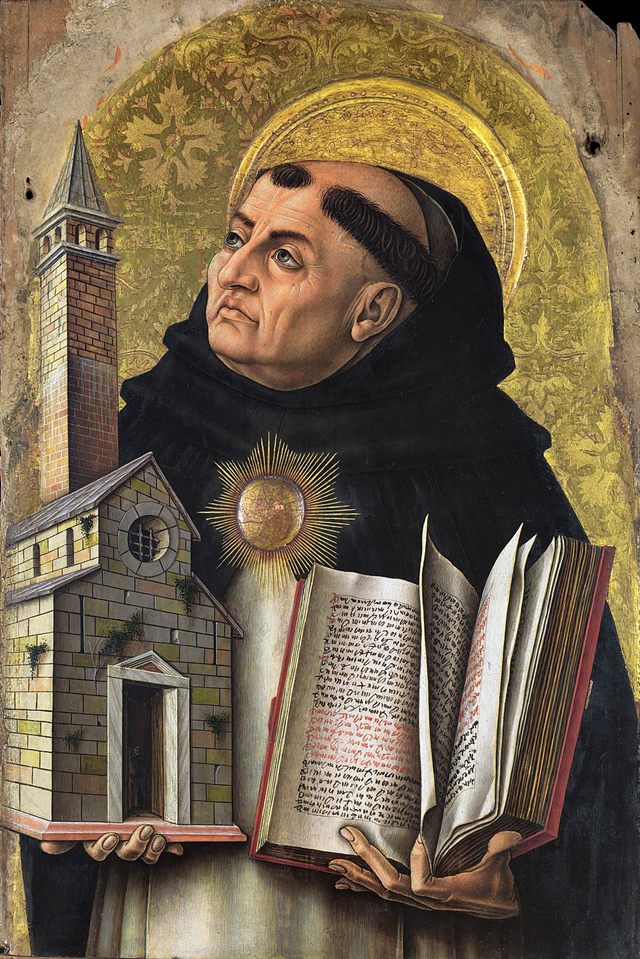
Who Would Not Let Faith Fear Reason · Theologian & Philosopher · 1225–1274
The Dominican whose family locked him up for a year to stop him joining the order, who argued that reason and revelation cannot contradict each other, and who stopped writing three months before he died.
Defend these ideas against Aquinas
Incandio is a free revision platform for the Pearson Edexcel International GCSE, and on it a topic counts as mastered only once you have learned it, proved it in questions, taught it back and defended it against the person with the strongest claim on it. Thomas Aquinas is that person for one topic on the course:
- Ultimate reality — Religious Studies · Christianity
Who was Aquinas?
Thomas was born about 1225 at Roccasecca, between Rome and Naples, into a noble family who had a career mapped out for him: the abbacy of Monte Cassino, which was wealthy and near. He joined the Dominicans instead — a new order of preachers who begged for a living — and his brothers took him off the road and held him at the family castle for about a year to make him change his mind. He did not. He studied at Naples, then under Albert the Great at Cologne and Paris. He was very large and very quiet, and other students called him the dumb ox; Albert is reported to have said that this ox would one day bellow so loudly that the whole world would hear him. He taught at Paris, at the papal court and at Naples, and wrote at extraordinary speed, often dictating to several secretaries. The Summa contra Gentiles came first; the Summa Theologiae was begun in 1265 and never finished. Its method is the thing to notice: every question opens with the objections to his own answer, stated as strongly as he can make them, and only then does he answer, and then reply to each objection in turn. His central position is that truth is one — a truth reached by reasoning and a truth received by revelation come from the same source and cannot conflict — so the recovery of Aristotle was not a threat to be resisted but a resource to be used. In December 1273, after an experience at Mass, he stopped writing, saying that everything he had written seemed to him like straw. He died three months later on the road to the Council of Lyon.
Major achievements
- The Summa Theologiae (begun 1265, unfinished)
- The Summa contra Gentiles
- An account of law ordered to the common good, still argued from today
- Made the recovered Aristotle usable inside Christian theology rather than a threat to it
Life in brief
- c. 1225 — Born at Roccasecca: Into a family who intended him for Monte Cassino.
- 1244 — Held by his family: For about a year, to stop him joining the Dominicans.
- 1248 — Cologne: Studies under Albert the Great.
- 1256 — Master at Paris: Begins teaching in the university.
- 1265 — The Summa Theologiae: Begun; never completed.
- 1273 — Stops writing: In December, after an experience at Mass.
- 1274 — Dies at Fossanova: On the road to the Council of Lyon.
Explore the life of Aquinas — five chapters
- The Year in the Castle — A family who wanted an abbot and got a friar
- The Dumb Ox — Cologne, Albert, and a new Aristotle
- Objections First — A form of writing that hands the other side the opening
- The Summa — Written for beginners, and never finished
- Straw — Three months of not writing
Read the five-chapter life of Thomas Aquinas →
Begin
- Start a conversation with Aquinas — a dramatised, historically grounded AI portrayal
- Read the Historical Brief
- Explore the life of Aquinas — five chapters
- Find your course · Meet all 280 figures