Explore Their Life · Pearson Edexcel International GCSE revision on Incandio
William Beveridge: A Life in Five Chapters
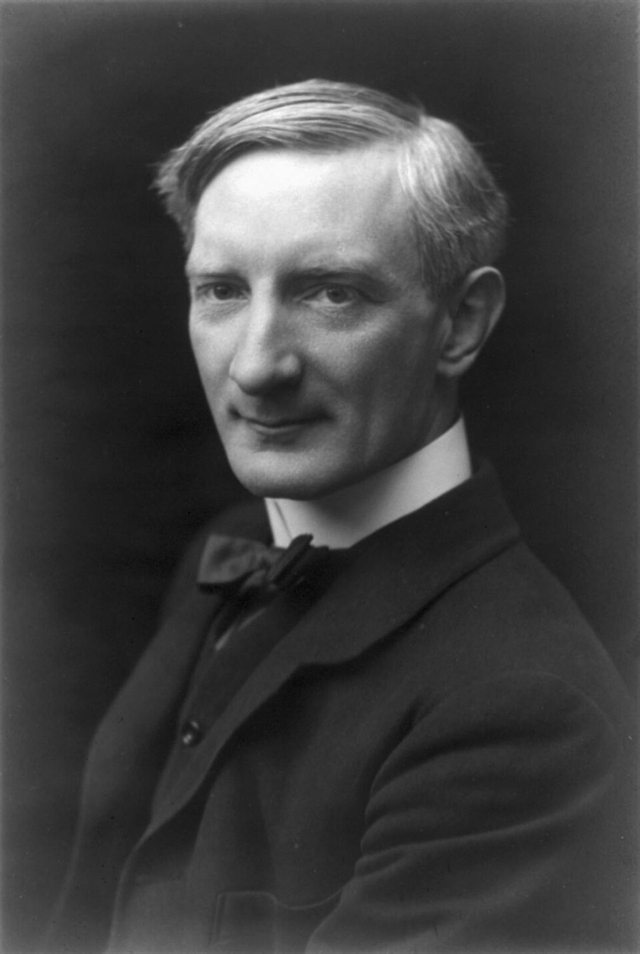
1879–1963
A judge's son born in Bengal who saw poverty in the East End, built labour exchanges for Churchill, and wrote the wartime report that named five giants and laid the foundations of the welfare state.
William Beveridge did not create the National Health Service, but his 1942 report made it a political promise. These five chapters follow his early life and work in the East End, the Liberal reforms, his years running the LSE, the Beveridge Report, and what happened to his plan after 1945.
The five chapters
- From Bengal to the East End — A privileged young man meets poverty
- Labour Exchanges and Insurance — Working for Churchill and the Liberal government
- Director of the LSE — An administrator between the wars
- The Five Giants — The report that queues formed to buy
- Whose Welfare State? — A Liberal plan built by a Labour government
Chapter 1 · From Bengal to the East End
A privileged young man meets poverty
1879 – 1905 · Rangpur · Oxford · Whitechapel
William Beveridge was born on 5 March 1879 at Rangpur in Bengal, in British India (now in Bangladesh). His father, Henry Beveridge, was a judge in the Indian Civil Service; his mother, Annette Akroyd, was a scholar who translated Persian texts. He was educated at Charterhouse School and Balliol College, Oxford, where he studied mathematics and classics, and then law.
Instead of becoming a lawyer, in 1903 he became sub-warden of Toynbee Hall in Whitechapel, in London's East End. Toynbee Hall was a 'settlement', where educated young men lived among the poor to study and help them. The East End was crowded, with casual work at the docks, bad housing and frequent illness.
At Toynbee Hall Beveridge became fascinated by unemployment. Many people at the time thought poverty was caused by bad character. Researchers such as Charles Booth in London and Seebohm Rowntree in York were showing that much poverty came from low wages, illness, old age and unemployment. Beveridge argued that unemployment was a problem of how industry was organised, not mainly of individual laziness.
It is also true that, like many reformers of his time, he held views influenced by eugenics. In early writing he suggested that people he called 'unemployables' should lose some civil rights. These views are rightly condemned today, and they are part of his story.
Why this matters
Beveridge's experience at Toynbee Hall and the research of Booth and Rowntree shaped his belief that poverty had causes the state could tackle.
A judge's son living among the dockworkers of Whitechapel. What would you ask him?
Ask Beveridge
- “What did living at Toynbee Hall teach you about the causes of poverty?”
- “How did Booth's and Rowntree's surveys change your thinking?”
- “Why did you decide unemployment was a problem of industry rather than character?”
- “How do you answer for your early writing about taking rights from 'unemployables'?”
- “Did growing up in a family of the Indian Civil Service shape your view of government?”
Chapter 2 · Labour Exchanges and Insurance
Working for Churchill and the Liberal government
1908 – 1918 · The Board of Trade · Westminster
In 1908 Winston Churchill, then President of the Board of Trade in the Liberal government, brought Beveridge into the civil service. The Liberals were introducing a wave of social reforms, including old age pensions (1908).
Beveridge's first big task was labour exchanges — offices where unemployed workers could find out about available jobs, instead of tramping from place to place. They opened in 1910 under the Labour Exchanges Act of 1909.
His second was unemployment insurance. Under Part II of the National Insurance Act of 1911, introduced by the Chancellor, David Lloyd George, workers in certain trades such as building and shipbuilding paid a small weekly contribution, as did their employers and the state. If they lost their jobs, they received benefit for a limited time. Part I of the same Act provided health insurance for workers. Beveridge designed much of the unemployment scheme.
The idea of insurance — everyone contributes, and you receive benefits as a right, not as charity — became the heart of his thinking. It avoided the humiliating Poor Law and the workhouse.
These schemes had limits. They covered only some workers, not their families, and benefits were small. But they were an important step: the government accepting some responsibility for people who fell on hard times.
During the First World War Beveridge worked on munitions and food rationing, gaining experience of running the economy in wartime.
Why this matters
The 1911 National Insurance Act, which Beveridge helped design, was an early step in the government taking responsibility for health and welfare.
Labour exchanges and the first unemployment insurance. What would you ask him?
Ask Beveridge
- “How did Churchill use you at the Board of Trade in 1908?”
- “How did a labour exchange help an unemployed man in 1910?”
- “Why did you prefer insurance to the Poor Law?”
- “Who was left out of the 1911 National Insurance Act?”
- “What did wartime rationing teach you about government?”
Chapter 3 · Director of the LSE
An administrator between the wars
1919 – 1941 · London School of Economics · Oxford
In 1919 Beveridge became Director of the London School of Economics, a post he held until 1937. He expanded it greatly, raising money, adding buildings and turning it into one of the world's leading centres for the social sciences. He was a powerful and sometimes autocratic leader, and he clashed with some staff, including the political theorist Harold Laski.
The interwar years were hard for many British people. Unemployment rarely fell below a million, and in the Depression of the early 1930s it rose to nearly three million. The insurance schemes of 1911 had been extended, but long-term unemployed people were pushed onto means-tested benefits. The means test, which examined a household's income and possessions, was deeply resented.
Health care was also patchy. Workers covered by national insurance could see a 'panel' doctor, but their wives and children usually could not, and hospital care depended on charity, local authorities or ability to pay. Many people avoided doctors because of the cost.
Beveridge continued to study unemployment and served on official committees. In 1937 he moved to Oxford as Master of University College.
When the Second World War began in 1939, he hoped for a major role organising wartime manpower. Instead, in 1941, the minister Arthur Greenwood asked him to chair a committee reviewing social insurance. Beveridge was disappointed — at first he saw it as a sideline. He turned it into the most important work of his life.
Why this matters
The patchy health care and hated means test of the interwar years explain why Beveridge's plan for universal provision was so popular.
An unwanted committee in the middle of a war. What would you ask him?
Ask Beveridge
- “Why was the means test so hated in the 1930s?”
- “Who could see a panel doctor before the war, and who could not?”
- “Why were you disappointed to be given the social insurance committee in 1941?”
- “How did you build the LSE into a leading institution?”
- “Why did some colleagues at the LSE find you difficult?”
Chapter 4 · The Five Giants
The report that queues formed to buy
1941 – 1943 · London
Beveridge's report, Social Insurance and Allied Services, was published on 1 December 1942, just weeks after the victory at El Alamein. It became a sensation. People queued to buy it, and it sold hundreds of thousands of copies.
The report proposed a single, simple system of social insurance. Every working person would pay one flat-rate weekly contribution. In return, everyone would receive flat-rate benefits when they could not earn — through sickness, unemployment, old age, widowhood or maternity — set at a level intended to cover basic needs. There would be no means test: benefits would be a right.
Beveridge said the plan depended on three 'assumptions': family allowances for children; a comprehensive health service for everyone; and the government keeping unemployment low. The health service was 'Assumption B'. He did not design it in detail.
The report described poverty — Want — as one of five giants blocking the road to a better Britain. The others were Disease, Ignorance, Squalor and Idleness.
The coalition government's reaction was cautious. Churchill worried about the cost and about making promises before the war was won. In a Commons debate in February 1943, many Labour MPs voted against the government for not acting faster. The report had become a symbol of what people were fighting for.
“A revolutionary moment in the world's history is a time for revolutions, not for patching.”
— Social Insurance and Allied Services (the Beveridge Report), 1942, paragraph 7
Why this matters
The Beveridge Report made a comprehensive health service a central part of post-war plans — the direct background to the NHS in 1948.
Five giants on the road to reconstruction. What would you ask him?
Ask Beveridge
- “Why did people queue in wartime to buy a government report?”
- “What did you mean by Assumption B, a comprehensive health service?”
- “Which of the five giants did you think was hardest to defeat?”
- “Why did you insist on flat-rate benefits with no means test?”
- “How did you feel when Churchill's government hesitated over your plan?”
Chapter 5 · Whose Welfare State?
A Liberal plan built by a Labour government
1944 – 1963 · Berwick-upon-Tweed · Westminster · Oxford
In 1944 Beveridge published Full Employment in a Free Society, arguing that the state should keep unemployment low. That year he was elected Liberal MP for Berwick-upon-Tweed, but he lost the seat in the Labour landslide of July 1945.
It was Clement Attlee's Labour government that turned much of his report into law: the Family Allowances Act (passed in 1945 under the caretaker government), the National Insurance Act of 1946, and the National Health Service Act of 1946, which came into effect on 5 July 1948. The NHS was the work of Aneurin Bevan, the Minister of Health, who negotiated with doctors and nationalised the hospitals. Beveridge had assumed a health service would exist; Bevan built it, on lines Beveridge had not set.
The welfare state did not follow Beveridge exactly. Benefits were set too low to live on, so many people still needed means-tested help. The system assumed a man earning for his family, with married women treated mainly as dependants. Critics have pointed to these weaknesses ever since.
Beveridge became a peer in 1946, as Baron Beveridge. In Voluntary Action (1948) he warned that the state should not crowd out charities, friendly societies and mutual aid. He married his long-time colleague Janet (Jessy) Mair in 1942. He died in Oxford on 16 March 1963.
Why this matters
Beveridge's report provided the plan, but the NHS was created by Bevan and the Attlee government — an important distinction for any answer on the welfare state.
A plan carried out by others, after the voters turned him out. What would you ask him?
Ask Beveridge
- “How did it feel to lose your seat just as your plan was being carried out?”
- “Was the NHS that Bevan built the health service you had in mind?”
- “Why were benefits set too low for people to live on?”
- “Why did your report treat married women as dependants of their husbands?”
- “Why did you warn in Voluntary Action against the state doing everything?”
What Beveridge changed
Beveridge's 1942 report provided the blueprint for Britain's post-war welfare state: national insurance, family allowances, and the assumption of a comprehensive health service, which became the NHS in 1948. It marked a turning point at which government accepted responsibility for the health and basic welfare of every citizen. Earlier, he had helped design labour exchanges and unemployment insurance under the Liberal reforms.
A debate that continues
Historians debate how far the post-war welfare state was 'Beveridge's', and how far it reflected the Labour government, Bevan's own vision and wartime public opinion. They also debate whether his reputation should be qualified by his eugenic views and the report's assumptions about women.
Keep exploring — ask Beveridge
- “Does the person who writes a plan deserve more credit than the person who builds it?”
- “Why did the Second World War make radical reform possible?”
- “Should a welfare system be universal or targeted at those in greatest need?”
Related lives
- Aneurin Bevan — I Stuffed Their Mouths With Gold
- Winston Churchill — Prime Minister of Great Britain
- David Lloyd George — The Cottage-Bred Solicitor Who Ran An Empire
Related themes
The Beveridge Report · The creation of the NHS · The Liberal reforms · The welfare state
Continue on Incandio
- Talk to Beveridge — every question on this page is one tap from being asked, and the same page carries the Historical Brief, the achievements and the timeline
- All 280 figures · Incandio — learn every idea, teach it, then defend it