Explore Their Life · Pearson Edexcel International GCSE revision on Incandio
William Paley: A Life in Five Chapters
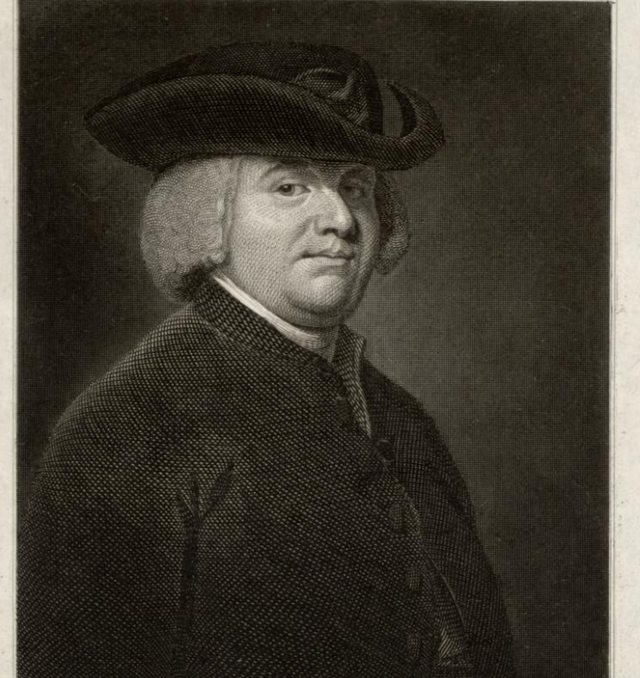
1743–1805
A schoolmaster's son who became the clearest teacher in Cambridge, condemned the slave trade, and wrote the design argument every student still meets — a watch found on a heath.
Paley is remembered for one image, and the image was not new. What was new was the patience with which he tested it against the body, organ by organ. These five chapters follow the Yorkshire schoolboy, the Cambridge tutor, the moralist who condemned the slave trade, the watch on the heath, and the objections — from Hume before him and Darwin after — that his argument still has to meet.
The five chapters
- Giggleswick to Cambridge — A headmaster's son who came top in mathematics
- The Moral Philosopher — General happiness, the pigeons, and the slave trade
- The Watch on the Heath — Natural Theology, written in pain
- Hume's Shadow — The objections already in print
- After Paley — A student at Christ's who read every word
Chapter 1 · Giggleswick to Cambridge
A headmaster's son who came top in mathematics
1743 – 1766 · Peterborough · Giggleswick · Cambridge
William Paley was born in Peterborough in July 1743. When he was a baby his father became headmaster of the grammar school at Giggleswick in the Yorkshire Dales, and Paley grew up there among farmers, fishermen and the boys his father taught. He was clumsy at riding, fond of fishing all his life, and unusually good at explaining things.
In 1759 he went to Christ's College, Cambridge. Mathematics dominated the Cambridge examinations, and in 1763 Paley was Senior Wrangler — the student placed first in the whole university. It was a remarkable result for a provincial boy with no connections.
He worked for a time as an assistant teacher at a school in Greenwich, then returned to Christ's as a fellow in 1766. Fellows had to be unmarried and were usually expected to take holy orders in the Church of England. Paley was ordained.
Two things from these years shaped everything he later wrote. The first was mathematics: he learned to reason in short, plain steps, and to state exactly what followed from what. The second was teaching: he discovered that he could make a difficult idea clear to a bored eighteen-year-old by finding the right ordinary example. Nearly every famous passage he wrote begins with something you could pick up — a stone, a watch, a handful of corn.
He was not a mystic and never claimed any special religious experience. His faith, as he presented it, was a conclusion from evidence — which is exactly why his arguments could be tested, and why they were.
Why this matters
Paley's habit of arguing from a plain, everyday example began as a teacher's technique, and it is the reason his design argument is so easy to grasp and so easy to attack.
A clumsy rider, a keen fisherman and the top mathematician in Cambridge. What would you ask him?
Ask Paley
- “How did being Senior Wrangler in mathematics shape the way you argue about God?”
- “Why do you always start from an ordinary object rather than a definition?”
- “Did you ever have a religious experience, or was your belief a conclusion from evidence?”
- “Why did Cambridge fellows have to be clergymen in your day?”
- “What did growing up in the Yorkshire Dales teach you about nature?”
Chapter 2 · The Moral Philosopher
General happiness, the pigeons, and the slave trade
1766 – 1785 · Christ's College · Carlisle
As a tutor Paley lectured on moral philosophy, and in 1785, by now Archdeacon of Carlisle, he turned the lectures into The Principles of Moral and Political Philosophy. Cambridge made it a set text, and generations of students learned ethics from it.
His central claim was that right action is whatever tends to promote general happiness, because a good God wills the happiness of his creatures. This combined two ideas that many people now keep apart: a religious foundation for morality and a test that looks at consequences. Some historians call him a theological utilitarian, writing before Bentham made the word famous.
The book contains a passage that embarrassed him later. Imagine, he wrote, a flock of pigeons in a field of corn, where ninety-nine gather everything into a heap for one — the weakest and worst of the flock — and then watch him waste it, and are punished if they touch a grain. That, he said, is what we see every day among people. He went on to argue that private property was still justified because it was useful. But radicals quoted the pigeons, and a story spread that he was called 'Pigeon Paley' at court. There is no firm source for that.
The same book condemned the slave trade outright, and Paley went on to draft arguments for the abolition committee and to speak against the trade at a public meeting in Carlisle. Yet in 1793, frightened by revolution in France, he published Reasons for Contentment, advising the labouring poor that their lives had advantages the rich lacked. He was humane, and he was a conservative, and both are true.
Why this matters
Paley's moral philosophy shows that a religious thinker could judge actions by their consequences, and it shows the limits of an eighteenth-century clergyman's radicalism.
Ninety-nine pigeons, one heap of corn, and a condemnation of the slave trade. What would you ask him?
Ask Paley
- “If morality is whatever promotes general happiness, why do we need God at all?”
- “What did you mean by the ninety-nine pigeons gathering corn for one?”
- “Why did you think the slave trade was impossible to defend?”
- “How could you condemn slavery and also tell the poor to be content with their station?”
- “Is it true that a remark about pigeons cost you a bishopric?”
Chapter 3 · The Watch on the Heath
Natural Theology, written in pain
1795 – 1802 · Bishopwearmouth · Lincoln
In 1802, at the rectory of Bishopwearmouth near Sunderland and suffering from a painful illness, Paley published Natural Theology: or, Evidences of the Existence and Attributes of the Deity, Collected from the Appearances of Nature.
It opens with a walk across a heath. If you kicked a stone, you might say it had always lain there. But if you found a watch, you would never say that. You would see that its parts — the spring, the wheels, the glass over the face — are put together for a purpose, to mark the time, and that if any part were shaped or placed differently the watch would not work. You would conclude that it had a maker.
Then Paley anticipates objections. You have never seen a watch being made: the inference still holds. The watch sometimes goes wrong: it still had a maker. Some parts seem to do nothing: that does not undo the evidence of the rest. Suppose the watch could even produce another watch: that would make its maker more impressive, not less necessary.
The rest of the book applies the same reasoning to nature. The eye, he argues, is built like a telescope, with lenses and adjustments for distance and light, and is better made. He goes on to the joints, the muscles, the epiglottis that stops food entering the windpipe, and the wings of birds. Contrivance, he insists, needs a contriver.
This is the design argument, also called the teleological argument, from the Greek telos, meaning purpose. Paley did not invent the watch image — Cicero and others used similar pictures — but nobody had worked the case through the body so thoroughly.
“In crossing a heath, suppose I pitched my foot against a stone, and were asked how the stone came to be there...”
— William Paley, Natural Theology (1802), chapter 1
Why this matters
Natural Theology is the classic version of the design argument, and students of religion meet it as the argument that purpose in nature points to a designer.
A stone, a watch and an eye compared with a telescope. What would you ask him?
Ask Paley
- “Why does a watch prove a maker when a stone does not?”
- “If the watch sometimes goes wrong, does it still show design?”
- “What makes the human eye better evidence than the watch itself?”
- “Does your argument tell us the designer is good, or only that there is one?”
- “Why did you add that a watch which could make another watch would need a maker even more?”
Chapter 4 · Hume's Shadow
The objections already in print
1779 – 1805 · Edinburgh · Carlisle
Paley's book came out twenty-three years after David Hume's Dialogues Concerning Natural Religion, published in 1779 after Hume's death. Hume had already put the strongest objections to the design argument, and many readers think Paley never properly answered them.
Hume's first objection is that the analogy is weak. A watch is like other machines we have seen made; the universe is unique, and we have never seen a universe made. Why compare it to a watch rather than to a growing plant or an animal, which produce order without any visible designer?
The second is that the argument proves too little. Even if the world was designed, it might have been designed by a committee of gods, by an apprentice god who botched it, or by one who has since died. Nothing in the evidence shows a single, all-powerful, perfectly good creator.
The third concerns suffering. A world in which animals live by eating one another, and in which disease and pain are everywhere, is hard to read as the work of a kind designer.
Paley faced the last objection directly. He argued that most contrivances in nature are beneficial, that pain is usually useful as a warning, and that the overall balance of nature favours happiness. Critics thought he underrated the amount of suffering in the world; defenders admired his honesty in raising it.
One way of reading Paley is that he was not really offering an analogy at all, but an inference to the best explanation: of the explanations available in 1802, a designer was the best. That reading makes his argument stronger — and also makes it vulnerable if a better explanation appears.
Why this matters
Hume's objections — weak analogy, too little proved, and suffering — are the standard criticisms of the design argument at GCSE, and they predate Paley.
A sceptic's book that came out first, and a reply about pain and happiness. What would you ask him?
Ask Paley
- “How do you answer Hume's point that we have never seen a universe being made?”
- “Could your evidence just as well point to several designers as to one God?”
- “How can a good designer have made animals that live by killing each other?”
- “Is your argument really an analogy, or a claim about the best explanation?”
- “Why do you say pain in nature is mostly useful?”
Chapter 5 · After Paley
A student at Christ's who read every word
1805 and after · Lincoln · Carlisle Cathedral · Christ's College
Paley died on 25 May 1805 and was buried in Carlisle Cathedral. For half a century his books were set at Cambridge, and educated readers in Britain and America took Natural Theology as the standard case for a designer.
One of those readers was a student at Paley's own college. In 1828 Charles Darwin arrived at Christ's College to train, as it happened, for the Church of England. He studied Paley's Evidences for his examinations and read Natural Theology with delight, later saying that he had almost learned it by heart and that its logic had charmed him.
Darwin's theory of evolution by natural selection, published in 1859, offered a different explanation of the very thing Paley had pointed to. Eyes, wings and joints fit their purposes, Darwin argued, because over immense time those creatures whose bodies happened to work slightly better survived and had more offspring. Design-like order could arise without a designer. Paley, of course, knew nothing of this; it came fifty-four years after his death.
The argument did not end there. Some religious thinkers argued that natural selection was itself the method a designer used. Others moved the design argument from biology to physics, pointing out that the basic constants of the universe seem finely tuned to allow life at all. Others, like Bertrand Russell, thought the existence of so much suffering made any designer implausible.
What makes Paley worth meeting is that he laid his argument out so clearly that everybody who disagreed knew exactly what to aim at. That clarity is a kind of honesty.
Why this matters
Paley's argument shaped the young Darwin and is still the starting point for debates about evolution, fine-tuning and design.
A book a young Darwin nearly knew by heart. What would you ask him?
Ask Paley
- “If an explanation without a designer were ever found for the eye, would your argument fall?”
- “Could a designer work through slow natural processes rather than direct making?”
- “Does the order of the stars and planets show design as clearly as the body does?”
- “Why did Cambridge set your books as examination texts for so long?”
- “What would you say to someone who finds the design argument persuasive but still doubts?”
What Paley changed
Paley gave the design argument its most famous form, made it a staple of English education for half a century, and set the terms that Darwin, Russell and the fine-tuning debate all had to engage. His moral philosophy also helped make consequence-based reasoning respectable in Christian ethics.
A debate that continues
Did Darwin refute Paley, or did he only remove one set of examples while leaving the deeper question — why there is order at all — untouched?
Keep exploring — ask Paley
- “Is the watch analogy strong enough to support belief in God?”
- “Does natural selection make the design argument redundant?”
- “Can the fine-tuning of the universe revive Paley's case?”
Related lives
- Charles Darwin — Author of On the Origin of Species
- David Hume — Who Asked What the Evidence Was For
- Thomas Aquinas — Who Would Not Let Faith Fear Reason
- Bertrand Russell — Who Asked Who Made God
Related themes
The design argument · Natural theology · Evolution and religion · The problem of evil
Continue on Incandio
- Talk to Paley — every question on this page is one tap from being asked, and the same page carries the Historical Brief, the achievements and the timeline
- All 280 figures · Incandio — learn every idea, teach it, then defend it