Pearson Edexcel International GCSE in Physics · 4PH1 · Free · no account needed
Gas Pressure and Absolute Zero — exam questions
10 original Incandio exam-style questions on Gas Pressure and Absolute Zero, 23 marks, about 23 minutes of writing. Each one carries the command word, the tariff and the specification statement it assesses, exactly as a paper presents them. This is an original Incandio practice question, written to reflect the structure and demands of the qualification. It is not an official Pearson Edexcel past-paper question.
This is the practice set for Gas Pressure and Absolute Zero — the lesson that teaches it. Read the lesson first if the idea is new; come here when you want to find out whether you can turn it into marks. Completely free, no account needed to read.
What these questions ask of you
7 command words run through this set, and on Pearson Edexcel International GCSE Physics each one means something precise. Answering the wrong command is the commonest way a candidate who understands the lesson still loses the mark.
- Which (1 mark)
- one option chosen from the set given
- State (1 mark)
- one precise fact or definition
- Calculate (1–5 marks)
- select the equation, substitute, evaluate — and state the unit Misread as: giving a bare number with no equation and no unit
- Determine (1–4 marks)
- a value obtained by combining a reading or gradient with a relationship
- Explain (2–4 marks)
- the physics that causes it, set out as a line of reasoning Misread as: describing the change without giving the physical reason for it
- Suggest (1–3 marks)
- a plausible answer applying taught physics to an unfamiliar arrangement
- Describe (2–4 marks)
- developed, linked statements of what happens — including a named direction where one exists
Assessed on Paper 1 (4PH1/1P) and Paper 2 (4PH1/2P), against AO1, AO2, AO3.
Where these sit in the specification
Pearson Edexcel International GCSE Physics (4PH1) — statements 5.16 · 5.17 · 5.15. Incandio is aligned to this specification; it is not published by, endorsed by or affiliated with Pearson, and it reproduces none of Pearson's wording.
The 10 questions
Answer them on paper, then open the lesson's exam practice to have them marked. The mark scheme, the accepted and rejected answers and the annotated model answer are in Incandio and are not printed here — an answer beside its question is not practice.
-
A sealed glass flask of air was connected to a pressure gauge and placed in a water bath. The bath was warmed in stages and the pressure recorded once the flask had settled at each temperature. The volume of the flask did not change.
Table 1 — pressure of a fixed volume of air at four temperatures Temperature / °C Pressure / kPa 0 101 20 108 50 119 80 130 (a)
(2)Calculate
Calculate the temperature of the 50 °C reading in kelvin, using Table 1.
A sealed glass flask of air was connected to a pressure gauge and placed in a water bath. The bath was warmed in stages and the pressure recorded once the flask had settled at each temperature. The volume of the flask did not change.
Table 1 — pressure of a fixed volume of air at four temperatures Temperature / °C Pressure / kPa 0 101 20 108 50 119 80 130 ............................ K
(b)
(2)Describe
Describe the relationship between temperature and pressure shown by Table 1.
A sealed glass flask of air was connected to a pressure gauge and placed in a water bath. The bath was warmed in stages and the pressure recorded once the flask had settled at each temperature. The volume of the flask did not change.
Table 1 — pressure of a fixed volume of air at four temperatures Temperature / °C Pressure / kPa 0 101 20 108 50 119 80 130 (c)
(3)Explain
Explain how a graph drawn from Table 1 could be used to estimate absolute zero.
A sealed glass flask of air was connected to a pressure gauge and placed in a water bath. The bath was warmed in stages and the pressure recorded once the flask had settled at each temperature. The volume of the flask did not change.
Table 1 — pressure of a fixed volume of air at four temperatures Temperature / °C Pressure / kPa 0 101 20 108 50 119 80 130 (Total for Question 1 = 7 marks)
-
(1)Which
Which temperature is absolute zero?
Temperature A 0 °C B −100 °C C −273 °C D −373 °C (Total for Question 2 = 1 mark)
-
(1)State
State what is true of the movement of the molecules of a gas at absolute zero.
(Total for Question 3 = 1 mark)
-
(2)Calculate
Calculate the temperature 27 °C in kelvin.
............................ K
(Total for Question 4 = 2 marks)
-
(2)Determine
Liquid nitrogen boils at 77 K. Determine this temperature in degrees Celsius.
............................ °C
(Total for Question 5 = 2 marks)
-
(4)Explain
Explain how the molecules of a gas exert a pressure on the walls of their container.
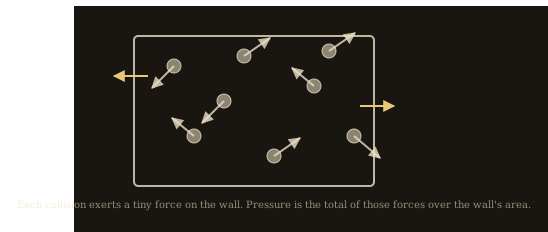
Figure 1 — molecules in a container (Total for Question 6 = 4 marks)
-
(3)Explain
Explain why there is a lowest possible temperature but no highest one.
(Total for Question 7 = 3 marks)
-
(3)Suggest
Suggest why the pressure inside the tyre is higher at the end of the journey.
A tyre after a long drive — A car tyre is checked before a long motorway journey and again immediately afterwards. The pressure has risen by about 15%. The tyre has not been pumped up, nothing has been added to it, and the volume of the tyre is very nearly unchanged. The rubber is noticeably warm.
(Total for Question 8 = 3 marks)
Have them marked, then defend the answer
Practice tells you the mark; teaching it back tells you whether you understand it. On Incandio a topic counts as mastered only once you have taught it and defended it.
- Mark these questions — 10 questions, marked on Incandio against the authored scheme, with the mistake you actually made named.
- Teach it — explain Gas Pressure and Absolute Zero to Ember, an AI pupil who does not have it yet and asks the awkward question.
- Defend it — argue it against Lord Kelvin over three rounds, marked against descriptors you can read first.
Completely free. No subscriptions, no paywalls, no account needed to start.
Back to the lesson
- Gas Pressure and Absolute Zero — Where the pressure of a gas actually comes from, and why the temperature scale has to start somewhere else.
- All of Incandio Physics · Incandio Exam Practice