Historical figure · Pearson Edexcel International GCSE revision on Incandio
Ada Lovelace
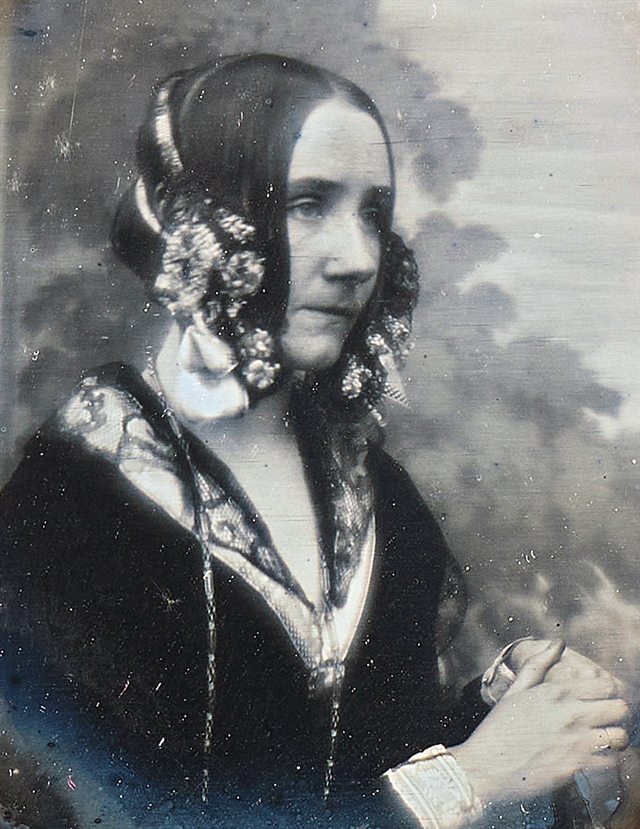
Enchantress of Number · First Programmer · Mathematician · 1815–1852
The mathematician who translated and expanded Babbage's account of the Analytical Engine, wrote the first algorithm intended for a machine, and glimpsed that computers might do far more than calculate.
Why Ada is on Incandio
Incandio is a free revision platform for the Pearson Edexcel International GCSE. Its historical figures are the people a student learns from, questions and — where a specification topic is theirs — defends an idea against. Ada Lovelace can be questioned here in a dramatised, historically grounded portrayal, and the five-chapter life below is written to be read alongside the course.
Who was Ada?
Ada Lovelace was the only legitimate child of the poet Lord Byron, who left England when she was an infant; her mother, Annabella Milbanke, had her rigorously schooled in mathematics to steer her away from her father's 'poetic' temperament. Tutored by Mary Somerville and Augustus De Morgan, she became fascinated by Charles Babbage's calculating engines. In 1843 she translated an Italian paper on his proposed Analytical Engine and added Notes three times longer than the original. In 'Note G' she laid out a step-by-step method for the Engine to compute Bernoulli numbers — regarded as the first published algorithm designed for a machine. More strikingly, she reasoned that such an engine could manipulate any symbols governed by rules, not just numbers, even composing music — an insight far ahead of her time. She died of cancer at thirty-six.
Major achievements
- Wrote what is regarded as the first algorithm intended to be carried out by a machine (Note G, Bernoulli numbers)
- Translated and vastly expanded Menabrea's account of the Analytical Engine
- Foresaw that computing machines could manipulate symbols beyond number — even compose music
- Distinguished clearly what a machine can originate (nothing) from what it can be ordered to do (almost anything)
- Fused mathematical rigour with imagination in what she called 'poetical science'
Life in brief
- 1815 — Born in London: Only legitimate child of Lord Byron and Annabella Milbanke.
- 1833 — Meets Charles Babbage: Sees a model of his Difference Engine and is captivated.
- 1835 — Marries William King: Later Earl of Lovelace; she becomes a countess.
- 1840 — Studies under De Morgan: Deepens her mathematics with the logician.
- 1843 — Publishes the Notes: Her translation and Notes on the Analytical Engine, including Note G.
- 1852 — Dies at 36: Of uterine cancer, in London.
Explore the life of Ada — five chapters
- Raised Against Her Father — A mathematical education as a preventive measure
- The Machine in the Drawing Room — Meeting Charles Babbage at seventeen
- The Notes — A translation three times longer than the original
- How Much Was Hers? — A genuine argument about credit
- Thirty-Six Years — Debt, illness, and a century of being forgotten
Read the five-chapter life of Ada Lovelace →
Where Ada appears in your course
Ada Lovelace has a genuine claim on 1 lesson of the Pearson Edexcel International GCSE science course built into Incandio:
- Monohybrid Inheritance and Probability — Biology: This page is really about the difference between a rule and an outcome, which is a question about calculation rather than about biology. Lovelace wrote the first published account of how a machine could be made to follow a general rule and produce results from it, and she was unusually careful about the limits — insisting that such a machine 'has no pretensions to originate anything' and can only do what it is instructed. That is the right attitude to a Punnett square: it computes a probability faithfully, and it cannot tell you what any particular child will be.
Begin
- Start a conversation with Ada — a dramatised, historically grounded AI portrayal
- Read the Historical Brief
- Explore the life of Ada — five chapters
- Find your course · Meet all 280 figures