Explore Their Life · Pearson Edexcel International GCSE revision on Incandio
Ada Lovelace: A Life in Five Chapters
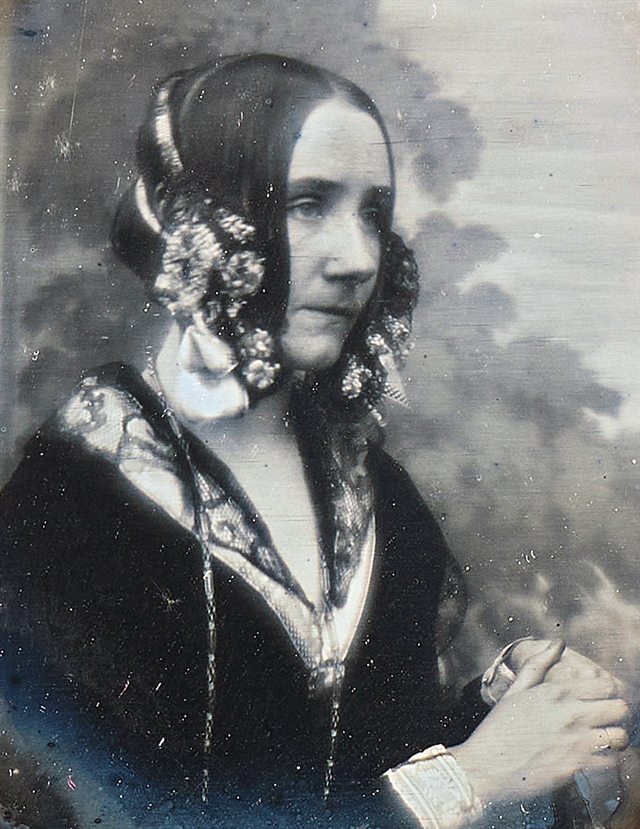
1815–1852
Byron's daughter, raised on mathematics to keep her from her father's imagination — and the first person to see that a calculating machine could work with anything, not just numbers.
Lovelace wrote a set of notes on a machine that was never built, and in them described what a computer could be a century before one existed. She has been both overclaimed and dismissed since. These five chapters set out the evidence for what she actually did, and the argument that still surrounds it.
The five chapters
- Raised Against Her Father — A mathematical education as a preventive measure
- The Machine in the Drawing Room — Meeting Charles Babbage at seventeen
- The Notes — A translation three times longer than the original
- How Much Was Hers? — A genuine argument about credit
- Thirty-Six Years — Debt, illness, and a century of being forgotten
Chapter 1 · Raised Against Her Father
A mathematical education as a preventive measure
1815 – 1832 · London · Ockham
Augusta Ada Byron was born on 10 December 1815, the only child of Lord Byron's brief and catastrophic marriage to Anne Isabella Milbanke. Her mother left a month later, taking the baby. Byron never saw his daughter again and died in Greece when she was eight; his last recorded words reportedly included her name.
Her mother — whom Byron had nicknamed the Princess of Parallelograms for her interest in mathematics — was determined that Ada should not inherit her father's temperament. The prescribed antidote was rigorous mathematical and scientific training, unusual for any girl of the period and almost unheard of for an aristocrat. Ada was made to lie still for long periods to develop self-control, and reported on by companions instructed to watch for signs of Byronic tendencies. She was not shown a portrait of her father until she was twenty.
The education worked in a way her mother did not intend. Ada was a genuinely imaginative mathematician. At twelve she designed a flying machine, studying bird anatomy and considering steam power, and wrote a book about it she called *Flyology*.
At fourteen she was struck by measles and spent about a year bedridden, with partial paralysis, walking with crutches for years afterwards.
Her tutors included Mary Somerville, the leading woman scientist in Britain, who became a mentor and friend, and later Augustus De Morgan, the logician, who wrote to her mother that her mathematical capacity was such that, in a man, it would have made him an original investigator.
Why this matters
Lovelace's education is a rare documented case of a girl in the 1820s being taught advanced mathematics — and of what happens when that opportunity is provided.
You have met the girl trained against her own father. What would you ask her?
Ask Ada
- “Why did your mother insist on mathematics?”
- “What did you design in Flyology at twelve?”
- “What did Mary Somerville give you?”
- “How did being your father's daughter follow you?”
- “What did a year in bed at fourteen do to you?”
Chapter 2 · The Machine in the Drawing Room
Meeting Charles Babbage at seventeen
1833 – 1840 · London
In June 1833, aged seventeen, Ada was taken to see a demonstration of Charles Babbage's Difference Engine — a partly built brass mechanism for calculating and printing mathematical tables without human error.
Where other visitors admired the workmanship, Ada wanted to understand the mechanism. Mary Somerville recorded that she asked about the principle rather than the effect. Babbage, forty-one and famously irascible, found in her someone who could follow his thinking, and the two corresponded for the rest of her life.
Babbage had by then moved on to something far more ambitious: the Analytical Engine, a general-purpose mechanical computer with a separate 'store' for numbers and a 'mill' for operations, programmed by punched cards borrowed from the Jacquard loom. It had conditional branching and loops. It was never built — the British government, having spent heavily on the unfinished Difference Engine, declined to fund it, and the manufacturing precision required was at the limit of the age.
Ada married William King in 1835, who became Earl of Lovelace in 1838, making her Countess of Lovelace. She had three children in four years and continued studying mathematics throughout, taking a formal correspondence course with De Morgan.
She wanted work of her own. In letters to Babbage she described herself as an analyst and metaphysician, and proposed that she become his interpreter — the person who could explain what his machine meant to a world that saw only an expensive calculator.
Why this matters
The Analytical Engine was a general-purpose programmable computer designed in the 1830s — and its significance was almost entirely missed by everyone except Lovelace.
You have the machine and the partnership. What would you ask her?
Ask Ada
- “What did you understand about the engine that other visitors did not?”
- “How did the Analytical Engine differ from a calculator?”
- “Why did punched cards from a loom matter?”
- “Why did the government refuse to fund it?”
- “What did you mean by calling yourself an analyst and metaphysician?”
Chapter 3 · The Notes
A translation three times longer than the original
1842 – 1843 · London · Ockham Park
In 1842 the Italian mathematician Luigi Menabrea published an account in French of a lecture Babbage had given in Turin. Lovelace was asked to translate it into English.
She did, and then added her own notes, labelled A to G. They run to about three times the length of the original paper, and they are the reason she matters.
Note A distinguishes the Analytical Engine from all previous machines: earlier devices computed numbers, but this one operates on general symbols according to rules. From that she draws the crucial inference. If relations between things — pitches in harmony, for example — could be expressed in symbols, the engine could act on them. She writes that it might compose elaborate and scientific pieces of music of any degree of complexity. This is the concept of a general-purpose computer working on any data that can be encoded, and no one else stated it for a century.
Note G contains a detailed table of operations for computing Bernoulli numbers on the engine, including a loop structure. It is widely described as the first published computer program, and the description is defensible, though Babbage had written unpublished programs of his own earlier.
Note G also contains her caution: the engine has no pretensions to originate anything, and can only do whatever we know how to order it to perform. Turing named this the Lovelace objection in 1950 and devoted a section to answering it.
She published under the initials A.A.L., since a countess's name on a scientific paper would have been scandalous.
“The Analytical Engine has no pretensions whatever to originate anything.”
— Ada Lovelace, Note G to her translation of Menabrea's Sketch of the Analytical Engine, 1843
Why this matters
Lovelace's Note A is the first statement that a computing machine could work on symbols of any kind — the conceptual leap from calculator to computer.
You have the notes themselves. What would you ask her?
Ask Ada
- “How did you see that the engine could work on music?”
- “What is happening in the Bernoulli numbers table?”
- “Why did you say the engine cannot originate anything?”
- “Why publish only as A.A.L.?”
- “Why were your notes longer than the paper you translated?”
Chapter 4 · How Much Was Hers?
A genuine argument about credit
Lovelace's reputation has swung between two extremes, and students should know why.
The deflationary case, argued by historians including Bruce Collier and, in a more measured form, by the Difference Engine's modern builder Doron Swade, holds that the ideas in the notes were Babbage's, that she was a gifted expositor rather than an originator, and that the Bernoulli program was substantially his work with her writing it up.
The case for her originality rests mainly on the surviving correspondence between them during the summer of 1843. The letters show her working on the Bernoulli calculation, finding and correcting an error Babbage had made, refusing his editorial interference, and insisting on control over her own text. She wrote firmly that she must have things her own way. Babbage himself later described the notes in his memoir as adding to Menabrea's paper and referred to her working out the algebraic development, and he never claimed the notes as his.
The reasonable conclusion is that the mathematics was a collaboration in which she did the detailed work with Babbage's input, and that the visionary claims — the symbol-processing argument, the music example, the objection about originality — appear in her notes and nowhere in his writing.
It is also worth noticing what the argument reveals. The reason it is unusually fierce is that she was a woman, an aristocrat and Byron's daughter, all of which have made her either irresistibly romantic or conveniently dismissible. The documents are more mundane and more interesting than either version.
Why this matters
The Lovelace credit dispute is an ideal case for teaching how historians weigh correspondence, publication and later testimony when deciding who did what.
You have the argument about her own work. What would you ask her?
Ask Ada
- “How much of the notes did Babbage contribute?”
- “What error of Babbage's did you find and correct?”
- “Why did you refuse to let Babbage change your text?”
- “Why do you think the argument about you is so heated?”
- “What would settle the question for a historian?”
Chapter 5 · Thirty-Six Years
Debt, illness, and a century of being forgotten
1844 – 1852 and after · London
Lovelace's last years were difficult. She planned further work — including, she suggested, a mathematical treatment of the nervous system — but none of it was completed. She developed an interest in applying mathematics to horse racing, ran up substantial gambling debts, and pawned family jewels twice, which her husband redeemed.
She was in increasing pain, treated with laudanum and other opiates that affected her behaviour and her judgement.
She died on 27 November 1852 of uterine cancer, aged thirty-six — the same age at which her father had died. She asked to be buried beside him at Hucknall in Nottinghamshire, next to a man she had never met.
The notes then went almost unread for a hundred years. The Analytical Engine was never completed, so there was nothing for them to describe, and computing had to be reinvented independently in the 1930s and 1940s. Alan Turing read her when preparing his 1950 paper and took her objection seriously enough to name and answer it.
Her rediscovery began properly in the 1950s and accelerated from the 1970s. In 1980 the US Department of Defense named its new programming language Ada, and its military standard number, MIL-STD-1815, was chosen for her birth year. Ada Lovelace Day, held each October, celebrates women in science and engineering.
What she actually did remains remarkable on any reading: she looked at an unbuilt brass machine designed to grind out numbers and described, correctly, a device that could operate on anything humans could encode.
Why this matters
Lovelace's notes were ignored for a century because the machine they described did not exist — a reminder that ideas can be correct and useless until the technology catches up.
You have the whole short life. What would you ask her?
Ask Ada
- “What were you planning to work on next?”
- “Why did you want to be buried beside a father you never knew?”
- “Why were your notes ignored for a century?”
- “What would you make of a computer today?”
- “Do you still think a machine cannot originate anything?”
What Ada changed
Lovelace's 1843 notes contain the first published account of a general-purpose computer as a machine that operates on symbols rather than only on numbers, and a detailed program for computing Bernoulli numbers. Her objection about machine originality shaped the founding debate in artificial intelligence, and the Ada programming language carries her name.
A debate that continues
Historians of computing disagree sharply over how much of the notes was her own work rather than Babbage's, with the surviving 1843 correspondence the principal evidence on either side.
Keep exploring — ask Ada
- “What else did you think the engine might one day do?”
- “How did you learn advanced mathematics without a university?”
- “What did Babbage understand about his own machine that you did not?”
Related lives
- Alan Turing — Father of Computer Science
- Grace Hopper — Amazing Grace · Mother of COBOL
- Mary Shelley — Mother of Science Fiction
Related themes
The history of computing · Algorithms and programming · Women in science
Where Ada appears in your course
Ada Lovelace has a genuine claim on 1 lesson of the Pearson Edexcel International GCSE science course built into Incandio:
- Monohybrid Inheritance and Probability — Biology: This page is really about the difference between a rule and an outcome, which is a question about calculation rather than about biology. Lovelace wrote the first published account of how a machine could be made to follow a general rule and produce results from it, and she was unusually careful about the limits — insisting that such a machine 'has no pretensions to originate anything' and can only do what it is instructed. That is the right attitude to a Punnett square: it computes a probability faithfully, and it cannot tell you what any particular child will be.
Continue on Incandio
- Talk to Ada — every question on this page is one tap from being asked, and the same page carries the Historical Brief, the achievements and the timeline
- All 280 figures · Incandio — learn every idea, teach it, then defend it