Explore Their Life · Pearson Edexcel International GCSE revision on Incandio
Elizabeth Fry: A Life in Five Chapters
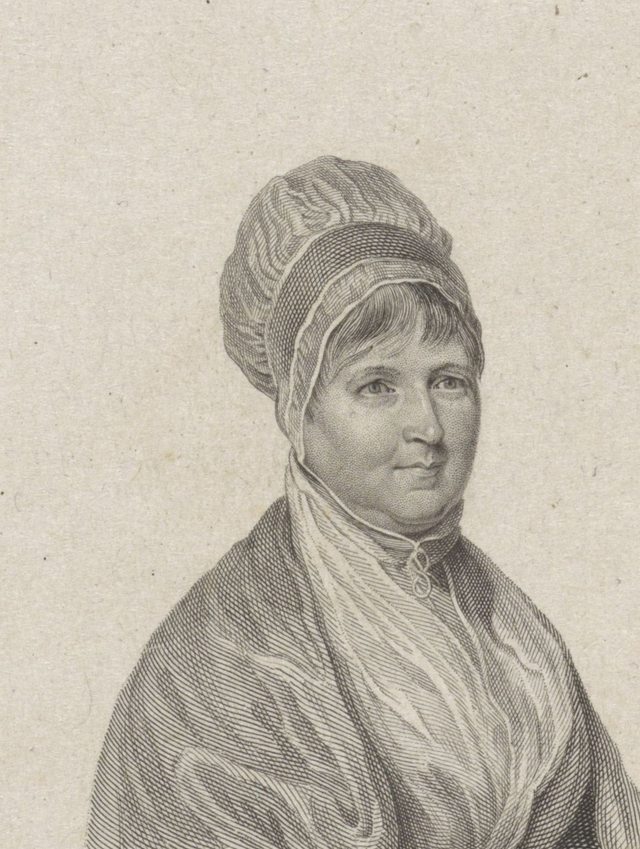
1780–1845
A banker's daughter from Norwich who walked into the women's side of Newgate, organised it, gave evidence to Parliament, and argued that a prison should change people rather than break them.
Fry is often shown as a saintly visitor reading the Bible to prisoners. The real woman organised, negotiated, lobbied ministers, travelled across Europe, ran a large household badly and a great cause well, and was criticised for both. These five chapters follow Earlham, Newgate, Parliament, the convict ships, and the last years.
The five chapters
- Earlham — A gay young Quaker and a preacher from America
- Newgate — Three hundred women and their children in four rooms
- Before Parliament — Evidence, the gallows, and a Home Secretary who would not move
- The Convict Ships — Patchwork for a voyage to the other side of the world
- The Cost and the Legacy — A failed bank, a separate system, and a silenced cell
Chapter 1 · Earlham
A gay young Quaker and a preacher from America
1780 – 1800 · Norwich · Earlham Hall
Elizabeth Gurney was born on 21 May 1780 in Norwich, the third daughter of John Gurney, a wealthy Quaker wool merchant and banker. The family lived at Earlham Hall, a large house outside the city, with eleven children, music, dancing and visitors. They were 'gay' Quakers — the old word for those who did not keep the plain dress and speech of strict Friends.
Her mother died when she was twelve. Elizabeth was a nervous, often unwell girl who was frightened of the dark and of the sea. Her journal, which she kept for most of her life, shows a young woman restless and dissatisfied, enjoying parties and red riding boots and wanting something more serious.
In February 1798, aged seventeen, she heard the American Quaker minister William Savery preach at the Friends' meeting house in Norwich. She cried through the meeting and felt that her life had changed. Over the following months she adopted plain dress and plain speech, using 'thee' and 'thou', and gave up dancing and singing. Her sisters were unconvinced.
Quakerism mattered to everything she did afterwards. Quakers — the Religious Society of Friends — believe there is 'that of God' in every person. They have no paid priests, and women as well as men may speak in meetings and be recognised as ministers. That belief in the worth of every person, including a prisoner, and the freedom for a woman to speak in public, explain much of Fry's later work.
In 1800 she married Joseph Fry, a Quaker merchant and banker, and moved to London.
Why this matters
The Quaker belief in 'that of God' in everyone, and Quaker acceptance of women as ministers, made Fry's later prison work both possible and, to her, necessary.
Red riding boots, a preacher from America, and plain dress. What would you ask her?
Ask Fry
- “What happened to you when you heard William Savery preach in 1798?”
- “How does the Quaker idea of 'that of God' in everyone shape how you see prisoners?”
- “Why did becoming a 'plain' Friend mean giving up dancing and music?”
- “Why could a Quaker woman preach when women in most churches could not?”
- “What did your journal show about your doubts as a young woman?”
Chapter 2 · Newgate
Three hundred women and their children in four rooms
1813 – 1817 · Newgate Prison · London
In 1813 the French-American Quaker Stephen Grellet visited Newgate prison in London and told Fry what he had seen on the women's side. She went with Anna Buxton, a fellow Quaker, taking clothing for the babies.
About three hundred women and their children were crowded into a few rooms. They slept on the floor, cooked, washed and lived there, and some were awaiting trial while others were waiting to be hanged or transported. Alcohol was sold inside the gaol. Visitors came to stare. The turnkeys warned Fry that the women would tear off her clothes. She went in anyway.
Family life — she had several young children, and two more were born in these years — kept her away until 1816. When she returned she asked the women what they wanted for their children, and they asked for a school. With the prisoners' agreement she set one up in an empty cell, with a young prisoner as the teacher.
In April 1817 she and eleven other women, most of them Quakers, formed the Association for the Improvement of the Female Prisoners in Newgate. They appointed a matron, arranged paid work — sewing and knitting goods that could be sold — and drew up rules. Crucially, Fry read the rules to the women and asked them to vote on whether to accept them. They did.
The change was striking enough that magistrates and visitors came to see it. Fry also read the Bible to the women, and for many visitors this became the famous image. But the method was practical: order, work, education, classification and the consent of the prisoners themselves.
Why this matters
Fry's Newgate work showed that a prison could be organised around work, education and consent, and became the model for reformers arguing that punishment should reform.
A school in an empty cell and rules the prisoners voted for. What would you ask her?
Ask Fry
- “Why did you ask the women prisoners to vote on the rules instead of imposing them?”
- “What did you find on the women's side of Newgate in 1813?”
- “Why did paid work matter so much in your plan for the prison?”
- “Were you afraid the first time you went inside?”
- “Was reading the Bible to prisoners reform or pressure?”
Chapter 3 · Before Parliament
Evidence, the gallows, and a Home Secretary who would not move
1817 – 1823 · House of Commons · Newgate
In 1818 Fry gave evidence to a committee of the House of Commons on the prisons of London. It was highly unusual for a woman to be called. She described what she had found, what the Association had done, and what she thought prisons needed: women prisoners supervised by women officers, separation of different kinds of prisoner so that first offenders were not taught by hardened criminals, useful work, education and religious instruction.
She also confronted the death penalty. In the early nineteenth century English law prescribed hanging for more than two hundred offences, including forgery and many kinds of theft. Fry visited women condemned to death, sat with them the night before execution, and pleaded for their lives.
In 1818 a young woman named Harriet Skelton was under sentence of death for passing forged banknotes, apparently at the urging of a man. Fry and others appealed to the Home Secretary, Lord Sidmouth, for mercy. Sidmouth refused, and Skelton was hanged that spring. Fry concluded that the death penalty for crimes against property was both cruel and useless, and said so.
Her evidence and her example fed into wider reform. In 1823 Robert Peel's Gaols Act required regular inspection of prisons, paid gaolers, women warders for women prisoners, and education. How much of this was Fry's influence and how much that of others — including her brother-in-law Thomas Fowell Buxton, who wrote on prison discipline — is debated. Over the following decades the number of crimes punishable by death was sharply reduced.
Why this matters
Fry's evidence and her campaign against hanging for property crimes connect directly to debates about the aims of punishment and the death penalty.
A Commons committee, a forger named Harriet Skelton, and two hundred hanging offences. What would you ask her?
Ask Fry
- “What did you tell the Commons committee prisons needed?”
- “Why did the hanging of Harriet Skelton matter so much to you?”
- “Why should first offenders be kept apart from hardened criminals?”
- “Is it ever right to execute someone for a crime against property?”
- “How did it feel to sit with a woman the night before her execution?”
Chapter 4 · The Convict Ships
Patchwork for a voyage to the other side of the world
1818 – 1843 · Deptford · New South Wales · Van Diemen's Land
Many women convicted in Britain were not hanged or imprisoned but transported — sent on ships to the penal colonies of New South Wales and later Van Diemen's Land, now Tasmania, for seven years, fourteen years or life. The voyage took about four months.
Fry learned that women were taken to the ships chained together in open carts, through jeering crowds, and that on board they had nothing to do for months. She persuaded the governor of Newgate to send them in closed carriages, and from 1818 she and members of her associations visited the women's convict ships before they sailed.
The Association supplied each woman with a bag containing practical things: Bible, needles, thread, scraps of cloth, knitting yarn and other useful items. The idea was that the women could make patchwork quilts and other goods during the voyage and sell them on arrival, starting their new life with a little money and a skill. One quilt made on the convict ship Rajah in 1841 survives today.
She also pressed for matrons on the ships, for schooling for the children, and for better arrangements on arrival, where women were often left with no protection at all. Over about twenty-five years her helpers visited more than a hundred ships.
Transportation itself was a harsh punishment that separated women from their families for ever, and Fry did not oppose it as a system. Her work aimed to make it less degrading. Critics today ask whether that was reform or management. It was certainly more than most people of her class did.
Why this matters
The convict-ship work shows Fry's belief that preparation for a new life — work, skills, dignity — was part of what punishment should achieve.
A bag of needles and scraps for a four-month voyage. What would you ask her?
Ask Fry
- “Why did you give the transported women materials to make patchwork on the voyage?”
- “Why did it matter how the women were taken through the streets to the ships?”
- “Should you have opposed transportation itself rather than improving it?”
- “What happened to women when they arrived in the colony with nothing?”
- “How did transportation affect the children of convicted women?”
Chapter 5 · The Cost and the Legacy
A failed bank, a separate system, and a silenced cell
1828 – 1845 · Upton · Europe · Ramsgate
Fry's public life had a price. She had eleven children, and critics said — then and since — that she neglected them for her causes. Her journal shows that she felt this keenly and blamed herself. In 1828 Joseph Fry's bank failed. The family lost their large house at Plashet and moved to a smaller one, and Joseph was disowned by the Quakers, as was the rule for bankruptcy. Some people asked how a woman who could not manage her own household could advise the nation on its prisons.
She went on. She travelled through France, Germany, Belgium, the Netherlands, Denmark and elsewhere, inspecting prisons and meeting rulers. The King of Prussia visited Newgate with her in 1842. She founded a night shelter for homeless people in London and, in 1840, an institution to train nurses.
By the 1840s, however, prison policy in Britain was moving in a direction she opposed. The 'separate system', introduced at Pentonville in 1842, kept prisoners alone in their cells, often hooded when they met, so that they could not influence each other. Its supporters thought solitude would lead to reflection and repentance. Fry argued that long solitary confinement drove people mad and destroyed the possibility of reform. The debate about solitary confinement continues.
She died at Ramsgate on 12 October 1845. From 2002 to 2016 her image appeared on the Bank of England five-pound note. Her central conviction — that a prisoner is a person who can change, and that punishment should help them do it — is still one of the main positions in debates about the aims of punishment.
Why this matters
Fry's opposition to solitary confinement and her argument for reform over retribution remain live positions in modern debates about prisons.
A failed bank, a European tour, and a new prison built for silence. What would you ask her?
Ask Fry
- “Was it fair to say you neglected your family for your causes?”
- “Why did you believe solitary confinement would destroy reform?”
- “How did your husband's bankruptcy change how people treated you?”
- “Which is the most important aim of punishment: retribution, deterrence or reformation?”
- “What did you learn from visiting prisons across Europe?”
What Fry changed
Fry made the reformation of prisoners a public cause, showed that order in a prison could rest on work, education and consent, helped bring women officers into women's prisons, and campaigned against hanging for property crimes and against solitary confinement. She is the reference point for reformation as an aim of punishment.
A debate that continues
Was Fry a genuine reformer of the prison system, or a humane manager of a punitive one whose religious instruction was itself a form of control?
Keep exploring — ask Fry
- “Should the main aim of prison be to reform the offender?”
- “Is solitary confinement ever justified?”
- “How should religious belief shape the treatment of criminals?”
Related lives
- Cesare Beccaria — Who Said Certainty Deters, Not Cruelty
- William Wilberforce — Twenty Years Against the Trade
- Florence Nightingale — The Lady with the Lamp
Related themes
Aims of punishment · Prison reform · Quakerism · The death penalty
Continue on Incandio
- Talk to Fry — every question on this page is one tap from being asked, and the same page carries the Historical Brief, the achievements and the timeline
- All 280 figures · Incandio — learn every idea, teach it, then defend it