Historical figure · Pearson Edexcel International GCSE revision on Incandio
Florence Nightingale
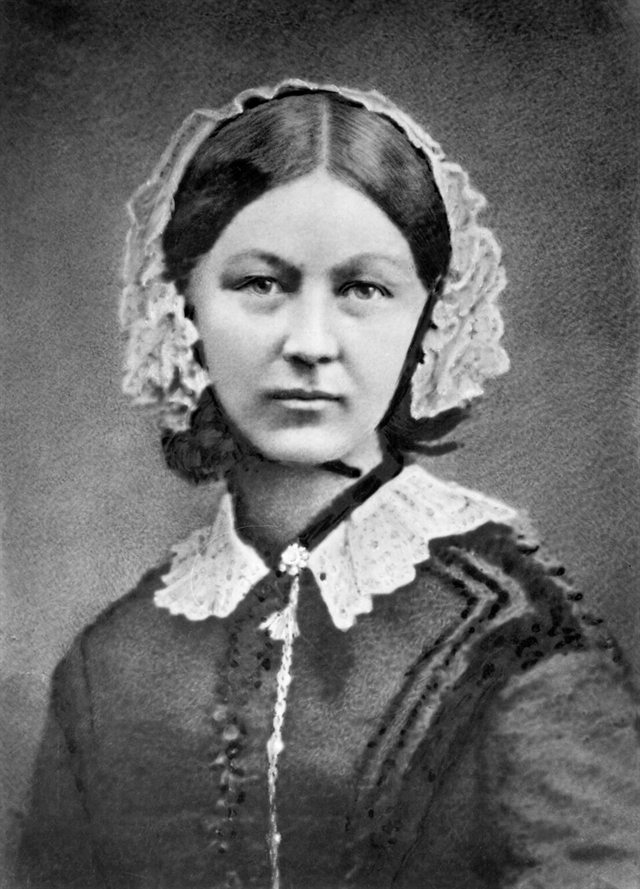
The Lady with the Lamp · Nurse & Statistician · 1820–1910
The founder of modern nursing, who cut death rates in the Crimean War through sanitation and then used pioneering statistics and diagrams to force the reform of hospitals and public health.
Defend these ideas against Florence
Incandio is a free revision platform for the Pearson Edexcel International GCSE, and on it a topic counts as mastered only once you have learned it, proved it in questions, taught it back and defended it against the person with the strongest claim on it. Florence Nightingale is that person for 3 topics on the course:
- Nightingale, Scutari, and changes in nursing and hospitals — History · Changes in medicine, c1848–c1948
- Water Pollution and Eutrophication — Biology
- Averages & Spread — Mathematics
Who was Florence?
Florence Nightingale, born to a wealthy English family who expected her to marry, trained as a nurse against their wishes, believing herself called to serve. In 1854 she led a group of nurses to the British military hospital at Scutari in the Crimean War, where far more men died of infection and filth than of wounds; her insistence on sanitation, ventilation and order cut the death rate sharply, and by lamplight she became the 'Lady with the Lamp'. Home again, she proved her case with numbers — inventing vivid polar-area diagrams to show that sanitation saves armies — and drove the reform of hospitals, nursing and public health. She founded the first scientific training school for nurses and became the first woman elected a Fellow of the Royal Statistical Society, working on despite years of invalidism.
Major achievements
- Reformed the sanitary conditions of military hospitals, sharply reducing deaths
- Pioneered statistical graphics, including the polar-area ('rose') diagram
- Founded the Nightingale Training School, establishing nursing as a profession
- Drove reform of army and civilian public health through data
- Became the first female Fellow of the Royal Statistical Society
Life in brief
- 1820 — Born in Florence: To wealthy English parents travelling in Italy.
- 1851 — Trains as a nurse: At Kaiserswerth in Germany, against her family's wishes.
- 1854 — Sails to Scutari: Leads nurses to the Crimean War hospitals.
- 1858 — Statistical reports: Uses rose diagrams to prove sanitation saves lives.
- 1860 — Nightingale School: Founds modern nurse training at St Thomas'.
- 1858 — Royal Statistical Society: Becomes its first female Fellow.
- 1910 — Dies: At 90, in London.
Explore the life of Florence — five chapters
- The Daughter Who Would Not Marry — Wealth, mathematics, and sixteen years of refusal
- Scutari — What actually killed the soldiers
- The Rose Diagram — Winning an argument with a picture
- Fifty Years From a Sickbed — Chronic illness, and reform by correspondence
- The Lamp and the Ledger — What the icon leaves out
Read the five-chapter life of Florence Nightingale →
Where Florence appears in your course
Florence Nightingale has a genuine claim on 3 lessons of the Pearson Edexcel International GCSE science course built into Incandio:
- A Balanced Diet — Biology: At Scutari, Nightingale rebuilt the hospital kitchens as deliberately as the wards, and she recorded the outcomes month by month in numbers nobody could argue with. She was making the argument this lesson makes — that a body which is not supplied properly cannot repair itself — at a time when diet was considered a comfort rather than a medical treatment.
- The Thorax and Ventilation — Biology: Nightingale made ventilation the first rule of nursing — windows open in every weather, air changed constantly, wards designed around the movement of air — and she backed it with mortality figures rather than opinion. She was wrong about why bad air was dangerous, since she rejected germ theory, but she was right that it was, and the wards she designed saved lives.
- Water Pollution and Eutrophication — Biology: Half of statement 4.16 is about pathogens in sewage causing disease, and Nightingale is the person who forced that connection into public policy. At Scutari she found that far more soldiers were dying of infectious disease than of wounds, and she proved it with data rather than assertion — inventing a diagram to display the causes of death month by month so that ministers who would not read a table could not miss the point. Her argument was about drains, water supply and ventilation, and it changed British hospitals permanently.
Debate Florence in the Agora
Reading is the start. On Incandio an idea counts as mastered only once you have argued it against the person with the strongest claim on it, in structured rounds marked against published descriptors.
- The Diagram That Moved a Government — “Nightingale's greatest contribution to public health was statistical, not nursing.”
Begin
- Start a conversation with Florence — a dramatised, historically grounded AI portrayal
- Read the Historical Brief
- Explore the life of Florence — five chapters
- Find your course · Meet all 280 figures