Ian Wilmut
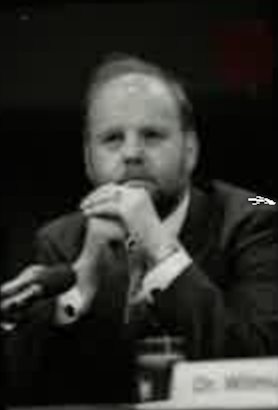
Whose Lamb Had No Father · Embryologist · 1944–2023
The embryologist who led the team that produced Dolly the sheep, the first mammal cloned from an adult body cell — and who spent the rest of his life correcting what people believed that meant.
Who was Wilmut?
Ian Wilmut was born in 1944 and worked at the Roslin Institute near Edinburgh on the reproductive biology of farm animals. On 5 July 1996 a Finn Dorset lamb was born there whose nucleus had come not from a sperm and an egg but from a mammary-gland cell of a six-year-old ewe, grown in culture. The nucleus was transferred into an egg from a different ewe whose own nucleus had been removed, stimulated to divide with an electrical pulse, and the resulting embryo carried by a third animal. Two hundred and seventy-seven reconstructed eggs produced twenty-nine embryos and one live lamb. She was named Dolly, and her announcement in February 1997 made cloning a public argument overnight. The decisive insight was not Wilmut's: Keith Campbell had realised that the donor cell must be starved into a quiescent state so that its cycle matched the egg's, and Wilmut said publicly, and later under oath, that Campbell's contribution was the greater. Wilmut opposed human reproductive cloning consistently. In 2007 he announced that he was leaving nuclear transfer for induced pluripotent stem cells, which reprogram an adult cell without an embryo at all.
Major achievements
- Led the team that produced Dolly, the first mammal cloned from an adult somatic cell (1996)
- Showed that a fully differentiated nucleus can be reprogrammed to build a whole animal
- Produced Polly, a transgenic lamb carrying a human gene, the following year
- Publicly credited Keith Campbell's cell-cycle insight as the decisive contribution
- Argued consistently against human reproductive cloning
Life in brief
- 1944 — Born in Hampton Lucey: Trained in agricultural science and embryology.
- 1973 — Frostie the calf: Born from a frozen embryo — his first widely noticed result.
- 1995 — Megan and Morag: Lambs cloned from cultured embryonic cells, using Campbell's method.
- 1996 — Dolly is born: 5 July, from a mammary-gland cell of a six-year-old ewe.
- 1997 — The announcement: Cloning becomes a worldwide public argument in a week.
- 1997 — Polly: A transgenic lamb carrying a human gene.
- 2007 — Leaves cloning: Turns to reprogrammed stem cells, which need no embryo.
- 2023 — Dies: After living for years with Parkinson's disease.
Explore the life of Wilmut — five chapters
- Farm Animals, Not Philosophy — How a livestock scientist ended up in a global ethics debate
- Keith Campbell's Insight — Starve the cell, and the clocks match
- Two Hundred and Seventy-Seven — 5 July 1996
- What Dolly Actually Settled — An answer to a question from 1938
- Walking Away From His Own Technique — 2007, and a diagnosis
Read the five-chapter life of Ian Wilmut →
Where Wilmut appears in your course
Ian Wilmut has a genuine claim on 1 lesson of the Pearson Edexcel International GCSE science course built into Incandio:
- Cloning Mammals — Biology: Wilmut led the Roslin group that produced Dolly in 1996, and he is the best possible corrective to how this lesson is usually remembered. He gives the arithmetic rather than the headline; he insisted publicly and under oath that the decisive idea was Keith Campbell's, not his — that the donor cell had to be starved into a resting state so its cycle matched the egg's; he opposed human cloning from the first day; and in 2007 he abandoned his own famous technique for reprogrammed stem cells, which achieve the same thing without an embryo.
Begin
- Start a conversation with Wilmut — a dramatised, historically grounded AI portrayal
- Read the Historical Brief
- Explore the life of Wilmut — five chapters
- Find your exam topics · Meet all 208 figures