Explore Their Life · Pearson Edexcel International GCSE revision on Incandio
Ian Wilmut: A Life in Five Chapters
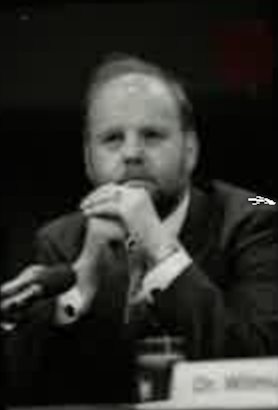
1944–2023
The embryologist whose name is on the first cloned mammal, who spent the rest of his life explaining that the decisive idea was his colleague's, and who abandoned the technique when a better one arrived.
Dolly was born from a mammary-gland cell of a six-year-old ewe, after 276 failed attempts. She made cloning a public argument overnight, mostly about a use Wilmut never advocated. These five chapters follow the science, the credit he kept redirecting to Keith Campbell, and the decision to walk away from his own method.
The five chapters
- Farm Animals, Not Philosophy — How a livestock scientist ended up in a global ethics debate
- Keith Campbell's Insight — Starve the cell, and the clocks match
- Two Hundred and Seventy-Seven — 5 July 1996
- What Dolly Actually Settled — An answer to a question from 1938
- Walking Away From His Own Technique — 2007, and a diagnosis
Chapter 1 · Farm Animals, Not Philosophy
How a livestock scientist ended up in a global ethics debate
1944 – 1990 · Hampton Lucy · Nottingham · Cambridge · Roslin
Ian Wilmut was born in July 1944 at Hampton Lucy in Warwickshire, the son of a mathematics teacher. He wanted to be a farmer, studied agriculture at Nottingham, and moved into animal reproduction — which is where agricultural science and embryology meet.
He did his doctorate at Cambridge on freezing boar semen, and in 1973 produced Frostie, the first calf born from a frozen embryo. He joined the Animal Breeding Research Organisation near Edinburgh, which became the Roslin Institute.
It is important to be clear about what this work was *for*, because the public argument that followed was about something else entirely.
The purpose was livestock improvement and, increasingly, biotechnology. If you could reliably make genetically identical animals, you could produce a herd with a desirable trait. More valuably, if you could genetically modify a cell in culture — where modification is controllable and checkable — and then grow an animal from that cell, you could produce livestock that made human proteins in their milk, for treating human disease.
That was the goal. Nuclear transfer was a *tool* for getting a modified cell to become an animal.
Nobody at Roslin was working toward cloning human beings, and the possibility played no part in the research programme.
“Dolly is a copy of a sheep's genes, not a copy of a sheep.”
— Ian Wilmut, on public reaction to the 1997 announcement
Why this matters
Dolly came out of a livestock-biotechnology programme, and cloning was a means of turning a modified cell into an animal, not an end in itself.
You have the agricultural programme behind the famous sheep. What would you ask?
Ask Wilmut
- “What was the cloning work actually for?”
- “Why is it easier to modify a cell than an animal?”
- “How does an agricultural scientist end up in an ethics debate?”
- “What was Frostie the calf?”
- “Did you ever want to be a farmer instead?”
Chapter 2 · Keith Campbell's Insight
Starve the cell, and the clocks match
1991 – 1995 · Roslin
Nuclear transfer had been tried in mammals and had failed consistently. Something about putting an adult nucleus into an egg did not work.
Keith Campbell, a cell biologist who joined Roslin in 1991, worked out what.
A cell moves through a cycle: growing, copying its DNA, preparing to divide, dividing. An unfertilised egg is arrested at a particular point in that cycle and is primed to receive a nucleus in a particular state. A donor cell taken from a culture is somewhere else in its own cycle, and the two are mismatched. The result is chromosomal chaos — DNA being copied when it should not be, or divided before it is ready — and the embryo dies.
Campbell's solution: *starve* the donor cell. Reduce the serum in the culture medium so that the cell runs out of nutrients and drops into a quiescent, non-dividing state known as G0. A cell in G0 has a stable, complete, undivided set of chromosomes, and its state matches what the egg expects.
That is the idea that made cloning work, and it is a cell-cycle insight, not an embryology one.
Megan and Morag, two lambs cloned from cultured embryonic cells, were born in 1995 by this method — a major result which attracted almost no public attention.
Wilmut said publicly, repeatedly, and later under oath in a legal deposition, that Campbell's contribution was the greater of the two. He spent much of the rest of his life saying it. Campbell died in 2012.
Why this matters
Cloning worked once the donor cell was starved into quiescence so that its cell cycle matched the egg's — a technical insight that was not Wilmut's.
You have the starved cell and the credit redirected. What is your question?
Ask Wilmut
- “Why does starving the donor cell make cloning work?”
- “Why do you keep insisting the idea was Campbell's?”
- “Why did Megan and Morag get no attention?”
- “What goes wrong when the cycles do not match?”
- “Can a name be taken off a discovery once it is attached?”
Chapter 3 · Two Hundred and Seventy-Seven
5 July 1996
1996 · Roslin
The procedure that produced Dolly used three sheep.
A mammary-gland cell from a six-year-old Finn Dorset ewe, grown in culture and starved into quiescence, supplied the nucleus. An egg from a Scottish Blackface ewe had its own nucleus removed. The two were placed together and given an electrical pulse, which both fused them and stimulated the reconstructed egg to begin dividing. The resulting embryos were carried by a third, surrogate, Blackface ewe.
The numbers matter and Wilmut always gave them: 277 reconstructed eggs produced 29 embryos that developed far enough to transfer, and those produced *one* live lamb.
She was born on 5 July 1996 and named Dolly, after Dolly Parton, because the donor cell came from a mammary gland. The technicians named her.
The result was announced in *Nature* in February 1997 and became a global news story within days. Within a week there were parliamentary statements, a presidential commission in the United States, and editorials in every serious newspaper in the world.
And the discussion was almost entirely about *human* cloning — the possibility of copying a person, resurrecting a dead child, manufacturing identical people. Wilmut spent years pointing out, with visible weariness, that a clone is a delayed identical twin: same genes, different womb, different upbringing, different experiences, different person. A copy of a sheep's genes, not a copy of a sheep.
He opposed human reproductive cloning from the first day and never wavered.
Why this matters
277 reconstructed eggs produced one live lamb, and Wilmut always published that number — the failure rate is the honest description of the technique.
You have the three ewes and the one lamb. What would you ask?
Ask Wilmut
- “Walk me through how Dolly was actually made.”
- “Why insist on quoting the failure rate?”
- “Why is a clone not a copy of a person?”
- “Did the public reaction surprise you?”
- “How many sheep are involved in making one lamb this way?”
Chapter 4 · What Dolly Actually Settled
An answer to a question from 1938
1997 – 2003 · Roslin · Edinburgh
Beneath the public argument was a genuine scientific result, and it answered a question Hans Spemann had written down in 1938.
When a cell specialises — becomes a mammary cell, say — does it lose the genes it is not using? Or does it keep the entire genome and simply switch most of it off?
Gurdon had shown in frogs that the whole genome is retained. Whether that held for mammals, with their far more elaborate regulation, was genuinely uncertain. A widespread expectation was that mammalian differentiation involves changes that cannot be undone.
Dolly showed it can. A nucleus from a fully differentiated adult mammalian cell, placed in an egg, can be *reprogrammed* — the switches reset — and can build an entire animal. Nothing was lost. It had only been silenced.
That is the finding underneath the noise, and it changed what was thinkable.
Dolly herself lived at Roslin, was bred normally and produced six lambs, and became arthritic. She developed a lung infection caused by a retrovirus common in sheep kept indoors, and was put down in February 2003 at six. Sheep of her breed usually live eleven or twelve years.
Whether cloning shortened her life is genuinely unsettled. Her telomeres — the protective ends of chromosomes, which shorten with age — were reportedly shorter than expected for her age, prompting suggestions she was born genetically old. Later studies of other cloned sheep, including four made from the same cell line, found them ageing normally. The current view is that her illnesses were common in indoor-housed sheep and that the evidence does not establish premature ageing.
Her body is in the National Museum of Scotland.
Why this matters
Dolly proved that a fully differentiated mammalian nucleus retains the whole genome and can be reprogrammed — nothing is lost in specialisation, only switched off.
You have the reprogrammed nucleus and the arthritic sheep. What is your question?
Ask Wilmut
- “What did Dolly prove about a specialised cell?”
- “Did cloning make Dolly age faster?”
- “How does an egg switch a nucleus back on?”
- “What kind of life did Dolly actually have?”
- “Was anyone surprised that it worked in a mammal?”
Chapter 5 · Walking Away From His Own Technique
2007, and a diagnosis
2004 – 2023 · Edinburgh
Wilmut obtained a licence in 2005 to use nuclear transfer on human embryos for research into motor neurone disease — therapeutic cloning, to produce stem cells matched to a patient, not to produce a person.
Then in 2006 Shinya Yamanaka published something that made the technique obsolete. By introducing four genes into an ordinary adult cell, he could reprogram it directly into a pluripotent stem cell — an *induced pluripotent stem cell* — capable of becoming any tissue. No egg. No embryo. No cloning.
In 2007 Wilmut announced publicly that he was abandoning nuclear transfer and moving to the new method, because it was better and because it avoided the ethical difficulty of using human eggs and embryos entirely.
Walking away from the technique your name is attached to, in favour of a rival's, is unusual, and he said the reasoning was simply that the other approach was more likely to work and easier to justify. Yamanaka received the Nobel Prize in 2012, shared with Gurdon.
Wilmut was knighted in 2008 and headed the MRC Centre for Regenerative Medicine in Edinburgh.
In 2018 he announced that he had been diagnosed with Parkinson's disease, and joined a research programme at Edinburgh studying it — becoming a subject in the field he had spent his career trying to serve.
He died in September 2023, aged seventy-nine.
He spent nearly thirty years correcting two things: that Dolly was Keith Campbell's insight as much as his, and that a clone is not a copy of a person. Neither correction ever quite caught up with the story.
Why this matters
Wilmut abandoned the technique his name is attached to because a rival's method was better and easier to justify ethically — a rare and instructive decision.
You have the abandoned technique and the diagnosis. What would you ask him?
Ask Wilmut
- “Why give up the method you are famous for?”
- “What do induced pluripotent stem cells do that cloning cannot?”
- “What is the difference between therapeutic and reproductive cloning?”
- “What was it like joining a study of your own disease?”
- “Which correction did you most want to stick?”
What Wilmut changed
Dolly settled a question open since Spemann posed it in 1938: a nucleus from a specialised adult cell still contains everything needed to build a whole animal, and an egg can switch it back on. That result underlies induced pluripotent stem cells, cloned livestock and transgenic animals producing human proteins — and it turned the ethics of cloning from a specialist question into a public one within a week.
A debate that continues
Wilmut consistently stated, including under oath, that Keith Campbell's cell-cycle insight was the greater contribution, and the popular attribution to Wilmut alone has never been corrected. Claims that Dolly aged prematurely are not supported by later studies of cloned sheep.
Keep exploring — ask Wilmut
- “What should cloning actually be used for?”
- “How do you correct a story the public has already settled?”
- “What would Spemann have asked you?”
Related lives
- Hans Spemann — Who Imagined the Experiment First
- Paul Berg — Who Joined Two Genomes, Then Called a Halt
- Rosalind Franklin — The Dark Lady of DNA
- Gregor Mendel — Father of Genetics
Related themes
Cloning and stem cells · Genes and differentiation · Ethics of biotechnology
Where Wilmut appears in your course
Ian Wilmut has a genuine claim on 1 lesson of the Pearson Edexcel International GCSE science course built into Incandio:
- Cloning Mammals — Biology: Wilmut led the Roslin group that produced Dolly in 1996, and he is the best possible corrective to how this lesson is usually remembered. He gives the arithmetic rather than the headline; he insisted publicly and under oath that the decisive idea was Keith Campbell's, not his — that the donor cell had to be starved into a resting state so its cycle matched the egg's; he opposed human cloning from the first day; and in 2007 he abandoned his own famous technique for reprogrammed stem cells, which achieve the same thing without an embryo.
Continue on Incandio
- Talk to Wilmut — every question on this page is one tap from being asked, and the same page carries the Historical Brief, the achievements and the timeline
- All 280 figures · Incandio — learn every idea, teach it, then defend it