Explore Their Life · Pearson Edexcel International GCSE revision on Incandio
Ibn Sina: A Life in Five Chapters
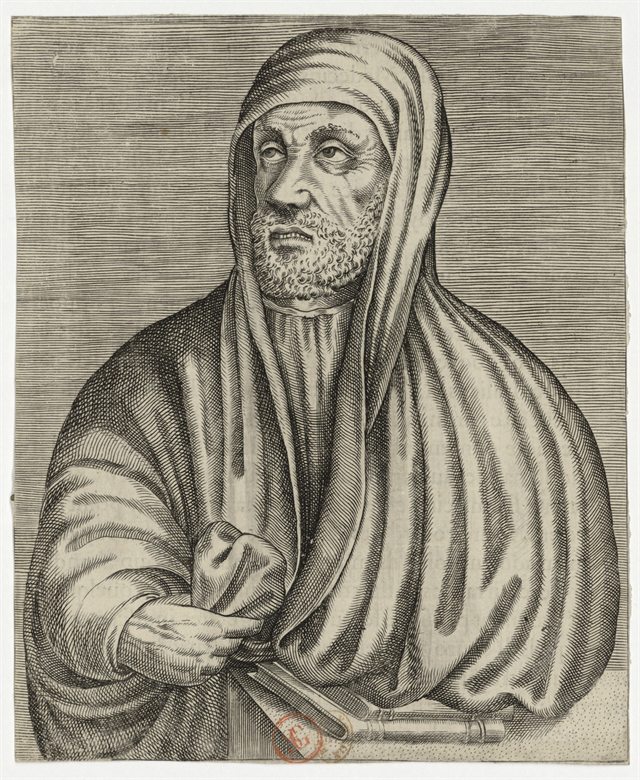
980–1037
A prodigy from Bukhara who treated an emir as a teenager, moved between courts and prisons, and wrote the Canon of Medicine — the book from which European universities taught medicine for five hundred years.
Ibn Sina, known in Europe as Avicenna, wrote the most successful medical textbook in history while serving, fleeing and sometimes being imprisoned by princes. These five chapters follow his education in Bukhara, his wandering years, the writing of the Canon of Medicine, his method, and how his book reached medieval England.
The five chapters
- The Boy from Bukhara — A prodigy and a library
- From Court to Court — A scholar on the move in dangerous times
- The Canon of Medicine — All of medicine in five books
- Rules for Testing a Remedy — Reason, experience and the conditions of proof
- Isfahan, Hamadan and the Road to Europe — A death on campaign, a book that crossed a continent
Chapter 1 · The Boy from Bukhara
A prodigy and a library
980 – 999 · Afshana · Bukhara
Ibn Sina was born in 980 in the village of Afshana, near Bukhara in Central Asia, in what is now Uzbekistan. The region was ruled by the Samanids, a Persian dynasty whose capital, Bukhara, was a centre of learning. His father was a government official who brought teachers to the family home.
We know a great deal about his childhood because he later dictated an account of it to his student, al-Juzjani. By his own account he had memorised the Qur'an and much literature by the age of ten. He learned arithmetic from a greengrocer, studied logic and geometry, and then read on alone. He said he found medicine one of the easier sciences and was treating patients in his teens.
One story from the autobiography is much loved. Ibn Sina read Aristotle's Metaphysics forty times and still could not understand it. Then a bookseller pressed on him a cheap short commentary by the philosopher al-Farabi, bought for three dirhams, and suddenly everything became clear.
At about seventeen he helped treat the Samanid ruler, Nuh ibn Mansur, and as a reward was allowed into the royal library, which he described as rooms full of chests of books. He read everything he could. Not long afterwards the library burned, and his enemies whispered that he had set the fire so that only he would know what the books contained. There is no evidence for that.
Why this matters
Ibn Sina's education shows how much Greek learning was available in Arabic in tenth-century Central Asia, and how a royal library could shape a scholar.
A teenage physician let loose in an emir's library. What would you ask him?
Ask Ibn Sina
- “What did al-Farabi's little commentary unlock in Aristotle that forty readings had not?”
- “Why did you find medicine easier than metaphysics?”
- “How did a teenager come to treat the emir Nuh ibn Mansur?”
- “What kinds of books did you find in the Samanid royal library?”
- “How do you answer the rumour that you burned the library yourself?”
Chapter 2 · From Court to Court
A scholar on the move in dangerous times
999 – 1024 · Gurganj · Jurjan · Rayy · Hamadan
Around 999 the Samanid state collapsed, conquered by Turkic rulers, and Ibn Sina's secure world disappeared. For the next quarter-century he moved from court to court across Central Asia and Iran — Gurganj, Jurjan, Rayy and Hamadan — working for whichever ruler would protect him.
The most powerful ruler of the region, Mahmud of Ghazni, collected scholars for his court, sometimes by force. Ibn Sina avoided his summons and kept moving. His contemporary al-Biruni, a brilliant astronomer, ended up at Mahmud's court, and the two men had earlier exchanged a series of sharp written questions and answers about physics and Aristotle.
At Hamadan Ibn Sina became physician and then vizier — chief minister — to the Buyid ruler Shams al-Dawla. It was dangerous work. Soldiers mutinied against him, looted his house and demanded his execution; the ruler protected him by sending him into hiding. After Shams al-Dawla died, Ibn Sina was accused of corresponding with a rival ruler and was imprisoned in a fortress for some months, where he kept writing.
Through all of this he worked at night, often with students reading his drafts aloud. Al-Juzjani also recorded that he enjoyed company, music and wine in the evenings — a detail later critics used against him.
This was the life in which the Canon of Medicine was written: not in a quiet university but in the margins of politics, journeys and danger.
Why this matters
Islamic medicine depended on patronage from rulers; Ibn Sina's career shows both the opportunities and the risks of that system.
Physician, vizier, fugitive and prisoner. What would you ask him?
Ask Ibn Sina
- “Why did you avoid the summons of Mahmud of Ghazni?”
- “What did you and al-Biruni disagree about in your letters?”
- “Why did the soldiers at Hamadan want you dead?”
- “How did you keep writing while locked in a fortress?”
- “Did serving princes help or hinder your medicine?”
Chapter 3 · The Canon of Medicine
All of medicine in five books
c. 1012 – c. 1025 · Jurjan · Hamadan · Isfahan
Ibn Sina began the Canon of Medicine (al-Qanun fi al-Tibb) around 1012 and finished it at Hamadan and Isfahan by about 1025. It is a huge work — around a million words — written in Arabic, the scholarly language of the Islamic world.
Its five books were carefully organised. The first set out general principles: the elements, the four humours and temperaments, anatomy, the causes and signs of illness, and how to keep healthy through diet, exercise and sleep. The second described individual medicines — hundreds of plant, animal and mineral remedies. The third covered diseases from head to toe. The fourth dealt with conditions affecting the whole body, such as fevers, and with wounds and poisons. The fifth was a compendium of compound drugs.
The Canon's foundations were Greek: Hippocrates and above all Galen, read through Aristotle's logic. Ibn Sina also drew on Islamic physicians before him, such as al-Razi of Rayy, and on his own observation. He described how some diseases, including tuberculosis, could spread between people, and how contaminated water and air could carry illness — ideas expressed within humoral medicine, not germ theory.
What made the Canon so successful was its order. Earlier medical writing was scattered across hundreds of books. Ibn Sina put the whole subject into one system that a student could learn from start to finish.
Why this matters
The Canon gathered Greek and Islamic medicine into one organised textbook, which is why it travelled so far and lasted so long.
A million words, five books, one system. What would you ask him?
Ask Ibn Sina
- “Why did you divide the Canon into five books in that particular order?”
- “Where in the Canon did you disagree with Galen?”
- “What did you mean when you wrote that tuberculosis could pass between people?”
- “How much did you take from al-Razi of Rayy?”
- “Who did you expect to read the Canon — doctors, students or princes?”
Chapter 4 · Rules for Testing a Remedy
Reason, experience and the conditions of proof
c. 1020s · Isfahan
One of the most interesting parts of the Canon is a short section setting out conditions for judging whether a medicine really works. Ibn Sina listed rules that, put simply, said: the drug must be pure and free from contamination; it should be tested on a simple disease, not one with many complications; it should be tried on more than one kind of case; its strength should match the strength of the disease; the effect should be watched over time; it should work consistently, not just once; and tests on animals may not tell you how it will act on humans.
This is not a modern clinical trial — there was no control group or statistics — but it shows a careful mind trying to separate a real effect from luck or coincidence.
Ibn Sina was also a major philosopher. His other great work, the Book of Healing (Kitab al-Shifa), covered logic, natural science, mathematics and metaphysics. He believed that reason and religious revelation, properly understood, did not contradict each other. He was a Muslim, but he wrote as a philosopher and physician, not as a religious authority, and his philosophical views were later attacked by some theologians.
In medicine, his method combined reasoning from principles with careful attention to experience. That combination — trust in a system, checked by observation — is exactly what made his work both powerful and, in its Galenic errors, hard to overturn.
Why this matters
Ibn Sina's conditions for testing drugs show that careful, evidence-based thinking existed in medieval medicine, even within the humoral system.
Seven conditions for trusting a medicine. What would you ask him?
Ask Ibn Sina
- “Why must a new remedy be tested on a simple disease first?”
- “Why might a drug that works on a lion fail on a man?”
- “How would you tell whether a patient recovered because of the drug or by chance?”
- “What does the Book of Healing have to do with medicine?”
- “Which is more reliable for a physician, reasoning or experience?”
Chapter 5 · Isfahan, Hamadan and the Road to Europe
A death on campaign, a book that crossed a continent
1024 – 1037, and after · Isfahan · Hamadan · Toledo · Montpellier
Ibn Sina's last years were his most settled. From around 1024 he lived at Isfahan under the protection of its ruler, Ala al-Dawla, accompanying him on campaigns and writing steadily. He wrote some works in Persian as well as Arabic, including a philosophical encyclopaedia for his patron.
In 1037, travelling with Ala al-Dawla's army, he fell seriously ill with a painful intestinal disease. According to al-Juzjani, he treated himself, but the treatment went wrong, and he died at Hamadan, where his tomb still stands. He was about fifty-seven.
His book had a much longer journey. In the twelfth century, scholars in Toledo in Spain — a city where Christian, Muslim and Jewish learning met — translated Arabic science into Latin. Gerard of Cremona translated the Canon. It became one of the standard medical textbooks of European universities such as Montpellier and Padua, and remained in use in some places into the seventeenth century.
Through the Canon, physicians trained in medieval Europe, including those who treated patients in England, learned Galen's medicine in Ibn Sina's organised form. That is both his greatest achievement and his problem in the long story of medicine: he made Galen's ideas clearer and more authoritative, including the mistakes.
Today Iran, Uzbekistan, Tajikistan and other countries all claim him as a national figure.
Why this matters
The Latin translation of the Canon is a key route by which Islamic and Greek medicine reached medieval English doctors.
A tomb in Hamadan and a textbook in Montpellier. What would you ask him?
Ask Ibn Sina
- “Why did you write some of your works in Persian rather than Arabic?”
- “How did you treat your own final illness on campaign?”
- “How would you feel about your Canon being read by Christian students in Europe?”
- “Did your clear organisation make Galen's errors harder to challenge?”
- “Which country do you think of as your homeland?”
What Ibn Sina changed
Ibn Sina's Canon of Medicine organised Greek medicine, Islamic scholarship and his own observations into a single textbook that was translated into Latin and used in European universities for about five hundred years. It is a central example of how the Islamic world preserved and developed ancient medicine and passed it to medieval Europe. His rules for judging whether a remedy works show a careful approach to evidence long before modern trials.
A debate that continues
Was Ibn Sina an original medical thinker or chiefly a brilliant organiser of Galen? Historians disagree about how much the Canon added beyond its system, and whether its authority helped or held back European medicine.
Keep exploring — ask Ibn Sina
- “Can organising knowledge be as important as discovering it?”
- “Why did Islamic medicine reach Europe through translation rather than conquest?”
- “Did a single great textbook make medicine stronger or slower to change?”
Related lives
- Galen — The Physician Who Ruled for Fourteen Centuries
- Ibn Rushd — Who Answered The Incoherence
- Maimonides — Who Said What God Is Not
- Ibn al-Haytham — Who Tested What the Ancients Wrote
Related themes
Islamic medicine · The Canon of Medicine · Medieval universities · The transfer of knowledge
Continue on Incandio
- Talk to Ibn Sina — every question on this page is one tap from being asked, and the same page carries the Historical Brief, the achievements and the timeline
- All 280 figures · Incandio — learn every idea, teach it, then defend it