Historical figure · Pearson Edexcel International GCSE revision on Incandio
Jan Ingenhousz
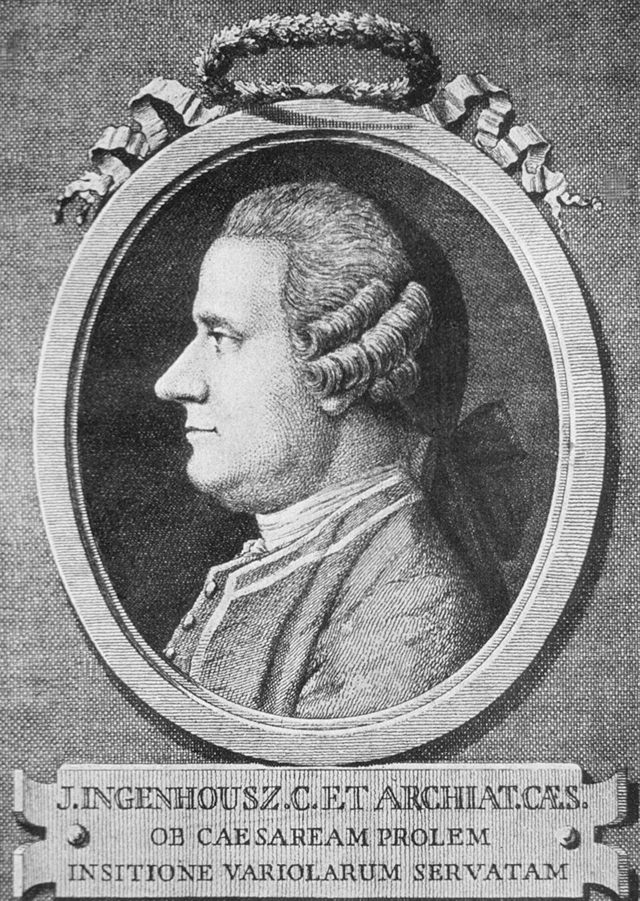
The One Who Found the Light · Physician & Plant Scientist · 1730–1799
The physician who showed that plants purify the air only in sunlight, and spoil it in darkness exactly as an animal does.
Defend these ideas against Ingenhousz
Incandio is a free revision platform for the Pearson Edexcel International GCSE, and on it a topic counts as mastered only once you have learned it, proved it in questions, taught it back and defended it against the person with the strongest claim on it. Jan Ingenhousz is that person for 3 topics on the course:
- What Limits Photosynthesis — Biology
- Gas Exchange in Plants, Day and Night — Biology
- Seeds and Germination — Biology
Who was Ingenhousz?
Jan Ingenhousz was born in Breda in 1730 and trained in medicine at Leuven, Leiden, Paris and Edinburgh. His first fame came from inoculation against smallpox: summoned by the Empress Maria Theresa after the disease struck the Habsburg family, he inoculated them successfully and was made her court physician with a pension for life. The work that outlasted that reputation was done in a single summer in England in 1779. Priestley had shown that a plant could restore air a candle had spoiled, but the result would not repeat dependably and nobody knew why. Ingenhousz submerged leaves in water and watched what came off them. In sunlight, fine bubbles streamed from the green parts; in shade the stream stopped; in darkness the plant spoiled the air rather than purifying it, precisely as an animal does. Three conclusions followed: only the green parts purify air, they do so only in light, and plants respire continuously day and night, though across a full day they purify far more than they injure. He performed over five hundred experiments that season and published the result in London the same year. He accepted Lavoisier's new chemistry where Priestley would not, and died at Bowood in Wiltshire in 1799.
Major achievements
- Showed that plants purify air only in the light, and only from their green parts
- Showed that plants spoil the air in darkness — that they respire continuously
- Established that light rather than warmth is the agent, by separating the two
- Inoculated the Habsburg family against smallpox and became court physician in Vienna
- Performed early experiments on the conduction of heat in metals and on electricity
Life in brief
- 1730 — Born in Breda: The son of a leather merchant and apothecary.
- 1768 — Summoned to Vienna: To inoculate the Habsburg family against smallpox.
- 1769 — Court physician to Maria Theresa: With a pension for life.
- 1779 — Five hundred experiments in one summer: In England, on leaves submerged in water.
- 1779 — Experiments upon Vegetables: Published in London: light is the condition.
- 1785 — Observes the motion of charcoal dust: Decades before Brown described the same effect.
- 1796 — States that plants take carbon from the air: Accepting the new chemistry Priestley rejected.
- 1799 — Dies at Bowood: In Wiltshire, in England.
Explore the life of Ingenhousz — five chapters
- Summoned by an Empress — Inoculation, and a pension for life
- The Experiment That Would Not Repeat — Priestley's mint, and why it sometimes failed
- Five Hundred Experiments in One Summer — Leaves under water, and bubbles you can count
- The Chemistry He Could Not Finish — A right result inside a theory that was collapsing
- Less Remembered Than the Man He Corrected — A career of near-misses, and an end in Wiltshire
Read the five-chapter life of Jan Ingenhousz →
Where Ingenhousz appears in your course
Jan Ingenhousz has a genuine claim on 7 lessons of the Pearson Edexcel International GCSE science course built into Incandio. Six of them:
- The Leaf: Structure and Gas Exchange — Biology: This lesson teaches one leaf doing two jobs, and Ingenhousz is the person who established that its exchange of gases reverses. In 1779 he submerged leaves in water and watched: in sunlight, bubbles streamed from the green parts; in shade the stream stopped; in darkness the leaf spoiled the air rather than purifying it. He also established that only the green parts do it, which is why the palisade layer described here sits where the light is and the roots do nothing of the kind.
- Gas Exchange in Plants, Day and Night — Biology: Statement 2.44 is Ingenhousz's discovery, almost word for word. Priestley had shown that a plant can restore spoiled air but could not make it happen dependably. In one summer in 1779 Ingenhousz performed over five hundred experiments on submerged leaves and found three things: that only the green parts do it, that they do it only in sunlight, and that in darkness a plant spoils the air exactly as an animal does — while over a whole day it purifies far more than it injures. That is the day-and-night balance this page is built on, and he is the reason anybody knows about it.
- Seeds and Germination — Biology: This page's most counter-intuitive claim is that light is not required for germination, and Ingenhousz is the person who established exactly where the boundary between light and darkness falls in a plant's life. In 1779 he showed that a plant purifies the air only in sunlight, only from its green parts, and that in darkness it spoils the air like an animal. A germinating seed is precisely that case — no green parts, no light, respiring a food store, giving out carbon dioxide. He would recognise the falling dry mass immediately, because it is the same plant doing the same thing his darkened jars measured.
- Global Warming and Deforestation — Biology: The first consequence of deforestation on this page is that the trees stop removing carbon dioxide from the air, and Ingenhousz is the person who established that green plants do that at all — and only in sunlight. His 1779 experiments showed that leaves purify the air by day and spoil it at night, and that only the green parts do it. Every claim on this page about what a forest was doing before it was cleared rests on the distinction he drew.
- Increasing Crop Yield — Biology: Everything a glasshouse does is an attempt to raise the rate of photosynthesis, and Ingenhousz established the conditions under which it happens at all. His 1779 experiments showed that only the green parts of a plant purify air, that they do so only in the light, and that in darkness a plant behaves like an animal. A grower running lamps at night to extend the day is applying his finding directly — and so is one who accepts that the plants go on respiring while the lamps are off.
- Combustion and Carbonates — Chemistry: This page describes carbon dioxide accumulating and mentions deforestation as part of the reason, and Ingenhousz is the person who established what trees are actually doing. In 1779 he showed that plants purify air only in the LIGHT, and that in darkness they do the opposite and spoil it — the green parts, not the whole plant, and only while illuminated. That is the discovery that makes 'deforestation raises carbon dioxide' a mechanism rather than an assertion, and he is the right person to ask how much a forest can really absorb.
Begin
- Start a conversation with Ingenhousz — a dramatised, historically grounded AI portrayal
- Read the Historical Brief
- Explore the life of Ingenhousz — five chapters
- Find your course · Meet all 280 figures