Historical figure · Pearson Edexcel International GCSE revision on Incandio
Marcellin Berthelot
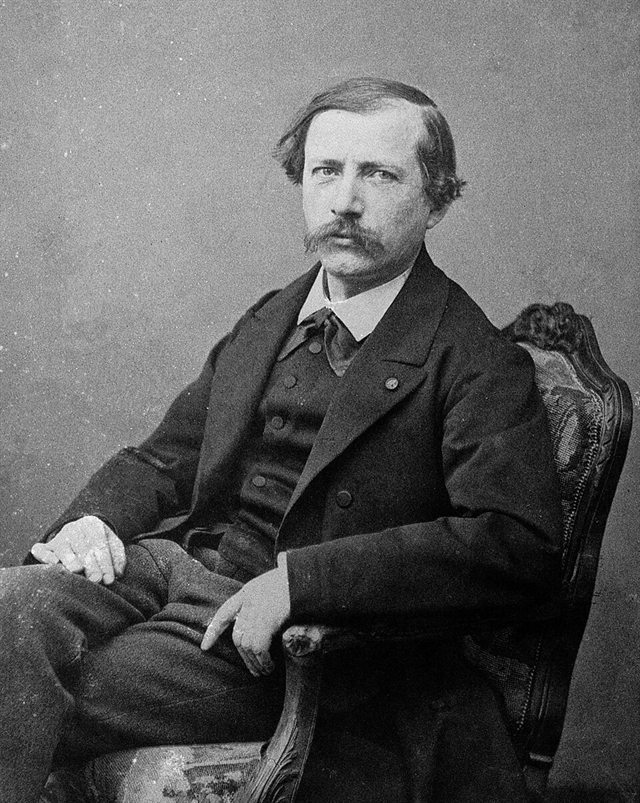
Who Named the Heat Both Ways · Chemist · 1827–1907
Who gave chemistry the words exothermic and endothermic, measured the heat of several thousand reactions, and then laid down a law stating that every reaction runs in the direction that gives out most heat — which would mean the second of his two words named nothing at all.
Defend these ideas against Berthelot
Incandio is a free revision platform for the Pearson Edexcel International GCSE, and on it a topic counts as mastered only once you have learned it, proved it in questions, taught it back and defended it against the person with the strongest claim on it. Marcellin Berthelot is that person for 3 topics on the course:
- Exothermic and Endothermic Reactions — Chemistry
- Rates of Reaction — Chemistry
- Dynamic Equilibrium — Chemistry
Who was Berthelot?
Berthelot was born in Paris in 1827 and made his name young, by attacking the last redoubt of vitalism. The claim that organic substances could only be produced by living things had survived Wöhler's urea of 1828 largely intact, and through the 1850s Berthelot demolished it methodically, building methane, methanol, acetylene, benzene and formic acid up from their elements. Chemistry, he wrote, differs from the other sciences in that it creates its object rather than merely finding it. In 1862 and 1863, working with Léon Péan de Saint-Gilles, he carried out the study that founded the quantitative treatment of chemical equilibrium: the reaction of ethanol with acetic acid to form an ester and water. What they showed is that the reaction does not go to completion. It slows, and stops, at a definite limit — and reaches the same limit from the other end, starting with the ester and water. Neither man could explain it; they measured it, exhaustively, and the measurements are still cited. From about 1864 he turned to heat. He measured the heat evolved or absorbed by reaction after reaction, on a scale nobody had attempted, eventually running to several thousand determinations, and he designed the apparatus the work needed — a sealed steel vessel in which a reaction can be run with nothing escaping to the room. He coined the terms exothermic and endothermic to classify what he found. And in 1867 he stated the generalisation he is now remembered for and by: the principle of maximum work, that every chemical change accomplished without the intervention of outside energy tends towards the products that set free the most heat. Julius Thomsen had arrived at much the same idea. It is false, and its falsity was obvious in ordinary cases — endothermic reactions occur, some of them spontaneously, as anyone who has dissolved ammonium chloride in water can feel. Berthelot defended it for some thirty years, and it was displaced by the free-energy treatments of Gibbs and Helmholtz. He was also a considerable public figure, serving as Minister of Public Instruction and later as Minister of Foreign Affairs, and he shaped French scientific education for a generation, not always for the better — he resisted atomic notation long after it had been accepted elsewhere. He died in 1907, a few hours after his wife, and the two were buried together in the Panthéon.
Major achievements
- Synthesised methane, methanol, acetylene, benzene and formic acid from their elements, ending vitalism as a serious position
- Carried out with Péan de Saint-Gilles the 1862–63 esterification study, the founding quantitative investigation of chemical equilibrium
- Showed that a reaction can stop at a limit and reach the same limit from either direction
- Measured the heat change of several thousand reactions
- Coined the terms exothermic and endothermic
Life in brief
- 1827 — Born in Paris: Son of a physician.
- 1855 — Synthesis from the elements: Organic substances built up from carbon and hydrogen.
- 1862 — The esterification study: With Péan de Saint-Gilles: a reaction that stops at a limit.
- 1865 — Thermochemistry begins: Heats of reaction, measured by the thousand.
- 1867 — The principle of maximum work: Every change runs the way that gives out most heat.
- 1881 — The sealed steel calorimeter: Nothing escapes to the room.
- 1895 — Minister of Foreign Affairs: A chemist in the cabinet.
- 1907 — Dies in Paris: Hours after his wife; both buried in the Panthéon.
Explore the life of Berthelot — five chapters
- Chemistry Creates Its Object — Building organic compounds from carbon and hydrogen
- The Reaction That Stops — Esterification, 1862 to 1863
- Several Thousand Heats of Reaction — Thermochemistry, and two words every student learns
- The Principle of Maximum Work — A wrong law drawn honestly from correct measurements
- Minister of Foreign Affairs — A chemist in the cabinet, and what he did with the power
Read the five-chapter life of Marcellin Berthelot →
Begin
- Start a conversation with Berthelot — a dramatised, historically grounded AI portrayal
- Read the Historical Brief
- Explore the life of Berthelot — five chapters
- Find your course · Meet all 280 figures