Explore Their Life · Pearson Edexcel International GCSE revision on Incandio
Marcellin Berthelot: A Life in Five Chapters
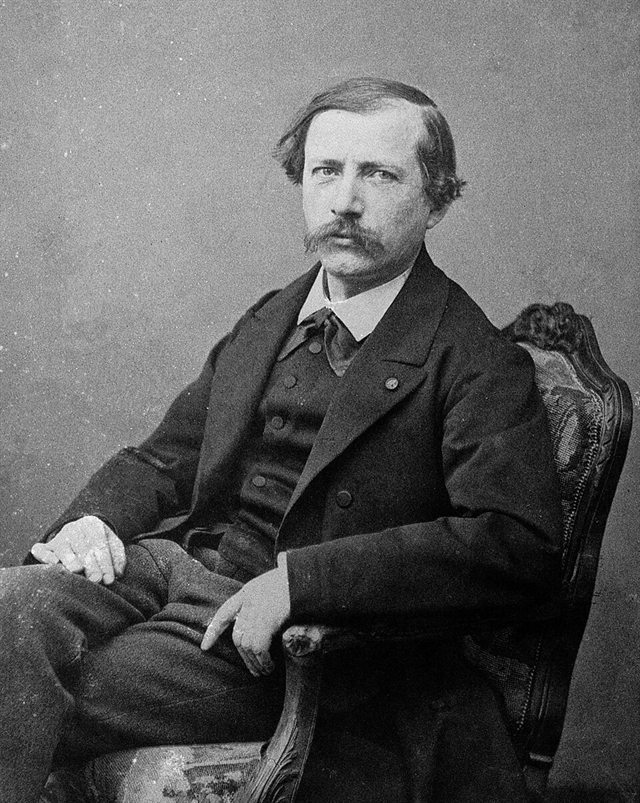
1827–1907
The chemist who finished off vitalism by building organic compounds from their elements, founded the study of equilibrium, coined the words exothermic and endothermic — and then proposed a law that the second of those words disproves.
Berthelot measured the heat of several thousand reactions and drew a general law from them that is false, and defended it for thirty years. He also ran the experiment where the quantitative study of equilibrium begins. He ended as Foreign Minister of France. These five chapters follow all three careers.
The five chapters
- Chemistry Creates Its Object — Building organic compounds from carbon and hydrogen
- The Reaction That Stops — Esterification, 1862 to 1863
- Several Thousand Heats of Reaction — Thermochemistry, and two words every student learns
- The Principle of Maximum Work — A wrong law drawn honestly from correct measurements
- Minister of Foreign Affairs — A chemist in the cabinet, and what he did with the power
Chapter 1 · Chemistry Creates Its Object
Building organic compounds from carbon and hydrogen
1827 – 1860 · Paris · Collège de France
Pierre Eugène Marcellin Berthelot was born in Paris in October 1827, the son of a physician who practised among the poor. He was a schoolfriend of Ernest Renan, and the two corresponded for forty years.
He made his name young, by attacking the last defensible position of *vitalism*.
Wöhler's urea of 1828 is usually presented as the end of the doctrine, and it was not. Defenders argued that urea is a *waste product* rather than a component of living tissue, and that Wöhler's starting materials derived ultimately from animal sources.
Berthelot removed both objections by building organic compounds *from their elements* — from carbon and hydrogen and nothing else.
Through the 1850s he synthesised methane, methanol, ethanol, formic acid, acetylene and benzene, and produced fats by combining glycerol with fatty acids. He made ethyl alcohol from ethylene and water. None of these required any material that had ever been alive.
He published *Chimie organique fondée sur la synthèse* in 1860, and stated the position that defines him: chemistry differs from the other sciences in that it *creates its object*. Astronomy and geology and biology describe what they find; chemistry makes things that did not exist and then studies them.
After that, vitalism had no serious defenders in chemistry. It had taken about thirty years and a great many syntheses.
Berthelot's own view of it was clear: the wall between organic and inorganic chemistry was not a fact about nature but a limitation of technique, and technique had removed it.
“Chemistry creates its object.”
— Marcellin Berthelot, Chimie organique fondée sur la synthèse (1860)
Why this matters
Berthelot removed the last defences of vitalism by building organic compounds from carbon and hydrogen alone, leaving no possible living contribution.
You have the compounds built from the elements. What would you ask him?
Ask Berthelot
- “Why was Wöhler's urea not enough to end vitalism?”
- “What does it mean that chemistry creates its object?”
- “How do you build benzene out of carbon and hydrogen?”
- “Was the organic-inorganic wall ever real?”
- “What did your father's practice among the poor teach you?”
Chapter 2 · The Reaction That Stops
Esterification, 1862 to 1863
1862 – 1863 · Paris
With *Léon Péan de Saint-Gilles*, Berthelot carried out the study where the quantitative treatment of chemical equilibrium begins.
The reaction is the formation of an ester: ethanol and acetic acid, warmed together, give ethyl acetate and water.
The assumption at the time was that a reaction, given time and the right conditions, goes to *completion*. Berthelot and Péan de Saint-Gilles found that it does not.
Start with equal amounts of ethanol and acetic acid, seal them, and leave them. The reaction proceeds, and then *slows*, and then *stops* — at a definite point, with about two-thirds converted and one-third of the starting materials still present. Wait longer and nothing further happens. Not slowly: not at all.
Then they did the experiment that made it important. They started from the *other end* — from ethyl acetate and water, the products — sealed and left them.
And the mixture arrived at *the same composition*. The same two-thirds to one-third ratio, approached from the opposite direction.
That is the demonstration that the limit is not exhaustion of something, or a failure of the reaction, but a *balance point* — a state the system reaches from either side and then maintains, in which the forward and reverse reactions continue and cancel.
They mapped it exhaustively, varying the proportions and temperatures, and their tables are still cited.
Neither could explain it. The explanation — that at equilibrium the forward and reverse rates are equal, and that the ratio of concentrations at that point is a constant — came from Guldberg and Waage in Norway in 1864, and their law of mass action was itself largely ignored for over a decade.
Berthelot measured the phenomenon exactly and left the account to somebody else.
Why this matters
Approaching the same composition from both directions is the demonstration that equilibrium is a balance point rather than an exhaustion of reactants.
You have the reaction that stops from either end. What is your question?
Ask Berthelot
- “Why does starting from the products matter so much?”
- “What is actually happening when the reaction has stopped?”
- “How long did you wait to be sure it had stopped?”
- “Could you have found the mass-action law yourself?”
- “Did anyone expect a reaction to stop part-way?”
Chapter 3 · Several Thousand Heats of Reaction
Thermochemistry, and two words every student learns
1864 – 1880s · Paris · Meudon
From about 1864 Berthelot turned to heat, and did it on a scale nobody had attempted.
He measured the heat evolved or absorbed by reaction after reaction — combustions, neutralisations, dissolutions, decompositions, formations — eventually running to several *thousand* determinations, published in enormous tabulated volumes.
He designed the apparatus the work required, including the *bomb calorimeter*: a sealed steel vessel, strong enough to contain a combustion under pressure, immersed in a measured mass of water, in which a substance can be burned in oxygen with nothing escaping to the room. The heat produced is calculated from the rise in the water's temperature.
That instrument is still in use, essentially unchanged in principle, and it is how the energy content of foods and fuels is determined. Every calorie figure on a food label descends from it.
And he coined the two words that classify what he found. A reaction that *gives out* heat to its surroundings he called *exothermic*. One that *takes in* heat he called *endothermic*.
Those are among the first words any chemistry student learns, and they are useful precisely because they name a division that turns out to matter: whether a reaction releases or absorbs energy is one of the fundamental things about it.
He also established the principle now called Hess's law in practice — that the total heat change is the same however a reaction is carried out, by whatever route — which is what allows heats of reaction to be calculated for processes that cannot be performed directly.
He was, on the evidence of the tables, an extraordinarily industrious and careful measurer.
And then he drew a general law from it all, and got it wrong.
Why this matters
Berthelot's bomb calorimeter is essentially unchanged in principle and is how the energy content of every food and fuel is still determined.
You have the sealed steel vessel and thousands of numbers. What would you ask?
Ask Berthelot
- “How does a bomb calorimeter work?”
- “Why do exothermic and endothermic need separate names?”
- “Where does the calorie figure on a food label come from?”
- “Why does the route not affect the total heat change?”
- “What is it like to make several thousand measurements?”
Chapter 4 · The Principle of Maximum Work
A wrong law drawn honestly from correct measurements
1867 – 1890s · Paris
In 1867 Berthelot stated the generalisation he is now remembered for and by: that every chemical change accomplished without the intervention of outside energy tends toward the products that *set free the most heat*.
In other words: reactions go the exothermic way. Heat released is the driving force of chemical change.
Julius Thomsen in Denmark had arrived at essentially the same idea independently, and it is sometimes called the Thomsen–Berthelot principle.
It is false, and — this is the striking part — its falsity was obvious in perfectly ordinary cases *at the time*.
Endothermic reactions occur. Some of them occur spontaneously. Dissolve ammonium chloride or ammonium nitrate in water and the beaker goes noticeably *cold* in your hand; it absorbs heat from its surroundings, and it happens readily, without help. That is the basis of an instant cold pack.
So the principle is disproved by an experiment a child can do, using the very word — *endothermic* — that Berthelot himself had coined for it.
Berthelot defended it for about thirty years.
The correct account came from *Josiah Willard Gibbs* in America and *Hermann von Helmholtz* in Germany in the 1870s and 1880s. What determines whether a change proceeds is not the heat alone but the *free energy*, which combines the heat change with a term involving *entropy* — the tendency toward increased disorder — and the temperature. An endothermic reaction proceeds when the increase in disorder is large enough to outweigh the heat absorbed. Dissolving a solid salt into freely moving ions is exactly such a case.
Berthelot's error is instructive precisely because it was drawn *honestly*, from an enormous body of correct measurements, by a careful man. Most reactions *are* exothermic, so the generalisation fits the majority of the data. He had the evidence and the wrong law, and the exceptions were in front of him.
Why this matters
The principle of maximum work is disproved by dissolving ammonium nitrate in water — an experiment using the very word Berthelot had coined for it.
You have the law and the cold beaker that breaks it. What is your question?
Ask Berthelot
- “How can a reaction that absorbs heat happen on its own?”
- “Why did you defend it for thirty years?”
- “What is entropy doing in the answer?”
- “How does a wrong law come out of correct measurements?”
- “What would have changed your mind?”
Chapter 5 · Minister of Foreign Affairs
A chemist in the cabinet, and what he did with the power
1870 – 1907 · Paris · The Panthéon
Berthelot was a public figure of the first rank for the last forty years of his life.
During the siege of Paris in 1870 he headed the committee on scientific defence, working on explosives and on the manufacture of munitions in a starving city.
He was made a life Senator in 1881, was Minister of Public Instruction from 1886 to 1887, and Minister of Foreign Affairs in 1895 and 1896. He was permanent secretary of the Académie des Sciences from 1889.
He was a committed republican, anticlerical and a positivist, and he shaped French scientific education for a generation — championing the teaching of science in schools, and organising the state's relationship with research.
And that power had costs. Berthelot *resisted atomic notation* in French chemistry long after it had been accepted everywhere else. He held that atoms were an unnecessary hypothesis and that equivalents were sufficient, and as permanent secretary and a former education minister he was in a position to enforce it. French chemistry teaching used equivalent notation for years after Germany and Britain had moved on, and French students were disadvantaged by it.
That is a case of an eminent scientist's philosophical preference becoming, by way of institutional power, a national curriculum.
He also worked on the history of chemistry, publishing serious studies of Greek and Arabic alchemical texts — he learned enough to work from the originals.
He died in Paris on 18 March 1907, aged seventy-nine, a few hours after his wife Sophie. He had asked not to be separated from her, and the two were buried together in the *Panthéon* — she is one of very few women interred there, and was for a long time the only one, on her husband's account rather than her own.
Why this matters
Berthelot's philosophical objection to atoms became, through his institutional power, the notation French schoolchildren were taught long after everyone else had moved on.
You have the cabinet, the notation and the Panthéon. What would you ask?
Ask Berthelot
- “Why did you resist atomic notation?”
- “Should a scientist's opinion decide a national curriculum?”
- “What did you do during the siege of Paris?”
- “Why study Greek and Arabic alchemy?”
- “Was the laboratory or the ministry the better use of you?”
What Berthelot changed
Exothermic and endothermic are Berthelot's, and are among the first words any chemistry student learns. The esterification study with Péan de Saint-Gilles is where the quantitative study of equilibrium begins, and his bomb calorimeter is still how the energy content of foods and fuels is determined. The principle of maximum work is one of the most instructive wrong ideas in chemistry, because it was drawn honestly from an enormous body of correct measurements and still failed.
A debate that continues
Berthelot defended the principle of maximum work for some thirty years against evidence that a child could produce, and used his institutional position to obstruct atomic notation in French chemistry long after it had been accepted elsewhere.
Keep exploring — ask Berthelot
- “Which of your thousands of measurements would you check first?”
- “How does an eminent man stop being an obstacle?”
- “What did Sophie make of the laboratory?”
Related lives
- Friedrich Wöhler — Who Made Urea Without A Kidney
- Jean-Baptiste Dumas — Who Swapped One Atom for Another
- Lord Kelvin — Who Found The Bottom Of The Scale
- Svante Arrhenius — Whose Thesis Nearly Failed
Related themes
Energy changes in reactions · Chemical equilibrium · Synthesis
Continue on Incandio
- Talk to Berthelot — every question on this page is one tap from being asked, and the same page carries the Historical Brief, the achievements and the timeline
- All 280 figures · Incandio — learn every idea, teach it, then defend it