Explore Their Life · Pearson Edexcel International GCSE revision on Incandio
Al-Ghazali: A Life in Five Chapters
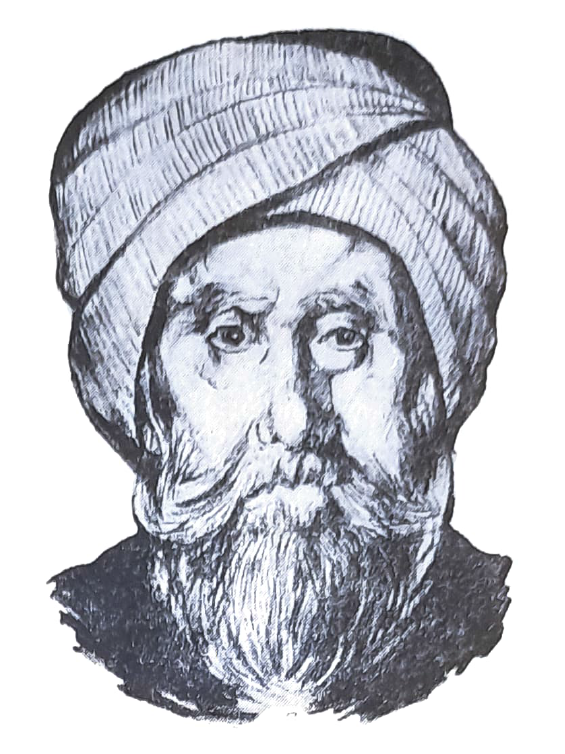
c. 1058–1111
The most celebrated teacher in Baghdad, who lost the ability to speak in his own lecture room, gave the post away, and spent eleven years finding out what a belief can rest on if not on having been raised in it.
Al-Ghazali is the great documented case of a believer taking doubt seriously in public. These five chapters follow the rise, the breakdown, the eleven years away, the examination of what certainty rests on, and the books that came out of it.
The five chapters
- Tus to Baghdad — The best teaching post in the Islamic world, at thirty-three
- The Crisis — Six months unable to lecture
- Testing the Foundations — The senses deceive; reason cannot check itself
- Reading the Philosophers Before Answering Them — Two years of summary, then the objection
- The Revival — Putting practice back at the centre
Chapter 1 · Tus to Baghdad
The best teaching post in the Islamic world, at thirty-three
c. 1058 – 1091 · Tus · Nishapur · Baghdad
Al-Ghazali was born about 1058 at Tus in Khorasan, in what is now north-eastern Iran. His father, a spinner of wool, died while he and his brother Ahmad were young, and the two were placed with a friend and then in a college where board was provided — which meant, as al-Ghazali later noted without embarrassment, that they studied partly because it fed them.
He went to Nishapur to study under al-Juwayni, among the leading theologians of the age, and made a reputation quickly enough that after his teacher's death he attached himself to the camp of Nizam al-Mulk, the vizier of the Seljuk empire and the founder of a network of colleges.
In 1091 Nizam al-Mulk appointed him to the Nizamiyya at Baghdad. It was the most prominent teaching position in the Islamic world. He was about thirty-three. Several hundred students attended his lectures; he wrote on law, on theology, on the philosophers; he was consulted on matters of state.
By any external measure this is a complete success, arrived at young. He described it afterwards as a period in which he was teaching for reputation rather than for God, and said that he knew it at the time and continued anyway. That judgement is retrospective and should be treated as such — but the crisis that followed suggests it was not invented after the fact.
Why this matters
The collapse was not the collapse of a man who had failed; it happened at the top, which is what makes it evidence rather than an excuse.
You have the rise and the chair at Baghdad. What would you ask?
Ask Al-Ghazali
- “What did it mean to be given the Nizamiyya at thirty-three?”
- “Did studying because it fed you affect what you believed?”
- “What did al-Juwayni teach you that stayed?”
- “Were you really teaching for reputation?”
- “What was expected of somebody in that chair?”
Chapter 2 · The Crisis
Six months unable to lecture
1095 · Baghdad
In 1095 al-Ghazali stopped being able to teach. He described it in Deliverance from Error in unusually plain terms: for a period he would come to the lecture room intending to speak and find that he could not, that his tongue would not obey him, and that this went on for months. He could not eat properly. The physicians examined him and concluded that the cause was not in his body — that something had settled in his mind and would not shift until whatever it was resolved.
What he says was underneath is the important part. He had been examining what his own certainty rested on and had not liked the answer. He had believed what he believed, he said, because he had been raised among people who believed it — and a Jewish child raised among Jews and a Christian child raised among Christians would say exactly the same about theirs. That is not an argument for or against any of the three; it is an observation about the status of the belief, and it is what he could not get past.
A claim held because it was inherited, he concluded, is not yet knowledge, whatever its content.
In November 1095 he left Baghdad. He arranged for his family, distributed most of what he had, and gave out that he was going to Mecca — probably because leaving the post outright would have been resisted by people with an interest in his staying.
He did not come back to public teaching for about eleven years.
“The thirst for grasping the real meaning of things was indeed my habit and wont from my early years.”
— Al-Ghazali, Deliverance from Error (al-Munqidh min al-Dalal)
Why this matters
Al-Ghazali's doubt was not about the content of his belief but about its foundation, and separating those two is the single most useful move a Religious Studies learner can make on this topic.
You have the six months and the reason he gives. What would you ask?
Ask Al-Ghazali
- “What actually happened in the lecture room?”
- “Why does it matter that you would have believed differently elsewhere?”
- “What did the physicians say?”
- “Why did you tell people you were going to Mecca?”
- “Was leaving the post an act of courage or of collapse?”
Chapter 3 · Testing the Foundations
The senses deceive; reason cannot check itself
c. 1095 – 1100 · Damascus · Jerusalem · The Hijaz
What al-Ghazali did with his doubt is a method, and it is worth following step by step because it is the part a Religious Studies course can actually use.
He began by asking what certain knowledge would have to be: something that could not conceivably be mistaken. Then he tested his sources against that standard.
The senses failed first. A shadow appears not to move and is moving; a star appears the size of a coin. In each case a further judgement corrects the sense — which means the sense was not certain, and the correction did not come from the senses.
Then reason, which corrects the senses. Here the problem is harder. If the senses were confident and wrong, what certifies that reason is not in the same position? Any check on reason would have to be conducted by reason, and that is circular. He compares it to a dreamer, entirely convinced while dreaming, who wakes and finds none of it was so — and asks what would follow if there were a waking beyond this one.
He could not answer it by argument, and he says so. What ended the crisis was not a proof; it was, on his account, a change that came from elsewhere, restoring the necessary truths — and he notes carefully that this is not a demonstration and that he is not offering it as one.
The practical conclusion is the one he built the rest of his life on: if argument cannot reach the foundation, then practice, discipline and a way of living have to do work that reasoning cannot.
Why this matters
The examination of the senses and of reason is the clearest short account anybody has written of why certainty is hard, and it was written by a believer rather than against belief.
You have the two tests and where they left him. What would you ask?
Ask Al-Ghazali
- “Why do the senses fail your test?”
- “Can reason ever check itself?”
- “What is the dreaming argument doing in your account?”
- “If it was not a proof that ended the crisis, what was it?”
- “Why does practice succeed where argument stops?”
Chapter 4 · Reading the Philosophers Before Answering Them
Two years of summary, then the objection
c. 1093 – 1095 · Baghdad
Before the crisis, al-Ghazali had done something unusual with the philosophers. Rather than dismissing them, he spent about two years reading them closely enough to set out their positions accurately, and then published that summary — The Aims of the Philosophers — on its own, without objection. It was so faithful that when it reached Latin Europe some readers took him for a follower.
Only then did he write The Incoherence of the Philosophers, and the target is narrower than its reputation suggests. He does not attack reasoning, logic or mathematics; he says explicitly that disputing established mathematics on religious grounds damages religion rather than mathematics, because a person who has been told that faith requires denying a demonstration will eventually choose the demonstration. That warning is his, and it is worth quoting to anybody who thinks he was an enemy of science.
What he attacks is a specific set of metaphysical claims advanced as if they had been demonstrated when, he argues, they had not — including the eternity of the world and an account of God's knowledge that made it general rather than particular.
His deepest philosophical move is about causation. When fire meets cotton, we observe one thing following another; we do not observe a necessity binding them. What we call cause and effect is a constant conjunction, and God is the real agent — which leaves room for events that do not follow the ordinary pattern without making nature unintelligible.
Ibn Rushd answered him a century later, line by line, in The Incoherence of the Incoherence. The two books are among the best-conducted disagreements in the history of religious thought, and neither man was born when the other's argument was needed.
Why this matters
Al-Ghazali summarised his opponents before answering them and refused to make religion depend on denying a demonstration — two habits that decide whether an argument about faith and reason is worth having.
You have the summary and the objection. What would you ask?
Ask Al-Ghazali
- “Why publish the philosophers' case before attacking it?”
- “Why does disputing mathematics damage religion?”
- “What exactly is wrong with saying fire causes burning?”
- “Which of the philosophers' claims did you actually reject?”
- “What would you say to Ibn Rushd if you could?”
Chapter 5 · The Revival
Putting practice back at the centre
c. 1100 – 1111 · Damascus · Tus · Nishapur
The book al-Ghazali is most read for in the Islamic world is not the attack on the philosophers. It is The Revival of the Religious Sciences, written in the years of retreat and after — forty books, arranged in four quarters, covering worship, ordinary conduct, the destructive traits of character and the saving ones.
Its argument is that religious knowledge had become an examinable subject and stopped being a way of living. Lawyers knew the rulings, theologians knew the arguments, and both could be entirely competent without any of it reaching what they actually did. The Revival puts the inner life back at the centre without discarding the law — its treatment of ritual is exacting — and the combination is what made it last.
He returned to teaching at Nishapur about 1106, and said plainly that he was returning as a different person doing a different thing.
He died at Tus in 1111, where he had been born, aged about fifty-three.
The reception has been enormous and contested. He is called the Proof of Islam; his Revival is read continuously in a way few medieval books are; and he is also blamed by some modern writers for a decline in philosophical study in the Islamic world after him. That last charge is disputed by specialists, partly because philosophy demonstrably continued, and partly because it credits one book with more power than any book has. What is not in dispute is the shape of the life: to the top, out of it, and back on different terms.
Why this matters
The Revival is the answer to a question every religious education faces — whether knowing the material and living it are the same achievement — and al-Ghazali's answer was written by somebody who had done the first and lost his nerve about it.
You have the retreat, the book and the return. What would you ask?
Ask Al-Ghazali
- “What had gone wrong with religious learning as you found it?”
- “What was different about teaching after you came back?”
- “Can somebody know a religion completely and live none of it?”
- “Are you responsible for what happened to philosophy after you?”
- “Would you leave the chair again?”
What Al-Ghazali changed
Al-Ghazali showed that doubt can be examined by a believer, in public, without either pretending it away or being destroyed by it — and that the question worth asking about a belief is not only whether it is true but what it is resting on. For Religious Studies he is the single best documented example anywhere of belief, uncertainty and unbelief in one life.
A debate that continues
Whether his critique of the philosophers slowed philosophical enquiry in the Islamic world, or whether that charge mistakes one book for a whole intellectual history, is argued by specialists and unresolved.
Keep exploring — ask Al-Ghazali
- “Is a belief you inherited worth less than one you reasoned to?”
- “Can reason ever certify itself?”
- “What should somebody do when argument runs out and the question remains?”
Related lives
- Ibn Rushd — Who Answered The Incoherence
- Maimonides — Who Said What God Is Not
- Thomas Aquinas — Who Would Not Let Faith Fear Reason
Related themes
Belief and uncertainty · Faith and reason · Religious experience
Continue on Incandio
- Talk to Al-Ghazali — every question on this page is one tap from being asked, and the same page carries the Historical Brief, the achievements and the timeline
- All 280 figures · Incandio — learn every idea, teach it, then defend it