Explore Their Life · Pearson Edexcel International GCSE revision on Incandio
Gustav Stresemann: A Life in Five Chapters
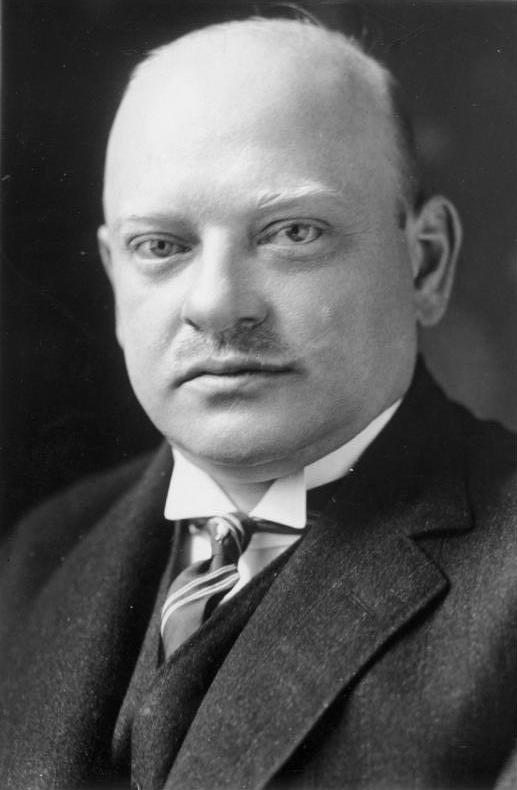
1878–1929
A beer merchant's son who wanted Germany to win the First World War, spent a hundred days saving the Republic he had opposed, and died six weeks before the crash that undid it.
Stresemann is taught as the man who rescued Weimar, and he began as one of its enemies. These five chapters follow the trade lobbyist who wrote a doctorate on bottled beer, the wartime annexationist, the hundred days of 1923, the years at the Foreign Ministry that ended in a Nobel Prize, and the argument about what he was actually doing that has never been settled.
The five chapters
- The Doctorate on Bottled Beer — How an outsider learned what business wanted
- The War He Wanted To Win — Annexation, submarines, and a reputation to live down
- A Hundred Days — The worst year, and the shortest chancellorship that mattered
- Locarno, Geneva and the Nobel Prize — Six years at the Foreign Ministry under six chancellors
- The Argument About What He Was Doing — Good European, or revisionist by other means
Chapter 1 · The Doctorate on Bottled Beer
How an outsider learned what business wanted
1878 – 1914 · Berlin · Leipzig · Dresden
Gustav Stresemann was born in Berlin in 1878, the youngest of seven children of a man who distributed bottled beer to the city's pubs. It was a respectable trade and it was trade, which in Imperial Germany placed him outside the class that expected to govern. He took a doctorate at Leipzig, and the subject was the Berlin bottled-beer business — an unglamorous choice that told him precisely how small firms were being squeezed by large ones.
He went into industrial lobbying, organising trade associations for exactly those smaller manufacturers, and he was extremely good at it. That work, rather than a university or a regiment, is where he learned the skill his whole later career rested on: assembling agreement between people whose interests only partly overlapped.
He entered the Reichstag in 1907 for the National Liberals, the youngest member in the chamber, and was known as a coming man and an intense one. He was a monarchist. He believed in a strong Germany with a fleet and colonies, and he saw no contradiction between that and a parliamentary voice for business.
Nothing here predicts Locarno. What it does explain is method. Stresemann never treated politics as a matter of principle first: he began from what each side needed and worked backwards to a form of words both could sign, which is what he did in 1923 and again in 1925.
Why this matters
The negotiator of Locarno was trained in trade associations, not in diplomacy — and it shows in how he worked.
You have the beer trade and the Reichstag seat. What would you ask him?
Ask Stresemann
- “Did coming from trade rather than from land close doors to you in Imperial Germany?”
- “What did organising small manufacturers teach you that politics did not?”
- “You were a monarchist in 1907. What did you want Germany to become?”
- “Why write a doctorate about the bottled-beer trade?”
- “Were you treated as a serious politician when you arrived in the Reichstag at twenty-nine?”
Chapter 2 · The War He Wanted To Win
Annexation, submarines, and a reputation to live down
1914 – 1919 · Berlin · The Reichstag
Stresemann supported the war from the first week and went on supporting it in the form the army wanted. He argued for annexations in the west and the east, he backed the resumption of unrestricted submarine warfare in 1917 knowing it would probably bring the United States in, and he was close enough to the High Command that opponents called him Ludendorff's young man. When the Reichstag passed its Peace Resolution in July 1917 calling for a settlement without annexations, Stresemann was against it.
He was not a fanatic and he was not on the fringe. This was a mainstream nationalist position, held by a great many respectable Germans, and the point of stating it plainly is that it makes what came next intelligible rather than saintly.
The war ended in defeat, the Kaiser abdicated, and Stresemann's party disintegrated. He founded a new one, the German People's Party, which was monarchist in sentiment and would not commit itself to the Republic. He was not converted in 1918. What changed him was the following four years: the murder of Rathenau in 1922 by nationalists, the Kapp Putsch, the discovery that the alternative to the Republic was not a restored monarchy but chaos.
He became what German has a word for — a Vernunftrepublikaner, a republican by reason rather than by love. It is a colder position than the textbooks usually give him, and it is the one he actually held.
Why this matters
Stresemann defended the Republic without ever preferring it, which is why judging him by whether he 'believed in' democracy misses what he did.
This is the part of him most accounts leave out. What would you put to him?
Ask Stresemann
- “You backed unrestricted submarine warfare in 1917. Did you expect America to enter?”
- “Why did you oppose the Peace Resolution of July 1917?”
- “What did the murder of Walther Rathenau change for you?”
- “Is a republican by reason a reliable defender of a republic?”
- “Did your wartime record make you harder or easier for nationalists to attack later?”
Chapter 3 · A Hundred Days
The worst year, and the shortest chancellorship that mattered
August – November 1923 · Berlin · The Ruhr · Saxony · Munich
Stresemann became Chancellor in August 1923, at the point where the Republic came closest to ending. French and Belgian troops held the Ruhr; the government's policy of passive resistance was being paid for by printing money and the currency had collapsed past any meaning; Communists had entered the governments of Saxony and Thuringia; Bavaria was in open defiance of Berlin. He held office for a hundred days.
In September he called off passive resistance. It was the single most unpopular decision available and it was the only one that stopped the printing presses, and he was denounced for it by everyone from the nationalist right to the Communist left. In November the Rentenmark was introduced and the currency held. He used Article 48 to remove the elected governments of Saxony and Thuringia, and treated Bavaria — where the threat was at least as great, and where the Munich Putsch came in the same month — far more cautiously, because the army would act against the left and might not act against the right.
That asymmetry is a real charge against him and it is not a simple one. He was governing with an army whose loyalty was conditional, and he knew it.
His own coalition brought him down in November. He had been Chancellor for a hundred days, and he had ended the occupation crisis, stopped the inflation and kept the Republic in existence, which is more than any of his predecessors managed.
Why this matters
1923 is where Stresemann's reputation was made, and where the accusation that he applied the constitution unevenly is best tested.
A hundred days and four crises at once. What would you ask him about that autumn?
Ask Stresemann
- “Ending passive resistance was hated. How did you decide it had to be done?”
- “Why act against Saxony and Thuringia and not against Bavaria?”
- “How much of the Rentenmark's success was confidence rather than economics?”
- “Could you rely on the army in the autumn of 1923?”
- “Was a hundred days long enough to do what you set out to do?”
Chapter 4 · Locarno, Geneva and the Nobel Prize
Six years at the Foreign Ministry under six chancellors
1923 – 1929 · Berlin · Locarno · Geneva · Thoiry
Stresemann left the chancellorship in November 1923 and became Foreign Minister the same month. He held the post until his death, through six governments, which made him the one continuous figure in German policy for the rest of the decade.
The achievements are real and they are precisely bounded. The Dawes Plan in 1924 rescheduled reparations and opened Germany to American credit. The Locarno treaties in October 1925 accepted the western frontier with France and Belgium as permanent and guaranteed it — and deliberately did not do the same for the eastern frontier with Poland, which Stresemann intended to revise later by negotiation. Germany entered the League of Nations in 1926 with a permanent Council seat. He shared the Nobel Peace Prize with Aristide Briand the same year. The Kellogg–Briand Pact followed in 1928, and in 1929 the Young Plan reduced the reparations burden again and secured the early evacuation of the Rhineland.
Alongside all of it he kept the Treaty of Berlin with the Soviet Union, signed in 1926, which is not what a purely Western policy would look like.
He worked himself into the ground. He had a stroke in October 1929 and died at fifty-one, six weeks before the Wall Street Crash removed the American lending his whole recovery had been built on.
Why this matters
What Locarno guaranteed and what it pointedly did not is the sharpest evidence about what Stresemann was actually trying to achieve.
A Nobel Prize and an unguaranteed eastern frontier. What would you ask him?
Ask Stresemann
- “Why guarantee the western frontier at Locarno and leave the eastern one open?”
- “What did a permanent seat at Geneva actually give Germany?”
- “Was it wise to rest German recovery on American loans you could not control?”
- “Why keep the Treaty of Berlin with the Soviet Union while you were negotiating with the West?”
- “Did the Nobel Prize help you at home or hurt you?”
Chapter 5 · The Argument About What He Was Doing
Good European, or revisionist by other means
1929 – now · Berlin · The archives
Stresemann's papers were published in the early 1930s, and they started an argument that has not stopped. In them he writes to colleagues about German aims in terms that sound nothing like the man at Locarno: the recovery of territory lost to Poland, the eventual union with Austria, the protection of Germans abroad. To one reading, the diplomacy was a mask and the aims were the aims of 1914 pursued by cheaper means.
The other reading takes the papers seriously and draws a different conclusion. Stresemann never pretended the frontier with Poland was settled; he said so in public and built it into the treaties. What Locarno established was that revision would be sought by negotiation and never by force — and for a German politician in 1925, with the army and the nationalist press watching, saying that at all was the risk. On this reading he was neither a saint nor a hypocrite but a nationalist who had concluded, from 1923, that force did not work.
Historians have moved between the two positions for ninety years, and the evidence genuinely supports both. What is not disputed is the sequence: while he was alive there was no serious challenge to the Republic from either extreme, and within four years of his death there was nothing left of it.
Why this matters
The dispute about Stresemann is a model of how historians read private papers against public acts — and of why neither on its own settles a motive.
Ninety years of disagreement about one man's purpose. What would you put to him?
Ask Stresemann
- “Were your private letters about revising the eastern frontier a contradiction of Locarno, or its point?”
- “What would you have done if you had lived through 1930?”
- “Did you think the settlement of 1919 could be undone without another war?”
- “Which of your six years at the Foreign Ministry mattered most?”
- “Why should anyone trust a politician's private papers more than their treaties?”
What Stresemann changed
Stresemann took Germany from occupation and a destroyed currency in 1923 to a permanent seat on the Council of the League of Nations in 1926, and he did it while never quite believing in the Republic he was defending. The six years he ran German foreign policy are the only stretch of the Weimar Republic in which neither extreme was growing. He died before he could find out whether the recovery he had built on American credit could survive American credit being withdrawn, and the answer arrived six weeks later.
A debate that continues
Was Stresemann a European statesman or a nationalist pursuing the aims of 1914 by negotiation? His published papers can be quoted convincingly for both, which is why the question has stayed open for ninety years.
Keep exploring — ask Stresemann
- “If the Wall Street Crash had come three years later, would the Weimar Republic have survived?”
- “Can a politician defend a system of government they would not have chosen?”
- “Should a treaty be judged by what it settles or by what it deliberately leaves unsettled?”
Related lives
- Otto von Bismarck — The Iron Chancellor
- Woodrow Wilson — He Designed It And His Own Senate Refused It
- David Lloyd George — The Cottage-Bred Solicitor Who Ran An Empire
- Alexander Kerensky — Fifty Years Of Explaining Eight Months
Related themes
The Weimar Republic · Reparations and the world economy · The League of Nations
Continue on Incandio
- Talk to Stresemann — every question on this page is one tap from being asked, and the same page carries the Historical Brief, the achievements and the timeline
- All 280 figures · Incandio — learn every idea, teach it, then defend it