Explore Their Life · Pearson Edexcel International GCSE revision on Incandio
William Beaumont: A Life in Five Chapters
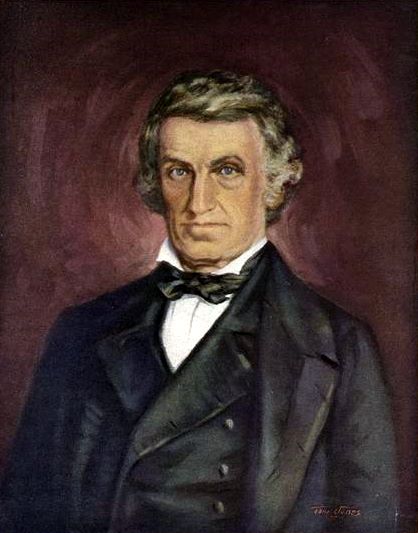
1785–1853
A frontier army surgeon who was handed a hole into a living man's stomach by an accident, spent a decade looking through it, and bound the man to him by contract to keep looking.
Beaumont proved that digestion is chemistry by tying food to silk strings and lowering it into Alexis St. Martin's stomach through a wound that never closed. The science is genuine and important. The relationship between the two men is the reason his name still appears in medical-ethics teaching. These five chapters keep both.
The five chapters
- A Farm, a Schoolroom and an Army — Medicine learned by apprenticeship on the American frontier
- 6 June 1822 — A shotgun in a company store, and a wound that would not close
- Food on Silk Strings — Two hundred and thirty-eight experiments
- The Contracts — A man bound by indenture to be experimented on
- What the Book Changed — American physiology begins, and ethics catches up
Chapter 1 · A Farm, a Schoolroom and an Army
Medicine learned by apprenticeship on the American frontier
1785 – 1822 · Lebanon, Connecticut · Vermont · Plattsburgh · Fort Mackinac
William Beaumont was born in November 1785 on a farm at Lebanon, Connecticut. He left home at about twenty-one with a horse, a sleigh and a small sum of money, and taught school in New York State.
He had no university education and no medical school. He learned medicine the way most American doctors then did: he apprenticed himself, in 1810, to a physician in St Albans, Vermont, read his master's books, watched, assisted, and was licensed by the Vermont Medical Society in 1812.
He joined the army as a surgeon's mate in the War of 1812 and served through it, including at the siege of Plattsburgh, where he treated large numbers of wounded men under fire and kept a diary about it.
After a period in private practice he rejoined the army, and in 1820 was posted to Fort Mackinac — a small garrison on an island in Lake Huron, at the junction of Lakes Michigan and Huron, in the middle of the fur trade. It was remote, cold, and had perhaps a few hundred inhabitants plus the transient trappers and voyageurs of the American Fur Company.
He was the only doctor for a very long way in any direction.
That is the background worth holding on to. Everything that follows was done by a self-taught frontier army surgeon with no laboratory, no colleagues, no library, and no institution behind him.
Why this matters
Beaumont had no medical school, no laboratory and no colleagues, which makes the systematic quality of what he did afterwards genuinely remarkable.
You have the apprentice surgeon at the edge of the map. What would you ask him?
Ask Beaumont
- “How do you learn medicine without a medical school?”
- “What was Fort Mackinac actually like?”
- “What did the War of 1812 teach you as a surgeon?”
- “What do you do when you are the only doctor for a hundred miles?”
- “Did you ever expect to do research?”
Chapter 2 · 6 June 1822
A shotgun in a company store, and a wound that would not close
1822 – 1825 · Fort Mackinac
On the morning of 6 June 1822, in the American Fur Company store on Mackinac Island, a shotgun discharged accidentally at close range — under a yard — into the left side of a nineteen-year-old French-Canadian voyageur named Alexis St. Martin.
Beaumont was fetched and arrived within minutes. His notes describe the wound: a hole the size of a man's palm, ribs fractured, part of the lung protruding, and the stomach perforated with food escaping from it. He recorded that he considered the case hopeless and did not expect the man to survive the night.
St. Martin survived. Over the following months the wound healed — but it healed *wrongly*. Instead of closing, the edge of the stomach fused to the edge of the hole in the abdominal wall, leaving a permanent opening about two and a half inches across, a *gastric fistula*, opening directly into the interior of a working stomach. A loose fold of tissue acted as a valve, which St. Martin could push aside with a finger.
He was destitute, unable to return to heavy work as a voyageur, and the local authorities proposed sending him back to Canada. Beaumont took him into his own household, fed him, and employed him as a servant.
And around 1825, three years after the accident, Beaumont realised what he had: a window into a living human stomach, doing its ordinary work, in a man who could walk around.
Nobody in history had ever had this.
“I had opportunities for the examination of the interior of the stomach, and its secretions, which has never before been so fully offered to any one.”
— William Beaumont, Experiments and Observations on the Gastric Juice (1833)
Why this matters
A wound that healed into a permanent opening gave Beaumont direct access to a working human stomach — an opportunity that had never existed before and has barely existed since.
You have the accident and the opening that never closed. What is your question?
Ask Beaumont
- “What did the wound look like when you first saw it?”
- “Why did the wound heal into an opening rather than closing?”
- “When did you realise what you had?”
- “Why take St. Martin into your own house?”
- “What did St. Martin think was happening to him?”
Chapter 3 · Food on Silk Strings
Two hundred and thirty-eight experiments
1825 – 1833 · Fort Mackinac · Fort Niagara · Plattsburgh · Washington
Beaumont's method was direct and it was systematic.
He tied pieces of food — beef, pork, bread, cabbage, raw and cooked — to lengths of silk string, introduced them through the fistula into St. Martin's stomach, and drew them out at intervals of an hour to see how far digestion had proceeded. He recorded everything: what the food was, how it was prepared, how long each stage took, what the stomach lining looked like, what the temperature was.
He drew off samples of pure *gastric juice* with a tube, before food was taken, and this is where the important results are.
He put food into a glass vial with the extracted juice, kept it at body temperature — sometimes in his pocket, sometimes on the mantelpiece — and the food was digested. Outside the body, in a bottle, with no living tissue involved at all.
That is the key finding. Digestion is *chemistry*. It is not a vital process requiring a living stomach, nor the mechanical grinding some had proposed, nor a fermentation. A fluid does it, and the fluid works wherever you put it.
He had the free acid analysed and it was identified as hydrochloric. He also observed that the stomach's muscular movements churn and mix the contents, that emotional state — anger, fever — slows digestion markedly, and that alcohol inflamed the stomach lining, which he noted repeatedly since St. Martin drank.
He published *Experiments and Observations on the Gastric Juice and the Physiology of Digestion* in 1833, at his own expense, with 238 numbered experiments.
Why this matters
Digesting food in a vial with extracted gastric juice proved that digestion is chemistry and needs no living tissue — the founding demonstration of digestive physiology.
You have the silk strings and the vial on the mantelpiece. What would you ask?
Ask Beaumont
- “What did digesting food in a bottle actually prove?”
- “Why tie the food to strings?”
- “What did anger do to St. Martin's digestion?”
- “What was in the juice besides acid?”
- “How did you decide what to try next?”
Chapter 4 · The Contracts
A man bound by indenture to be experimented on
1832 – 1834 · Plattsburgh · Washington · Canada
This is the part that keeps Beaumont's name in medical-ethics teaching.
St. Martin was illiterate, poor, French-speaking, and had no means of supporting himself after the injury. In 1832 Beaumont had him sign a formal indenture — St. Martin signed with a cross — binding him to serve Beaumont, to submit to and assist in the experiments, and to allow gastric juice to be drawn and food introduced through the opening, in return for board, lodging and a payment of a few hundred dollars.
Set aside the modern language of consent for a moment and consider the position as it stood. One party was an army officer and physician; the other was an unlettered labourer whose ability to work had been destroyed and who depended on the first party for food. St. Martin had, in any practical sense, no alternative. He also could not read what he signed.
St. Martin repeatedly fled. He went back to Canada, married, had children, and stayed away for years at a time. Beaumont pursued him with letters, sent intermediaries, offered increased sums, and tried to have him brought back through the Fur Company. He never succeeded after 1834.
Beaumont died in St Louis in April 1853, aged sixty-seven, after slipping on ice-covered steps and striking his head.
St. Martin outlived him by twenty-seven years, dying in Quebec in 1880 at about seventy-eight. His family, aware that physicians wanted the body for autopsy, deliberately let it decompose before burial and interred it deep in an unmarked grave, so that nobody could dig him up.
That final act tells you what the family thought of the arrangement.
Why this matters
The founding experiments of digestive physiology rest on an indenture signed with a cross by an illiterate man who had no practical alternative.
You have the contract and the man who kept running. What is your question?
Ask Beaumont
- “Could St. Martin have said no?”
- “Why did you need a contract at all?”
- “Why did he keep running away?”
- “What did you owe him?”
- “His family buried him so nobody could examine him — what does that tell you?”
Chapter 5 · What the Book Changed
American physiology begins, and ethics catches up
1833 – present · Plattsburgh · St Louis · Europe
*Experiments and Observations* was published in 1833 in an edition of a thousand copies, printed at Plattsburgh, New York. It was translated into German within five years and read across Europe.
It is generally taken as the founding text of American physiology — the first substantial original physiological research produced in the United States — and it settled the nature of digestion.
The timing has an irony. Beaumont established that gastric juice digests food chemically, and identified hydrochloric acid as the active principle he could detect. In 1836, three years after his book, Theodor Schwann isolated *pepsin* from stomach lining — the enzyme that does most of the protein digestion. Beaumont had been handling it constantly in his vials without any way of knowing it was there.
He also overrated the stomach, believing it did nearly the whole work of digestion; the intestine does a great deal more.
He left the army in 1839 after a dispute over postings, and built a successful private practice in St Louis.
His lasting position is genuinely double. The physiology is real, careful and important, and every lesson on enzymes and digestion stands downstream of it. And the case is used in medical-ethics teaching worldwide as an early example of the exploitation of a research subject — a man who could not read, could not work, and could not afford to refuse.
Both of those are true, and neither cancels the other.
Why this matters
Beaumont's work founded American physiology and is simultaneously a standard teaching case in research ethics — a pairing worth confronting rather than resolving.
You have the founding text and the standing objection. What would you ask?
Ask Beaumont
- “You were handling pepsin without knowing — how does that strike you?”
- “How much of digestion actually happens in the stomach?”
- “Should this work still be taught?”
- “What would St. Martin's name be if the world were fair?”
- “Would you do it the same way now?”
What Beaumont changed
Beaumont turned an accident into the founding experiments of digestive physiology: digestion is chemistry, the chemistry is in the gastric juice, and the juice works outside the body as well as inside it. His 1833 book is generally taken as the first major original physiological research produced in the United States, and every school lesson on enzymes and digestion stands downstream of it.
A debate that continues
The indentures binding Alexis St. Martin — an illiterate, destitute man who signed with a cross and had no practical alternative — make this a standard case in medical-ethics teaching, and his family deliberately buried him so that no physician could examine the body.
Keep exploring — ask Beaumont
- “What would you have tested next if he had stayed?”
- “Who should be named on this discovery?”
- “What does a researcher owe the person they study?”
Related lives
- Theodor Schwann — Who Said Animals Are Built Like Plants
- Claude Bernard — Father of Experimental Medicine
- Ernest Starling — The Man Who Named the Hormone
- Edward Jenner — Father of Vaccination
Related themes
Digestion and enzymes · The stomach · Consent in medical research
Where Beaumont appears in your course
William Beaumont has a genuine claim on 3 lessons of the Pearson Edexcel International GCSE science course built into Incandio:
- The Alimentary Canal — Biology: In 1822 a shotgun accident left the voyageur Alexis St. Martin with a permanent opening into his stomach, and Beaumont — the army surgeon who saved him — spent the next decade doing what no one before or since has done: watching a living human stomach digest. He lowered food in on silk strings, timed every change, and watched the churning movements this lesson describes. He is the closest anyone has come to seeing the inside of the tube you are labelling.
- Digestive Enzymes and Bile — Biology: Every enzyme in this lesson lives in a secreted fluid, and Beaumont is the man who proved such fluids do the work: he drew gastric juice from a living stomach — through the opening in Alexis St. Martin's side — and digested meat with it in a warmed vial on his mantelpiece. He proved digestion is chemistry a decade before anyone named the first enzyme, and he believed to the end that his juice was one single solvent rather than the workforce this lesson lays out.
- Absorption and the Energy in Food — Biology: Beaumont's famous timetables recorded dinners dissolving in a living stomach hour by hour — the most exact record of digestion ever made from life — yet his window opened on the stomach, which absorbs almost nothing, so he never once saw the meal actually enter the body. His era pictured dissolved food simply soaking in where it lay. The villus this lesson describes is the answer to the question his ledger could never close: where the dinner arrives.
Continue on Incandio
- Talk to Beaumont — every question on this page is one tap from being asked, and the same page carries the Historical Brief, the achievements and the timeline
- All 280 figures · Incandio — learn every idea, teach it, then defend it